


Material Science & Culinary Architecture
Why Commercial Porcelain Rim Plates Remain the Anchor of Hospitality Dining
In high-volume commercial foodservice, the choice between coupe and rimmed plate geometries is far more than an aesthetic preference—it is a critical operational decision affecting food safety, plating presentation, staff ergonomics, and annual replacement expenditure.
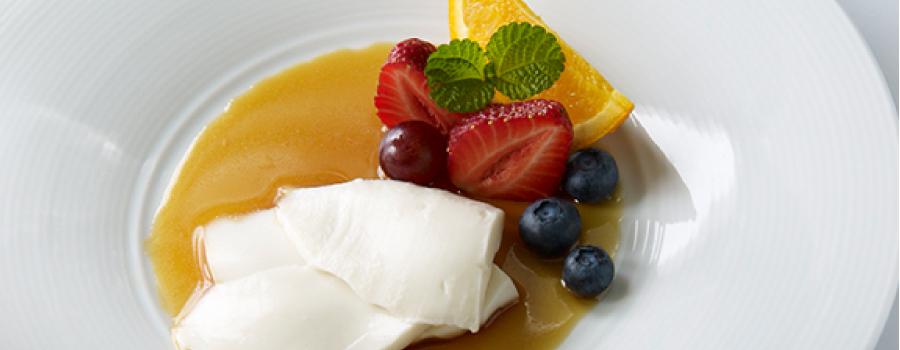
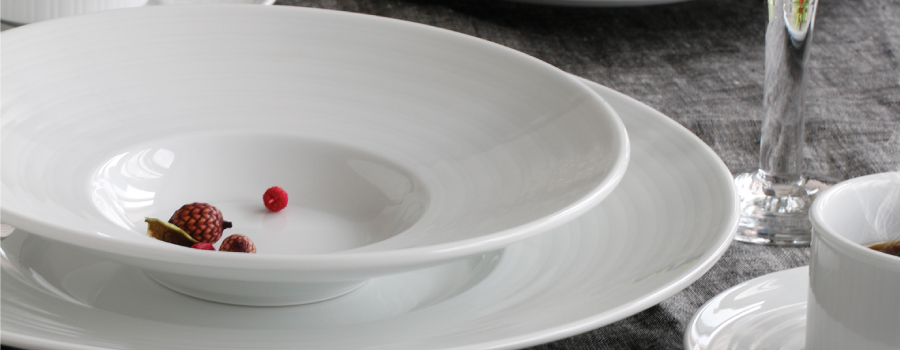
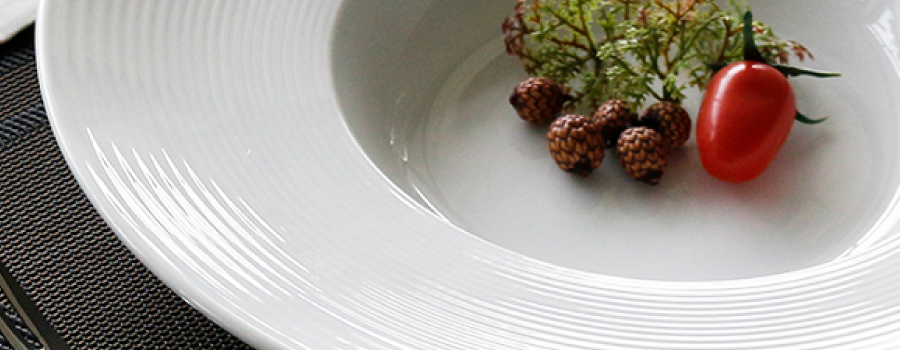
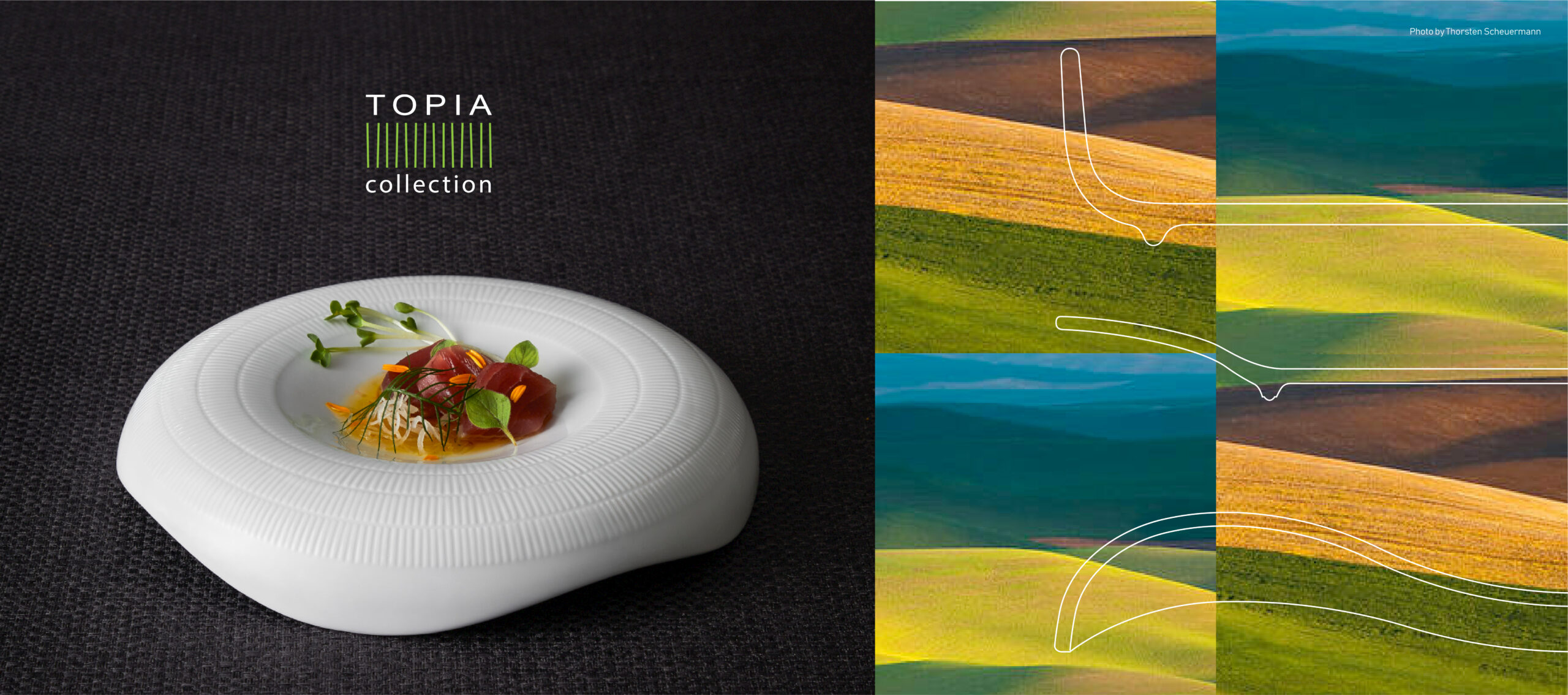
When global purchasing directors, executive chefs, and hotel F&B managers evaluate tableware for international hotel rollouts, luxury resorts, or banquet facilities, porcelain rim plates emerge as the most versatile workhorse on the pass. Unlike rimless coupe designs, a classic wide-rim plate provides a dedicated architectural margin—often referred to by culinary designers as "the white frame." This structural border visually isolates the culinary creation from the dining environment, drawing the guest's focal point directly into the well of the plate.
Beyond culinary visual framing, porcelain rim plates serve vital functional roles back-of-house and on the service floor. The outer rim creates a designated hygienic zone for floor staff, allowing waiters to handle, carry, and place service items without their fingers approaching the plated dish or sauce elements. Furthermore, the elevated perimeter acts as a physical thermal wall, maintaining core dish temperature inside the central basin while keeping the handling rim cooler for comfortable service delivery.
"For commercial hospitality operators, a rim plate is not merely ceramic dinnerware—it is an engineered framing canvas that balances service ergonomics, thermal retention, and long-term edge durability under severe dishwashing conditions."