Microstructural Density & Tricalcium Phosphate Vitrification
In the competitive ecosystem of Michelin-starred restaurants, luxury hotel dining rooms, and high-end banquet galas, fine dining bone china represents the absolute pinnacle of ceramic craftsmanship and table presentation. However, for hotel procurement directors and corporate purchasing executives, selecting bone china is not merely an aesthetic decision—it is a critical capital investment in operational durability, thermal retention, and long-term cost of replacement.
Unlike standard vitrified porcelain, high-grade fine dining bone china incorporates a minimum of 40% to 45% purified calcium phosphate—derived from refined tricalcium phosphate bone ash—fused into a matrix of high-grade kaolin clay, feldspar, and quartz. When fired at temperatures exceeding 1,250°C to 1,300°C, this unique chemical formulation causes the body to undergo an intricate crystalline transformation, forming an ultra-dense, non-porous structure known as anorthite glass.
The resulting ceramic body displays unparalleled physical properties:
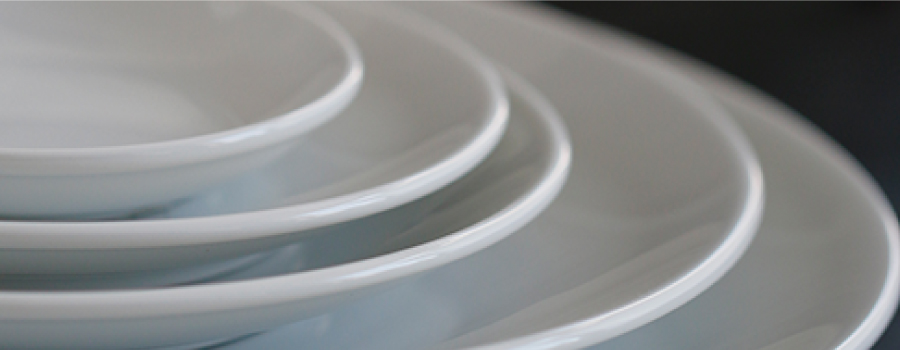
- Superior Translucency: Light passes effortlessly through thin-walled rims, emitting a warm, soft ivory hue that enhances food presentation without optical distortion.
- High Flexural Strength: Bone ash dramatically increases the mechanical bending modulus of the ceramic matrix, allowing thinner profiles to achieve up to 30% higher impact resistance than standard porcelain of equivalent thickness.
- Zero Water Absorption (<0.05%): Fully vitrified body structures eliminate moisture penetration, rendering the ware 100% resistant to bacterial harbor, thermal shock cracking, and glaze crazing.