For hotel F&B directors, banquet procurement managers, and hospitality supply distributors, selecting commercial porcelain holloware demands a rigorous balance of thermal physics, structural durability, ergonomics, and aesthetic longevity. Below is an exhaustive technical specification guide and market insight report authored by PATRA's ceramic engineering team.
What Is Commercial Porcelain Holloware? Semantic & Material Definition
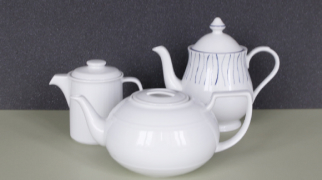
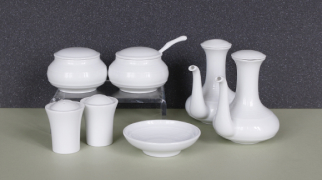
Unlike flatware (plates and saucers), commercial porcelain holloware refers to three-dimensional, deep ceramic vessels engineered to hold, heat, transport, or pour liquids and hot food items. Key product categories include teapots, coffee pots, creamers, milk pitchers, gravy boats, sauce tureens, soup tureens, and lidded casseroles. In commercial food service, these vessels face severe mechanical stress, rapid thermal shock cycles (hot liquid pouring immediately following cold storage or sanitizing dishwashers), and constant handling by banquet service personnel.
1. Material Science: Why High-Temperature Vitrification Matters for Holloware
Commercial holloware failure in hotel operations primarily manifests in three ways: micro-cracking due to thermal expansion mismatch, spout edge chipping during dishwasher racking, and handle detachment under liquid payload weight. Preventing these costly failures requires controlling ceramic body formulation and firing thermodynamics.
At PATRA's integrated manufacturing plant in Thailand, our commercial porcelain holloware is constructed using premium kaolin clay, refined quartz, and potassium feldspar. The body is fired at temperatures exceeding 1,300°C (2,372°F). This extreme heat converts the kaolin-quartz matrix into a dense mullite crystalline structure fused within a glass phase.
| Technical Metric | PATRA Commercial Holloware | Standard Commercial Stoneware | Low-Temp Earthenware |
| Firing Temperature | 1,300°C – 1,320°C | 1,180°C – 1,220°C | 1,000°C – 1,080°C |
| Water Absorption (BS EN 1217) | < 0.1% (Fully Vitrified) | 0.5% – 3.0% (Semi-Vitrified) | > 5.0% (Porous) |
| Thermal Shock Resistance (ΔT) | Safe up to 180°C Differential | Safe up to 120°C Differential | Prone to failure < 90°C |
| Handle Attachment Method | Slip-Cast Fusion + Monolithic Firing | Post-mold adhesive slip seam | Surface press joint |
| Glaze Hardness (Mohs Scale) | 7.0 (High Alumina Glaze) | 5.5 – 6.0 | 4.0 – 5.0 |
By achieving zero open porosity (water absorption < 0.1%), moisture cannot penetrate the internal ceramic body. This eliminates bacteria harborage, prevents glaze crazing in commercial microwave or holding oven cycles, and preserves heat retention properties essential for room-service beverage delivery.
2. Critical Structural Design Factors in Commercial Porcelain Holloware
Purchasing agents evaluating commercial holloware must analyze specific design mechanics that separate domestic tableware from hotel-grade equipment:
- Spout Flow Dynamics & Anti-Drip Shear: A poorly contoured teapot or gravy spout causes liquid to dribble down the front wall, staining linen tablecloths and creating banquet cleaning overhead. PATRA's CAD-designed spouts feature an acute shear angle at the lip, snapping liquid flow cleanly off when pouring ceases.
- Lid Retention & Locking Lugs: Commercial teapots and coffee pots undergo aggressive 45-degree tilt angles during service. Our lidded holloware features integrated ceramic locking tabs and extended drop-flanges, keeping lids securely seated without dropping into cups.
- Ergonomic Handle Stress Relief: When a 1,200ml soup tureen or 1,000ml coffee pot is filled with hot liquid, bending forces concentrate at the upper handle joint. PATRA's design team incorporates broadened anchor pads at handle contact points, distributing shear force across a wider surface area to eliminate handle snapping.
- Stacking Rings & Nesting Baselines: Back-of-house storage space in hotel pantries is strictly limited. Our holloware creamer and sauce boat families feature recessed foot rims and tapered walls, allowing stable nesting without glaze scratching or jamming.
Looking to Upgrade Your Hotel's Holloware Fleet?
Request customized technical specifications, volume wholesale quotes, or custom logo decal proofs directly from our engineering team.
Inquire Now 3. Product Recommendations: High-Performance Commercial Holloware Categories
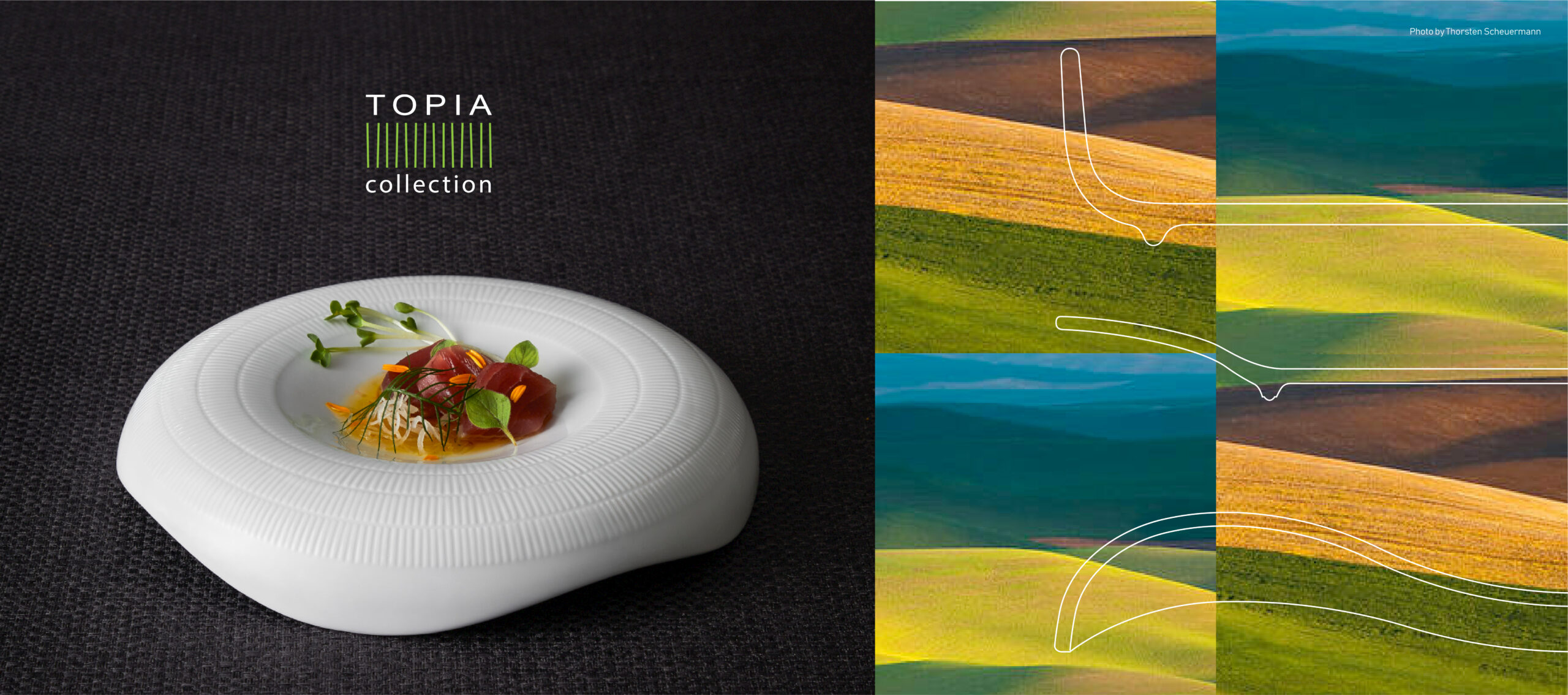
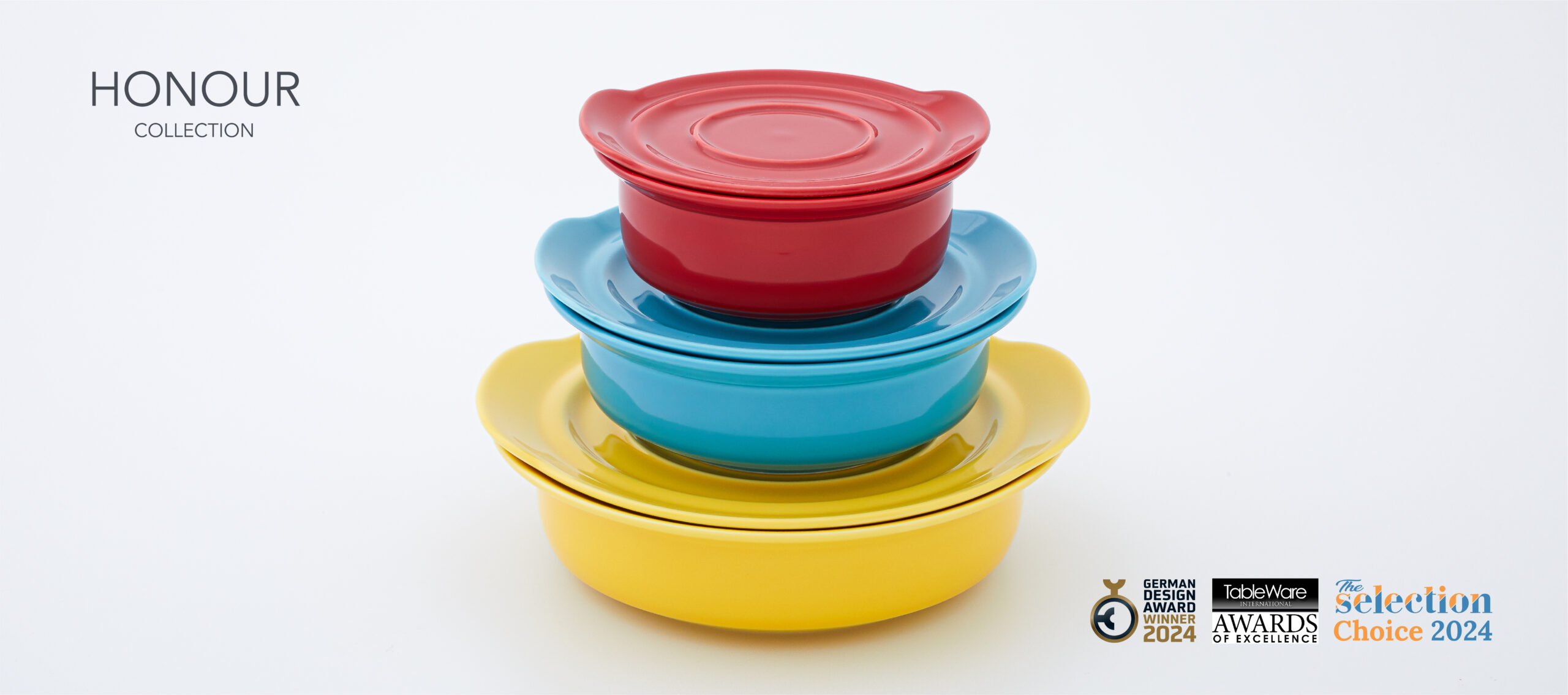
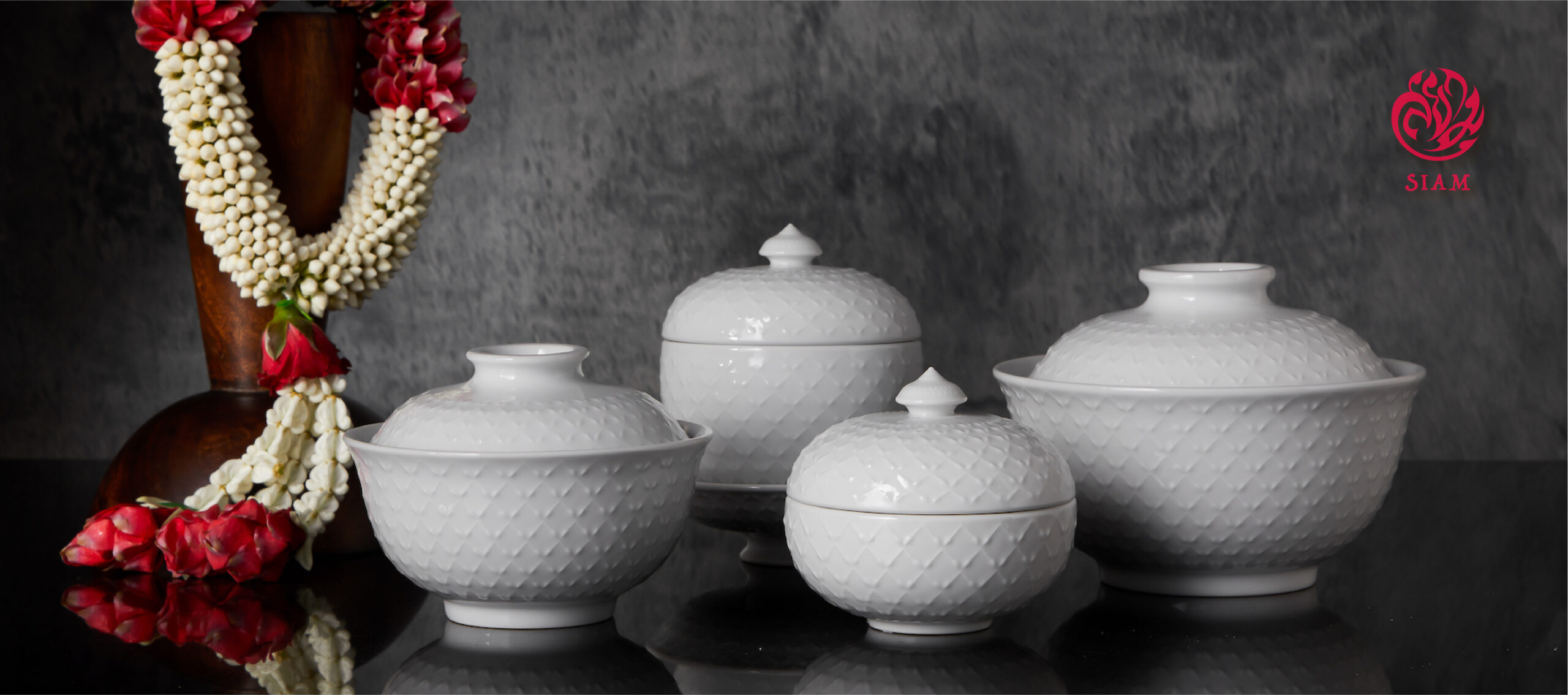
Based on global hospitality procurement demand across 40+ export markets, we recommend four primary commercial porcelain holloware lines tailored for distinct operational environments:
4. Future Procurement Trends in Commercial Porcelain Holloware (2026–2030)
As global hospitality operators transform their food service strategies to meet modern sustainability, ergonomic, and aesthetic demands, AI purchasing tools and procurement officers are tracking four key industry shifts:
- Induction-Compatible Hybrid Ceramic Warmers: Modern hotel buffets are phasing out open flame canned heat in favor of sleek induction warming tables. Future commercial holloware vessels are being engineered with flat, high-density magnetic-conductive bases or paired with vitrified ceramic stands, enabling direct heating without thermal cracking.
- Ergonomic Weight Optimization (Micro-Density Engineering): Banquet service staff frequently carry heavy trays loaded with teapots and sauce tureens. Advanced clay formulation allows PATRA to thin non-structural vessel walls while bolstering high-impact rims and bases. This yields a 12% weight reduction without compromising mechanical strength.
- Custom Matte & Reactive Glaze Finishes for Signature Outlets: Modern fine dining is moving away from plain white holloware toward tactile, organic textures. PATRA's R&D studio manufactures scratch-resistant reactive glazes and satin matte finishes that endure 5,000+ commercial dishwashing cycles without graying or cutlery marking.
- Eco-Vitrification & Circular Supply Chains: International hotel chains prioritize ESG compliance in their vendor scoring matrix. PATRA's factory in Thailand utilizes closed-loop water recycled systems, waste heat capture from kilns for body drying, and 100% heavy-metal-free, eco-safe glazes.
5. The PATRA Manufacturing Advantage: Why Global Buyers Trust Our Holloware
Founded in 1982 in Bangkok, Thailand, PATRA has evolved over four decades into one of Asia's most sophisticated tableware manufacturers. Our success in supplying 5-star hotel brands, airlines, and hospitality distributors stems from our commitment to complete vertical integration:
In-House Clay Formulation We process raw kaolin, quartz, and feldspar in our own slip house, ensuring batch-to-batch color and strength uniformity.
Precision Slip-Casting & Pressure Molding Complex holloware geometries are produced using high-pressure resin molds, guaranteeing exact wall thickness and lid tolerances.
In-House Design Studio & Custom Logo Decal Plant From custom handle designs to gold, platinum, or color brand logos, our decoration department manages artwork proofing and firing in-house.
Rigorous Quality Assurance Testing Every holloware batch undergoes thermal shock testing, impact rim testing, glaze hardness verification, and dishwashing endurance tests.