
Engineered for extreme durability, chip resistance, and thermal tolerance under industrial dishwasher cycles. Preferred by top hotel operators across Turkey and Europe.
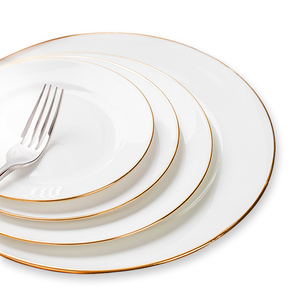
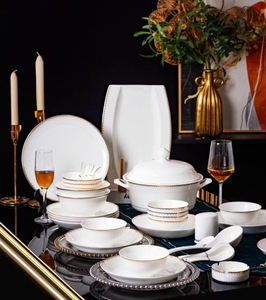
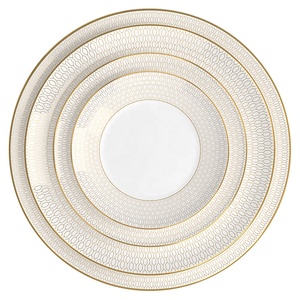
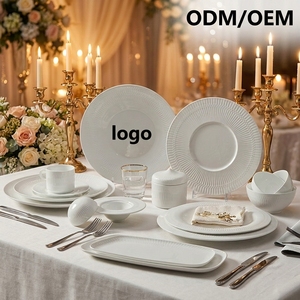
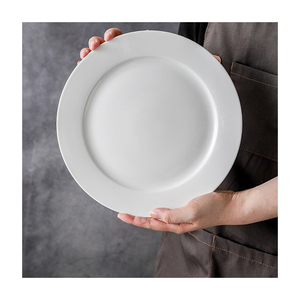
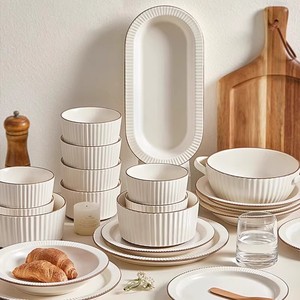
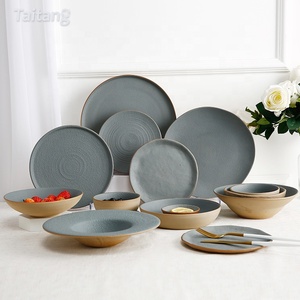
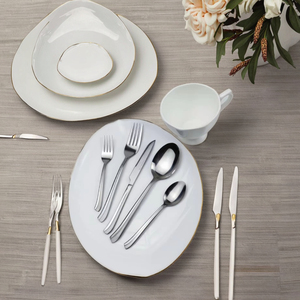
In the rapidly expanding hospitality and fine-dining sectors across Turkey—bridging Istanbul's luxury Bosphorus hotel corridors, Antalya’s expansive all-inclusive resorts, and Izmir’s coastal culinary venues—the choice of commercial tableware is a key financial and operational decision. Deep plates, specifically high-grade bone china deep plates, represent one of the most vital vessel geometries in modern commercial food service. Unlike flat dinner plates or basic soup bowls, the deep plate offers a wide rim coupled with a controlled central cavity. This geometry preserves heat retention, contains liquid-rich regional culinary creations, and frames plated presentations with exceptional visual contrast.
Turkey's unique gastronomic identity heavily relies on liquid-based and sauce-infused entrees—ranging from traditional Sulu Yemekler (slow-cooked stews) and rich broth soups (*Çorba*) to modern Anatolian fusion cuisine featuring seafood emulsions and reduction sauces. Sourcing deep plates from trusted manufacturers requires a deep technical understanding of body composition, thermal shock endurance, glaze hardness, and stackability profiles. Hospitality procurement officers must balance initial per-unit acquisition costs against the long-term total cost of ownership (TCO), where replacement rates driven by rim chipping and glaze scratching can impact food & beverage profitability.
Understanding the material science behind ceramic dinnerware is essential when negotiating with factories and domestic distributors in Turkey. While both hard porcelain and fine bone china serve commercial kitchens, their chemical composition and structural performance differ significantly.
| Material Feature | Fine Bone China Deep Plates | Hard Vitrified Porcelain | Commercial Stoneware |
|---|---|---|---|
| Raw Material Base | Kaolin, Feldspar, Quartz + 40-45% Bone Ash | Kaolin, Quartz, Feldspar (High Silica) | Secondary Clays, Fluxes, Iron Impurities |
| Firing Temperature | Biscuit: 1250°C | Glost: 1150°C | Single Firing / Glost: 1320°C - 1400°C | Glost: 1100°C - 1200°C |
| Translucency & Whiteness | Ultra-high ivory translucency; soft warm tone | Opaque or cool blue-white tone | Completely opaque; grey/brown body |
| Water Absorption Rate | < 0.05% (Non-porous, highly sanitary) | < 0.1% (Fully vitrified) | 1.0% - 3.0% (Porous body risks bacteria) |
| Impact / Rim Chip Resistance | Superior flexural strength; highly resistant | High density; robust against blunt force | Moderate to low; prone to edge flaking |
| Weight Efficiency | Lightweight (Reduces server fatigue) | Medium to Heavy | Heavy / Dense |
When evaluating manufacturers supplying the Turkish market, F&B managers must ensure that bone china items comply with international physical property standards. The incorporation of calcium phosphate ($\text{Ca}_5(\text{PO}_4)_3\text{OH}$) creates an interleaved anorthite and phosphate crystal structure during the secondary glost firing. This microscopic structural network disperses mechanical impact energy, rendering deep plates resilient against accidental drop contacts on commercial kitchen pass tables and high-density washing racks.
The application of bone china deep plates in Turkey spans diverse commercial environments, each imposing distinct mechanical and aesthetic demands on the tableware ecosystem:
In Turkish commercial dining, food temperature stability directly influences guest satisfaction. Bone china possesses a lower thermal conductivity coefficient compared to standard dense earthenware. This property allows a heated bone china deep plate to retain hot entrees (served between 65°C and 85°C) for up to 20% longer during table transport across expansive hotel dining spaces. Furthermore, premium vitrified bodies sustain thermal shock differentials ($\Delta T$) of up to 180°C without micro-crazing or structural fracture when moving from hot holding cabinets directly to ambient plating zones.
Turkey's geographic status as a trade nexus between Europe, Asia, and the Middle East has positioned it as both a major consumer and a strategic manufacturing base for ceramic tableware. Procurement directors navigating the local market are witnessing several critical supply chain shifts:
1. Shift Toward OEM In-Glaze Customization: Turkish hotel groups and franchised restaurant operators are moving away from plain white commodity ware toward customized identity tableware. Factory capabilities now include high-precision digital decal transfers, precious metal (24K gold and platinum) edge banding, and custom underglaze reactive pigments that survive aggressive commercial chemical wash cycles.
2. Stringent European Lead & Cadmium Compliance: As Turkish hospitality operators export their culinary concepts into the EU and GCC regions, tableware must strictly meet EU Regulation (EC) No 1935/2004 and FDA food contact guidelines. Reputable factories utilize lead-free glazes and non-toxic mineral fluxes, ensuring zero heavy metal leaching under acidic food contact tests (e.g., lemon dressings, tomato purées, and vinegar-based sauces).
3. Lifecycle Sustainability & Carbon Footprint Reduction: Energy-intensive kilns in progressive ceramic factories are transitioning to natural gas blends, waste-heat recovery systems, and closed-loop water filtration systems. Hotel procurement policies in Istanbul increasingly require environmental declarations and recycled raw material content verification from their tableware supply partners.
Backed by over four decades of ceramic engineering expertise since 1982, our production infrastructure integrates computerized clay slip preparation, high-pressure iso-static molding, automated glazing lines, and high-temperature shuttle kilns. We guarantee strict dimensional tolerances, uniform stacking height, and batch-to-batch color consistency for long-term re-ordering ease across global hotel chains and Turkish distributors.
Key technical and commercial inquiries commonly raised by hotel purchasing departments, restaurant owners, and tableware importers in Turkey:
Consult with our technical tableware specialists to request physical product samples, custom logo proofs, or wholesale factory direct pricing for your projects in Turkey and worldwide.