PATRA  |  Porcelain & Bone China Tableware Manufacturer since 1982 — Bangkok, Thailand

Top Trusted Bone China Bowl with Lid Factory & Exporter for the Ethiopia Market

Engineered Commercial Tableware Solutions & Thermal Retention Holloware for East African Hospitality

Export Product Showcase

Hospitality-Grade Bone China & Ceramic Collections

Precision-molded lidded bowls, chip-resistant rim plates, and luxury banquet holloware engineered for intensive commercial use.
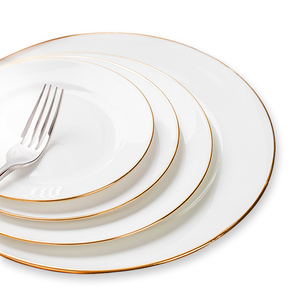
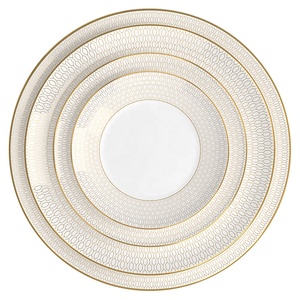
Ceramic Factory Wholesale Luxury With Golden Rim White Plate Bone China Flat Plate Dinnerware
Luxury Golden Rim Bone China Flat Dinner Plate (6/7/8/10 Inch)
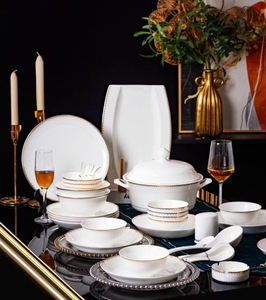
Luxury Bone China Hotel Plates Bowl Pot Dinnerware Sets Set Porcelain Plate With Ceramic Lid
Luxury Bone China Hotel Bowl Pot & Dinnerware Set with Ceramic Lid
Hotel Banquet Ceramic Tableware Bone China Dinnerware Set Golden Edge Plates for Wedding
Hotel Banquet Bone China Dinnerware Set with Golden Edge for Weddings
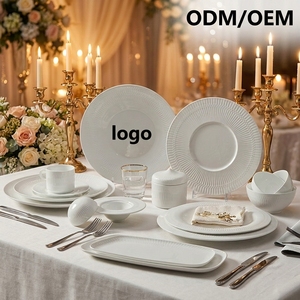
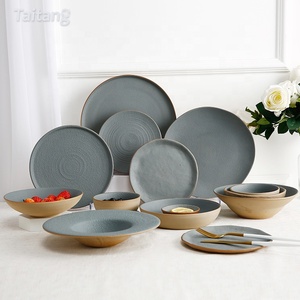
ST Luxury White Celadon Porcelain Dinnerware Sets ODM OEM Durable Non-Toxic Eco-Friendly
ST Luxury White Celadon Commercial Porcelain Dinnerware Set (OEM/ODM)
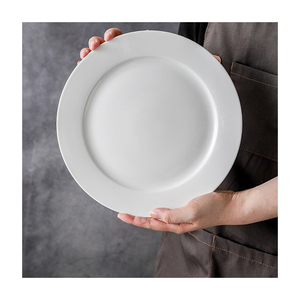
High Bone China Plate Customized Wedding Hotel White Porcelain Flat Plate
High Bone China Customized Round Flat Plate for Hotel & Banquet Presentation
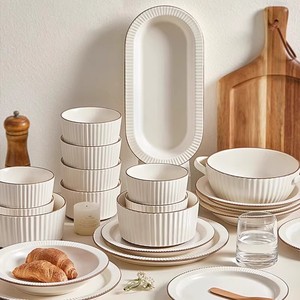
Wholesale Luxury Modern Restaurant Dinnerware Set European Design Hotel Quality
Modern European Design Hotel Quality Ceramic Dishwasher Safe Tableware
One Stop Solution Ceramic Set Hotel Tableware Dinner Dishes Crockery
One-Stop Solution Commercial Ceramic & Stoneware Dinnerware Set
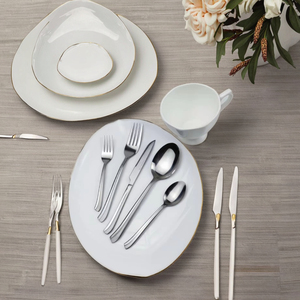
High-end Stainless Steel Knife Fork Spoon Set Portable Dinnerware for Hotel
High-End Stainless Steel Cutlery Flatware Set for Commercial Dining
>45%
Bone Ash Content
1300°C
Vitrification Firing
40+
Global Export Markets
0.05%
Water Absorption Rate

Executive Summary: The Strategic Evolution of Commercial Tableware in East Africa

The hospitality and food service infrastructure across East Africa—led by Ethiopia's rapidly expanding luxury tourism, diplomatic venue expansion, and international conference economy in Addis Ababa—is experiencing a structural shift toward high-performance, aesthetically refined dinnerware. Among commercial holloware categories, lidded bone china bowls have emerged as an essential operational asset for four-star and five-star hotels, diplomatic catering units, cultural fine dining establishments, and high-capacity wedding banquets.

This technical white paper examines the material science, thermal retention mechanics, localized dining applications, and export logistics involved in sourcing high-grade bone china bowls with lids tailored specifically for the Ethiopian commercial procurement market. As a established manufacturing enterprise operating out of Thailand with over four decades of ceramic technology development, our facility integrates high-temperature vitrification, precision lid sealing tolerances, and lead-free in-glaze decoration to meet the rigorous demands of professional catering operations across Sub-Saharan Africa.

Key Insight for Ethiopian Procurement Directors: The high altitude of Addis Ababa (~2,350 meters above sea level) results in lower atmospheric pressure and faster convective heat dissipation. Lidded bone china holloware provides a critical thermal containment barrier, ensuring traditional soups, broths, and stews maintain optimal service temperatures (>65°C) from kitchen pass to table.

1. Material Science & Ceramic Metallurgy of Commercial Bone China

Understanding the distinction between standard feldspathic porcelain, stoneware, and authentic high-grade bone china is vital for commercial buyers evaluating Total Cost of Ownership (TCO) and replacement breakage ratios.

1.1 Bone Ash Concentration and Chemical Formulation

Authentic bone china is defined by the incorporation of refined tricalcium phosphate $\text{Ca}_5(\text{PO}_4)_3\text{OH}$, derived from calcined cattle bone ash, blended into a high-purity kaolin, feldspar, and quartz matrix. Our manufacturing standards mandate a minimum bone ash content of 45%, producing distinct structural and optical characteristics:

  • High Mechanical Flexural Strength: Despite having a thinner cross-sectional body wall compared to heavy porcelain, the interlocking crystalline lattice formed during vitrification grants superior impact resistance against rim chipping.
  • Optical Translucency & Ivory Whiteness: High bone ash content creates a warm, translucent hue under light, establishing an immediate perception of premium luxury in fine dining environments.
  • Low Porosity (<0.05% Water Absorption): Complete vitrification prevents oil absorption, food dye staining, and micro-cracking caused by bacterial buildup inside body pores.

1.2 Dual High-Temperature Firing Process

Our industrial production line utilizes a precision double-firing sequence controlled by digital atmospheric monitoring:

  1. Biscuit Firing (1,280°C – 1,300°C): Raw formed clay bodies are subjected to high heat to burn off organic compounds and fully vitrify the calcium phosphate matrix, securing maximum body density and structural shrinkage accuracy.
  2. Glaze Firing (1,080°C – 1,150°C): A specially formulated, lead-free glaze is applied. Under controlled glaze firing, the glaze melts into a flawless, glass-like coating that fuses atomically with the bone china body.
Performance Metric PATRA High Bone China (>45% Ash) Standard Commercial Porcelain Earthenware / Stoneware
Bone Ash Percentage 45% – 48% 0% 0%
Water Absorption < 0.05% (Vitrified) < 0.5% 3.0% – 8.0%
Rim Chip Resistance Exceptional (Reinforced Edge) Moderate to High Low (Prone to chipping)
Thermal Shock Tolerance $\Delta T = 140^\circ\text{C}$ $\Delta T = 120^\circ\text{C}$ $\Delta T = 90^\circ\text{C}$
Dishwasher Cycle Life > 2,500 Commercial Cycles 1,500 Cycles < 500 Cycles
Weight-to-Strength Ratio Ultra-Lightweight / High Durability Heavy / Dense Heavy / Brittle

2. Lid Engineering & Ergonomic Design Features for Lidded Bowls

A lidded bowl in commercial hospitality is more than a decorative serving piece; it is an engineered thermal vessel. Designing lidded bone china bowls for bulk food service requires solving complex engineering challenges regarding thermal contraction, condensation control, and handling safety.

Precision Lid-Rim Tolerance

Each lid and bowl body are fired on custom refractory setters to ensure a seating tolerance within ±0.3mm. This prevents excessive lid wobble, reduces thermal leakage, and eliminates lid slippage during tray service.

Condensate Recirculation Rim

The underside lip of the lid features an angled drip channel. Steam condensing on the interior of the lid drips smoothly back into the center of the dish without running down the exterior bowl wall, preserving table hygiene.

Ergonomic Heavy-Duty Finial

Lid knobs (finials) are hollow-molded and reinforced at the stress junction, allowing staff and guests to safely grip hot lids without heat transfer discomfort or risk of snap breaks.

3. Localized Ethiopian Market Demand & Application Scenarios

Ethiopia represents one of Africa's fastest-growing aviation, diplomatic, and commercial hospitality hubs. The unique culinary traditions of Ethiopian gastronomy combined with international luxury hotel standards require specialized dinnerware configurations.

3.1 Thermal Containment for Ethiopian Traditional Soups and Stews

Ethiopian culinary presentation features rich, aromatic stews (such as Doro Wat, Beg Wat, and Shiro Wot), traditional porridges like Genfo or Marqa, and complex clear soups. Serving these dishes at peak temperatures is central to the dining experience:

  • Heat Retention in Altitude Environments: In Addis Ababa, where water boils at ~92°C due to atmospheric pressure, food cools significantly faster. Lidded bone china bowls trap heat energy, holding serving temperatures above 65°C throughout a multi-course banquet.
  • Aroma Preservation: Ethiopian dishes rely heavily on complex spice blends (such as Berbere and Niter Kibbeh aromatic clarified butter). Sealed lidded bowls trap volatile aromatic compounds, releasing a fragrant bloom when uncovered at the guest's seat.

3.2 Addis Ababa Luxury Hotel Boom & Banquet Operations

With Addis Ababa hosting the African Union (AU) Headquarters, the United Nations Economic Commission for Africa (UNECA), and over 100 diplomatic missions, international brand hotels (including Hyatt Regency, Skylight Hotel, Radisson Blu, and Marriott Executive Apartments) maintain strict operational tableware guidelines:

  • High-Throughput Banquet Efficiency: Lidded bowls must stack securely in banquet staging warmers without scratching glazed surfaces.
  • 24k Gold & Platinum Rim Resistance: Diplomatic banquets demand gold-accented tableware. Our factory utilizes in-glaze micro-metallic application technology, allowing gold leaf accents to withstand harsh industrial dishwashing chemicals.

4. Ethiopian Import Regulations, Shipping Logistics & Compliance

Successfully importing commercial ceramic tableware into Ethiopia requires navigating specific trade pathways, port logistics, and mandatory quality certifications. Our export management division provides complete end-to-end documentation support for Ethiopian importers and project contractors.

4.1 Port Logistics: From Factory to Addis Ababa Dry Ports

Because Ethiopia is landlocked, primary maritime cargo transit passes through the Port of Djibouti, followed by land freight into inland dry ports:

Logistics Route Overview: Factory Container Loading (Thailand) → Vessel Shipment to Port of Djibouti → Ethiopian Shipping and Logistics Services Enterprise (ESLSE) Multimodal Railway/Truck Transit → Customs Clearance at Modjo Dry Port / Kality Dry Port (Addis Ababa).

  • Palletization & Export Packaging: All lidded bowls and fragile holloware are packed in 5-ply corrugated export cartons, fitted with custom EPE foam inserts, and heat-shrink wrapped on heavy-duty wooden pallets treated to ISPM-15 fumigation standards.
  • Zero Breakage Guarantee Packaging: Tested against drop impact guidelines (ASTM D5276) to withstand rough sea transit and overland road transport from Djibouti to the Ethiopian highlands.

4.2 Compliance, Tariff Codes & Payment Modalities

  • HS Code Classification: 6911.10.00 (Tableware and kitchenware of bone china or porcelain).
  • Mandatory Inspections: Compliance with Ethiopian Conformity Assessment Enterprise (ECAE) standards and mandatory Lead and Cadmium migration testing certified under ISO 6486-1:1999 (Food Contact Safety).
  • Forex & Banking Support: Full documentation compliance for Letter of Credit (L/C) opening through Commercial Bank of Ethiopia (CBE) or private commercial banks.

5. Enterprise Advantages: Why Global Buyers Partner with Our Factory

Established in 1982, PATRA has evolved into a global leader in professional porcelain and bone china manufacturing. Operating from advanced facilities in Thailand, our brand is trusted by luxury hospitality groups across 40+ countries.

Vertically Integrated Manufacturing

From raw kaolin refining and body formulation to master mold engineering and decal printing, 100% of production takes place within our owned facilities, guaranteeing complete batch-to-batch consistency.

Bespoke OEM / ODM Customization

Our in-house design studio creates custom bowl shapes, embossed textures, and customized gold leaf logo decals tailored to hotel corporate identity and cultural motif specifications.

Strict Quality Assurance

Every single piece undergoes manual optical inspection, thermal shock testing, and rim stress verification prior to packing, maintaining an industry-leading defect-free delivery rate of 99.8%.

6. Buyer FAQs for Sourcing Bone China Lidded Bowls for Ethiopia

What is the minimum order quantity (MOQ) for custom lidded bone china bowls?
For standard white ware lidded bowls, our MOQ starts at 500 units. For custom-decorated items (such as 24k gold rims or custom hotel crest logos), the MOQ is typically 1,000 units per item shape. Small-batch trial orders can be arranged for full hotel project outfitters.
Are gold-rimmed lidded bone china bowls commercial dishwasher safe?
Yes. We utilize advanced in-glaze and high-fire precious metal decoration technologies. When fired at elevated temperatures, the gold decoration bonds beneath or within the protective glaze layer, making it resistant to heat and high-alkaline commercial dishwasher detergents.
How do you guarantee zero breakage during sea transit to Djibouti and dry port transport to Addis Ababa?
We utilize heavy-duty export packaging protocols. Lids and bowl bodies are individually wrapped in protective foam sheets, isolated within reinforced internal cardboard dividers, packed into double-wall 5-ply cartons, and fully strapped onto fumigated wooden pallets with shrink-wrap corners. Breakage claims are under 0.2% globally.
Can your factory provide samples for hotel procurement board evaluation in Ethiopia?
Yes, we regularly dispatch pre-production sample kits via DHL/FedEx directly to project procurement offices, hotel general managers, and architects in Addis Ababa and regional business hubs.
What is the average production and delivery lead time for an Ethiopian import order?
Standard manufacturing lead time is 30 to 45 days post-sample approval and L/C deposit confirmation. Ocean transit from Bangkok/Laem Chabang Port to the Port of Djibouti takes approximately 18 to 25 days, followed by 5 to 7 days for inland transit to Addis Ababa dry ports.

Request a Custom Quote & OEM Catalog

Partner with Thailand's premier ceramic manufacturer. Contact our export specialists today for wholesale pricing, sample requests, and Ethiopian logistics support.

Get a Quote