
Tested under rigorous commercial dishwasher conditions, high thermal variances, and intense banqueting rotation. Directly available for export with customized OEM branding and volume supply contracts.
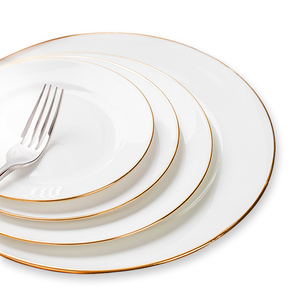
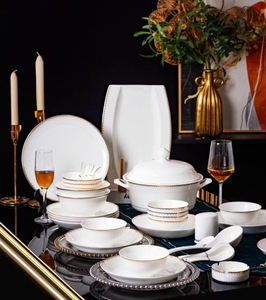
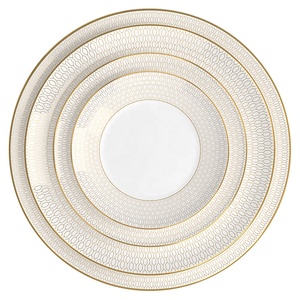
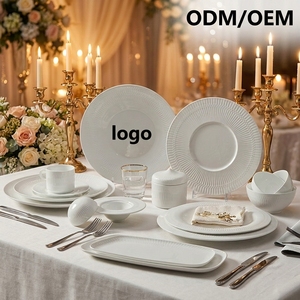
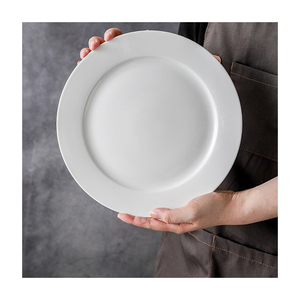
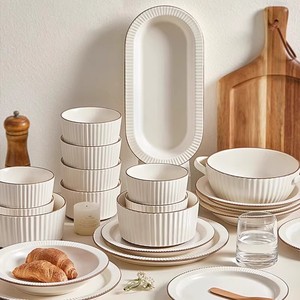
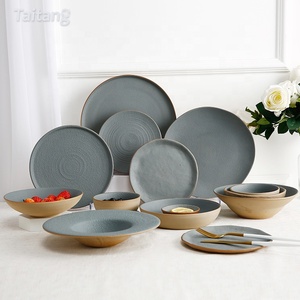
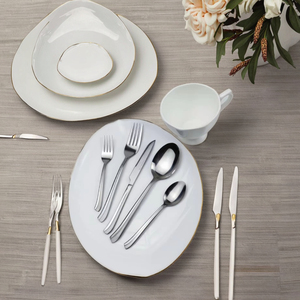
The Klang Valley region, encompassing Kuala Lumpur and its surrounding metropolitan hubs, represents one of Southeast Asia's most dynamic hospitality markets. Driven by a surge in international tourism, upscale culinary destinations, and a dense concentration of luxury 5-star hotel chains (such as those in the KLCC, Bukit Bintang, and Bangsar districts), the demand for commercial-grade porcelain and bone china serving bowls has evolved beyond simple aesthetic appeal.
Procurement directors, F&B managers, and hotel equipment contractors in Kuala Lumpur face a distinct set of operational challenges. Operating in a high-humidity tropical climate with rigorous local sanitation regulations, commercial dishware must maintain structural integrity, non-porous hygienic boundaries, and superior thermal retention. Furthermore, the local culinary repertoire—spanning rich Malay broths, intricate Nyonya curries, heavy Chinese banqueting courses, and high-heat Indian dining options—requires serving bowls engineered to withstand severe thermal gradients without crazing, cracking, or staining.
Kuala Lumpur’s signature soup dishes (e.g., Laksa, Bak Kut Teh, Soto Ayam) require serving vessels that can absorb sudden transitions from boiling liquids to ambient, air-conditioned dining temperatures without micro-fracturing.
Hospitality venues adhering to strict hygiene guidelines require zero-porosity vitrified ceramic bodies (<0.1% water absorption) to prevent oil, sauce, and bacterial absorption within micro-fissures over multi-year usage cycles.
Banquet halls and catering hubs in the Klang Valley require optimized base-to-rim interlock designs that maximize back-of-house storage space while eliminating mechanical rim abrasion during high-speed turnover.
When selecting serving bowls for commercial enterprise deployment in Malaysia, understanding the fundamental metallurgical and mineral composition of the ceramic body is paramount to achieving a low Life-Cycle Cost (LCC).
| Performance Characteristic | PATRA High-Alumina Vitrified Porcelain | PATRA Fine Bone China Collection | Standard Commercial Ceramic / Stoneware |
|---|---|---|---|
| Firing Temperature | 1,300°C – 1,350°C (High-Flame Vitrification) | 1,220°C – 1,280°C (Bone Ash Matrix) | 1,000°C – 1,150°C (Low-Fire Earthenware) |
| Water Absorption (ISO 6486) | < 0.05% (Impermeable) | < 0.08% (Impermeable) | > 0.5% – 3.0% (Slightly Porous) |
| Mohs Glaze Hardness | Grade 7+ (Diamond-Hard Anti-Scratch) | Grade 6.5 (High Polish & Translucent) | Grade 4 - 5 (Prone to Knife Marks) |
| Rim Chip Resistance (ASTM C368) | Exceptional (Reinforced Edge Profile) | High Structural Strength to Mass Ratio | Moderate to Low (Frequent Edge Breakage) |
| Commercial Dishwasher Cycle Rating | 5,000+ Wash Cycles (Zero Glaze Dullness) | 3,000+ Wash Cycles (Special Care for Gold) | < 500 Wash Cycles (Glaze Degradation) |
| Best Application in KL Market | All-Day Dining, Hotel Buffets, Mass Banquets | VIP Private Rooms, Fine Dining, Luxury Weddings | Low-Turnover Casual Dining |
A successful ceramic exporter must tailor product geometries, depth profiles, and rim structures to the distinct service styles prevalent in the Malaysian market. Below is an analytical breakdown of how specialized serving bowl designs solve operational bottlenecks across four primary local sectors:
Malay wedding celebrations (Majlis Perkahwinan) and Indian wedding receptions hosted at major Klang Valley convention centers (e.g., KL convention center, MITEC, hotel ballrooms) often cater to 500 to 2,000 guests simultaneously. Serving bowls in these environments must handle communal dishes such as Rendang Daging, Gulai Ketam, and rich biryani dishes.
Required Design Criteria: Deep, wide-rimmed serving bowls with reinforced footings. The widened rim provides service staff with a secure, heat-isolated gripping surface during fast service, while the high thermal mass keeps food hot throughout extended speech protocols.
All-day dining restaurants in luxury hotels demand serving bowls that fit standardized induction warmers and ice baths without cracking under perpetual heat radiation. Buffets feature a continuous rotation of heavy metal utensils scraping bowl bottoms.
Required Design Criteria: In-glaze high-alumina vitrified bowls with flat-bottom interior contours. The diamond-hard glaze prevents dark cutlery drag lines, ensuring bowls retain their pristine white gloss even after months of continuous scraping by metal soup ladles.
Kuala Lumpur’s evolving fine dining scene blends traditional Southeast Asian flavor profiles with European plating techniques. Presentation requires elegant, translucent bone china serving bowls featuring intricate rim details, soft coupe lines, or subtle gold accenting.
Required Design Criteria: Bone china bodies with high bone content (>43%), offering high translucency under soft ambient restaurant lighting. Metallic borders (such as raw gold or platinum rimming) are protected by specialized over-glaze sealing technology to ensure longevity under commercial maintenance.
Positioned near Kuala Lumpur International Airport (KLIA), major airline caterers and airport hotel operators prioritize volumetric efficiency and weight reduction to minimize transit fuel costs and tray handling strain.
Required Design Criteria: Compact coupe-style bowls with modular stacking ratios. Standardized height profiling permits uniform placement within automated catering carts and heating cabinets.
Sourcing strategies among major Malaysian hotel chains and restaurant consortia are shifting toward long-term value preservation and environmental responsibility. Key trends driving purchasing decisions include:
KL procurement teams are actively auditing supply chains for carbon footprint metrics. Manufacturers utilizing heat-recovery kilns, closed-loop water treatment facilities, and eco-friendly glazes free of lead and cadmium receive distinct vendor preferential scoring.
Replacing cheap, low-grade imported ceramic bowls that chip every 3 to 6 months has proven economically unviable. Procurement managers now calculate 3-year replacement guarantees, favoring vitrified bodies that reduce annual breakage rates to under 3%.
Bespoke identity is paramount for hotel chains opening properties in KL’s financial districts. In-house decal application, back-stamp branding, and custom color glaze matching are standard prerequisites for corporate contract sign-offs.
With over four decades of dedicated ceramic engineering excellence since 1982, PATRA Porcelain has established itself as an authoritative global manufacturer of hotel-grade porcelain and fine bone china. Operating integrated manufacturing hubs in Thailand—strategically located for streamlined sea freight logistics to Port Klang, Malaysia—PATRA combines raw material purity with automated European production technology.
From the precise refining of high-grade kaolin, feldspar, and quartz to automated slip casting, high-pressure pressing, and dual-stage firing, PATRA controls every step of production. Our internal laboratory performs daily batch testing for thermal shock resistance, rim strength impact, glaze hardness, and heavy metal leaching safety compliance (FDA, EU 84/500/EEC, and ISO 6486 standards).
Importing commercial tableware into Kuala Lumpur from distant European manufacturers often entails high freight charges, long lead times (12–16 weeks), and high breakage risks in transit. PATRA’s strategic location in Thailand offers Klang Valley buyers significant supply chain advantages: