
Explore our top-tier commercial porcelain casseroles, lidded pots, and vitrified tableware solutions exported directly to Thai hotel chains, resort groups, and restaurant operations.
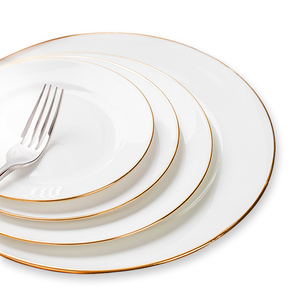
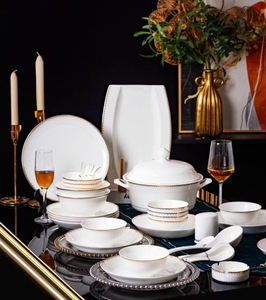
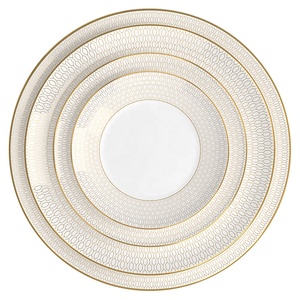
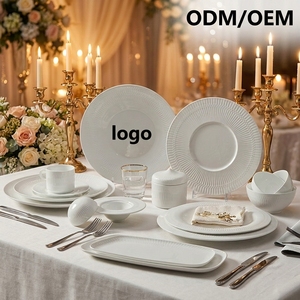
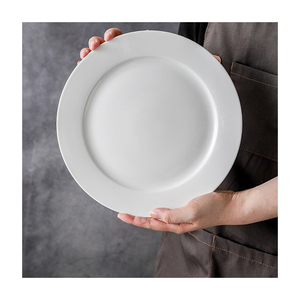
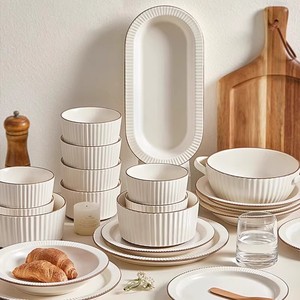
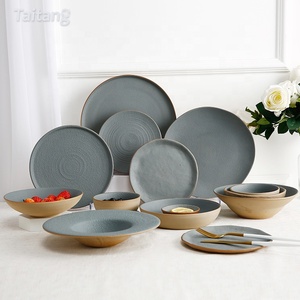
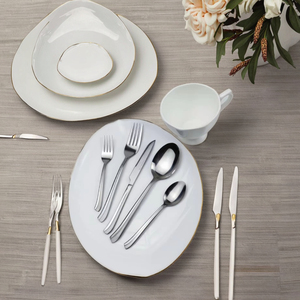
The hospitality and food service industry in Thailand is undergoing a rapid evolution. Driven by the resurgence of international luxury tourism, the expansion of the Michelin Guide across Bangkok, Phuket, Chiang Mai, and Chonburi, and an elevated consumer appetite for high-concept dining, hoteliers and restaurateurs require commercial tableware that bridges thermal performance with aesthetic distinction. Within this ecosystem, porcelain casserole dishes, vitrified stoneware pots, and heat-retaining serving vessels serve a critical dual role: high-heat culinary execution back-of-house and sophisticated table-side presentation front-of-house.
As a global ceramic manufacturer with over four decades of technical heritage—anchored by historical production roots established in 1982 under PATRA Ceramics—our enterprise provides Thailand's leading hotel procurement groups, catering wholesalers, and restaurant chains with direct factory-to-door export solutions. This comprehensive B2B technical whitepaper explores the material science, thermal shock resilience, localized culinary application scenarios, and supply chain logistics required when specifying commercial porcelain casserole dishes for the Thailand market.
Not all ceramic cookware is created equal. Commercial kitchens in Southeast Asia frequently suffer high breakage rates and glaze crazing due to specifying residential-grade ceramics or low-fired stoneware. Our export-grade porcelain casserole dishes are engineered using high-alumina refined kaolin, feldspar, and quartz, processed through high-pressure isostatic molding and vitrified in automated tunnel kilns at temperatures exceeding 1,300°C.
Fired at 1,300°C, the ceramic matrix achieves complete mullite needle formation, sealing pores to a water absorption rate under 0.1% to prevent bacterial growth and moisture retention.
Formulated with low thermal expansion coefficients ($\alpha \approx 4.5 \times 10^{-6}/\text{K}$), allowing direct transition from kitchen ovens (300°C) to ambient tropical service without cracking.
Reinforced quartz glaze achieves a Mohs hardness of 7+, resisting stainless steel utensil scratches, heavy commercial dishwashing, and acidic food contact (pH 2–11).
| Performance Parameter | High-Alumina Vitrified Porcelain | Commercial Stoneware | Enameled Cast Iron |
|---|---|---|---|
| Firing Temperature | 1,300°C – 1,350°C | 1,100°C – 1,200°C | 800°C – 900°C (Enamel) |
| Water Absorption | < 0.08% (Non-porous) | 1.0% – 3.0% (Semi-porous) | 0.00% (Substrate iron rusts if chipped) |
| Thermal Shock Tolerance ($\Delta T$) | $\ge 220^\circ\text{C}$ Continuous | $\approx 140^\circ\text{C}$ Risk of crazing | $\approx 180^\circ\text{C}$ Risk of enamel flaking |
| Mechanical Edge Impact Score | High (Reinforced Rolled Rims) | Moderate | High (Heavy weight increases drop risk) |
| Chemical & Acid Resistance | Immune to acidic sauces (Tom Yum/Citric) | Prone to staining & acid erosion | Chipping exposes reactive iron substrate |
| Tare Weight (Ease of Service) | Lightweight to Medium (Ergonomic) | Heavy | Extremely Heavy (Staff Fatigue) |
Thailand’s culinary landscape presents unique operational demands. Commercial cookware must adapt seamlessly across high-humidity tropical microclimates, high-salinity coastal regions, and diverse dining modalities—from elevated royal Thai cuisine to international buffet spreads.
In high-end properties along Sukhumvit, Riverside Bangkok, and beachfront resorts in Phuket or Koh Samui, buffet service requires casseroles that maintain serving temperatures above 65°C for extended periods without scorching sauces. Our heavy-walled porcelain casserole bodies retain core thermal energy when paired with induction heating plates or chafing stands, ensuring dishes like Massaman Curry, Green Curry (Gaeng Keow Wan), and beef stews remain hot and visually appealing without moisture loss.
Thai fine dining increasingly emphasizes interactive guest experiences. Lidded bone china and vitrified porcelain casseroles (such as our 2025 Luxury Bone China Hotel Casserole Set) allow chefs to present braised abalone, clay-pot crab with glass noodles (Goong Ob Woon Sen), or aromatic Thai soups with steam released table-side. The non-porous glazed interior prevents pungent aromatics (lemongrass, galangal, kaffir lime oil) from absorbing into the body, guaranteeing zero flavor cross-contamination between kitchen cycles.
Properties operating near marine environments face accelerated wear from salt-air corrosion and hard water chemistry in dishwashing systems. Our porcelain casserole dishes feature fully glazed foot rims (or polished foot pads) that eliminate water retention during rack stacking, accelerating dry times and reducing fungal/bacterial spot risk in tropical back-of-house storage environments.
Procurement directors and hotel purchasing managers across Thailand are navigating several key structural trends shaping the ceramic import market in 2025–2030:
With decades of specialized ceramic engineering experience, our factory operations offer distinct strategic advantages to Thai importers, hospitality distributors, and contract buyers:
From raw kaolin clay refining and mold master prototyping to automated firing and in-house decal printing, every production step is controlled under ISO 9001 quality systems.
Casserole bases and lids are precision-engineered with interlocking foot profiles, reducing storage footprint and preventing lateral slippage during kitchen transport.
We archive digital master molds and spectroscopic color formulas for every production run, guaranteeing that replacement orders 3 to 5 years later match existing stocks precisely.
Vitrified porcelain is fired at significantly higher temperatures (1,300°C+) than stoneware (1,100°C–1,200°C). This process transforms the internal clay matrix into a dense, non-porous body with water absorption under 0.1%. For hotels in Thailand, this means zero absorption of humidity, oil, or food odors, superior thermal shock tolerance during rapid kitchen re-heating, and dramatically reduced rim chipping in automated commercial dishwashers.
Yes. Our commercial porcelain casseroles are oven-safe up to 300°C direct thermal heat and fully microwave safe. For induction buffet warming, we manufacture specialized casserole models fitted with encapsulated magnetic stainless-steel bottom plates, allowing direct induction coupling for efficient, fuel-free heat retention on buffet lines.
Absoloutely. Our in-house design studio and decoration plant specialize in custom OEM/ODM hospitality projects. We offer underglaze logo printing, high-temperature inglaze decal application, gold/platinum rim banding, and custom color glaze matching (including matte finishes and traditional celadon tones). Pre-production physical samples are delivered for hotel brand sign-off prior to bulk manufacturing.
For standard white ware production, lead times are typically 30 to 45 days from sample approval. Custom decorated or custom molded orders require 45 to 60 days. Transit time by ocean freight from our primary export port to Laem Chabang or Bangkok Port takes approximately 7 to 12 days. We provide full export documentation including Form E (ASEAN-China Free Trade Area), Certificates of Origin, Bill of Lading, and Packing Lists for fast import customs clearance.
Yes. All products undergo rigorous laboratory testing for heavy metal migration. They are fully compliant with ISO 6486-1/2, US FDA CPG 7117.06/07, and Thai Industrial Standards Institute (TISI) requirements for lead and cadmium safety. Inspection certificates are available with every bulk export shipment.
Replacing broken or chipped tableware represents one of the highest ongoing operational costs in hotel Food & Beverage operations. When evaluating supplier proposals for porcelain casserole dishes and banquet holloware, procurement managers should calculate the Total Cost of Ownership (TCO) rather than initial piece price alone.
By specifying high-alumina vitrified porcelain with reinforced rolled rims and thermal shock guarantees, commercial operators in Thailand typically experience a 35% to 50% reduction in annual replacement breakage rates compared to low-fired ceramic alternatives. Furthermore, maintaining standardized shape profiles across multiple outlets within a hotel property enables shared inventory buffers, reducing backup capital expenditure.
Equip your hotel, restaurant, or distribution catalog with high-performance vitrified casseroles engineered for Thailand's demanding hospitality market. Contact our export engineering team today for factory-direct price lists, custom OEM quotes, and physical sample kits.