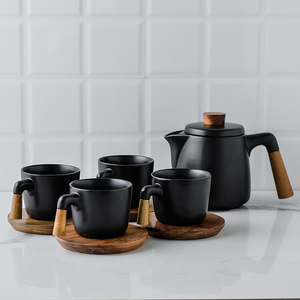

Vitrified porcelain, bone china, and specialized drip coffee sets crafted for Japanese hospitality and specialty cafes.
Japan represents one of the most sophisticated, quality-conscious, and segmented coffee markets globally. From traditional retro Kissaten (classical Japanese coffee houses) to third-wave specialty roasteries in Omotesando and high-density luxury hotel dining rooms in Ginza, the expectations placed on ceramic coffee sets and serving hardware extend far beyond aesthetics. In Japan, coffee service is an immersive sensory ritual where tactile ergonomics, heat retention geometry, glaze purity, and mechanical durability intersect.
For Japanese B2B buyers—including coffee chain procurement managers, hotel F&B directors, lifestyle brand buyers, and ceramic importers—selecting an overseas coffee set factory involves stringent risk-mitigation criteria. Products must strictly comply with the Japanese Food Sanitation Act (Ministry of Health, Labour and Welfare), withstand thousands of cycles in commercial dishwashers, and display zero thermal crazing under extreme temperature deltas (ΔT ≥ 140°C).
"In the Japanese commercial market, operational longevity is evaluated alongside visual minimalism. A coffee set must deliver high rim-chip resistance while preserving a silky, non-porous tactile surface that prevents coffee oil stain absorption over years of continuous service."
As domestic manufacturing costs in traditional regions like Arita, Seto, and Mino continue to rise, Japanese enterprise buyers are increasingly seeking reliable OEM/ODM partners in Southeast Asia. Thailand-based manufacturing hubs offer an ideal strategic balance: raw material access to high-grade kaolin clay, European-imported kilns, lower tariff structures, and strict international standard adherence.
Formulated with refined kaolin, quartz, and feldspar fired at 1,300°C. Delivers superior structural density and impact strength designed for high-turnover hospitality environments.
100% compliant with Japanese Food Sanitation Law regulations. Underglaze and in-glaze decorative pigments remain permanently sealed behind scratch-resistant glazes.
Engineered specifically for space-restricted Japanese back-of-house storage. Precision rim tolerances allow secure vertical nesting without glaze abrasion.
To successfully penetrate or expand within the Japanese commercial coffee market, manufacturers must align their product engineering with distinct local usage environments. Below are four key localized application scenarios defining current procurement demand across Japan:
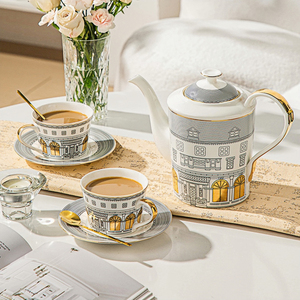
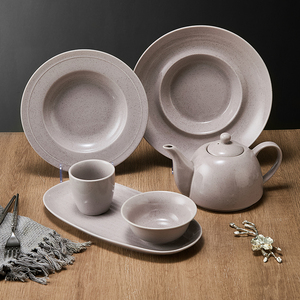
In five-star hotel lounges across Roppongi, Marunouchi, and Kyoto Station, afternoon coffee and tea service demands lightweight, highly translucent bone china or ultra-white vitrified porcelain. Sets such as the Modern European Style Luxury Ceramic Coffee Cup and Saucer Set are specified for their understated elegance. The thermal retention properties ensure double-espresso shots and pour-over micro-lots maintain optimal extraction temperatures (65°C–70°C) during prolonged table presentation.
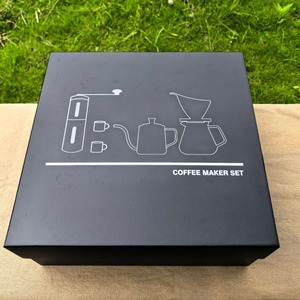
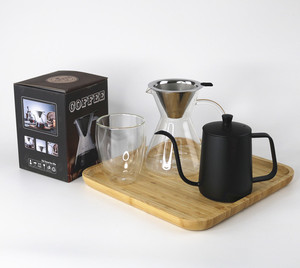
Japan’s third-wave coffee movement heavily emphasizes the visual mechanics of manual brewing. Integrated pour-over kits—like the Wholesale High Quality Hand Drip Brewer Coffee Cups Pot Set and the 5/8 Piece Outdoor Drip Kit—are deployed on brew bars where baristas prepare single-origin beans directly in front of customers. Clean pouring spouts with zero drip-back, ergonomic handles for precise flow control, and heat-resistant borosilicate or ceramic carafes are critical requirements here.
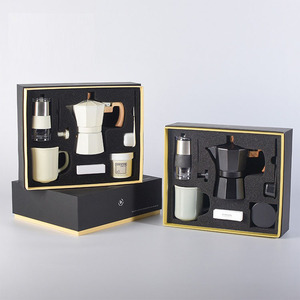
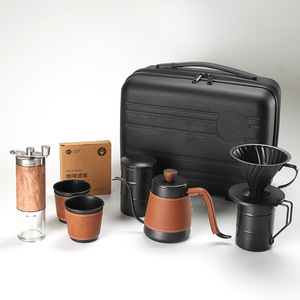
The post-pandemic outdoor lifestyle boom in Japan (popularized by outdoor leisure culture and glamping resorts near Fuji-Hakone) has spurred massive retail and commercial demand for portable, drop-resistant coffee kits. Modular sets containing manual crank grinders, compact mocha pots, and stackable mugs—housed in reinforced EVA travel cases—allow outdoor equipment brands and lifestyle boutiques to offer turnkey coffee solutions to Japanese consumers.
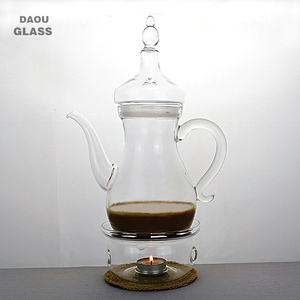
Seasonal corporate gifting (Ochugen in summer, Oseibo in winter) remains a vital revenue stream for Japanese retail chains and department stores (Takashimaya, Isetan, Mitsukoshi). Boxed coffee set gifts featuring eco-friendly porcelain cups, natural wood accents, or clear glass warmers cater precisely to Japanese preferences for ceremonial presentation, unboxing experience, and practical daily utility.
Understanding emerging market shifts is essential for B2B buyers evaluating long-term supply chain partners. Over the next three to five years, four structural trends will dominate Japanese coffee set procurement:
Japanese commercial enterprises are accelerating their ESG commitments. Coffee sets produced using low-carbon firing protocols, recycled clay bodies, and lead-free raw materials receive preferential evaluation during corporate procurement tenders. Sourcing vitrified porcelain from factories committed to closed-loop water filtration and heat-recovery kilns satisfies these growing corporate sustainability benchmarks.
Modern Japanese interior decor for cafes and dining venues favors neutral, matte earth tones combined with clean, unadorned geometry. High-sheen gold trims are increasingly replaced by subtle reactive glazes, satin-finish whites, matte blacks, and natural ceramic textures that showcase the innate quality of the clay.
Given the premium cost of real estate in Japanese urban centers, commercial kitchens operates within tight footprint constraints. Tableware must stack securely without teetering. Foot rings on cups and bottom indents on saucers are engineered to exact millimeter tolerances, ensuring vertical stability in commercial dishwashing racks and storage shelves.
Japanese importers are actively diversifying their supplier portfolios to mitigate geopolitical risks and tariff fluctuations. Thailand has emerged as a premier ceramic manufacturing partner for Japan due to favorable economic partnership agreements (JTEPA / RCEP), resulting in reduced tariff barriers, reliable shipping schedules to Tokyo and Osaka ports, and world-class manufacturing standards.
As a leading ceramic manufacturer established in 1982, PATRA brings over 40 years of specialized expertise in producing hotel-grade porcelain and fine bone china. With fully integrated raw material preparation, body forming, glaze formulation, high-temperature firing, and custom decal decoration facilities in Thailand, we supply premium hospitality operators, coffee roasters, and global distributors across 40+ international markets.
Our coffee sets undergo 1,300°C vitrification, yielding non-porous ceramic bodies with near-zero water absorption (less than 0.05%). This prevents moisture penetration, odor retention, and micro-cracking over thousands of commercial wash cycles. Whether delivering standard white-ware coffee collections or developing bespoke OEM molds and private-label logo applications, our technical engineering team guarantees uncompromised consistency across every production batch.
Addressing the technical, regulatory, and commercial queries most frequently raised by Japanese procurement directors and ceramic importers:
Yes. All ceramic glaze formulations, underglaze colors, and bone china bodies strictly adhere to lead (Pb) and cadmium (Cd) leaching thresholds specified under the Japanese Food Sanitation Law (Act No. 233). Test reports from accredited third-party laboratories (SGS, TUV, or INTERTEK) can be provided with export documentation for smooth Customs clearance at Japanese ports.
PATRA vitrified porcelain is fired at high temperatures (1,300°C) from kaolin, quartz, and feldspar. It offers maximum impact strength, dense mechanical structure, and exceptional durability for high-volume commercial cafes and banquets. Bone china incorporates refined bone ash, producing a whiter, highly translucent, lighter piece with superior heat retention—ideal for luxury hotel lounges and fine-dining afternoon tea services.
Yes. Our in-house R&D and decoration studio specializes in OEM/ODM development. We offer in-glaze and on-glaze decal applications for brand logos, custom rim striping, and custom pantone glaze matching. Additionally, we provide custom gift packaging options—including rigid gift boxes, eco-friendly corrugated kraft packaging, and custom foam inserts—tailored for Japanese retail distribution.
Our ceramic bodies are engineered to withstand extreme thermal shock cycling (ΔT 140°C). Cups can transition safely from commercial dishwasher rinsing cycles directly to espresso extraction without structural crazing or micro-fracturing. Glaze hardness is specifically optimized to resist metal marking caused by stainless steel spoons.
Standard white-ware items maintain flexible MOQs to support initial market testing and specialized cafe projects. Custom OEM shapes or custom-decal orders typically start at 1,000–3,000 pieces per item depending on complexity. Standard ocean freight lead times from Bangkok to major Japanese ports (Tokyo, Yokohama, Osaka, Kobe) range from 12 to 18 days post-production.
We utilize export-grade drop-tested packaging protocols. Items are packed in high-bursting-strength 5-ply outer cartons with internal egg-crate dividers and bubble wrapping. Palletized shipments are stretch-wrapped and corner-board reinforced to withstand handling during transit, minimizing breakage rates below industry benchmarks (<0.5%).
Contact our international B2B export team today to request product catalogs, technical spec sheets, or custom OEM production quotes for your market.
Get a Quote