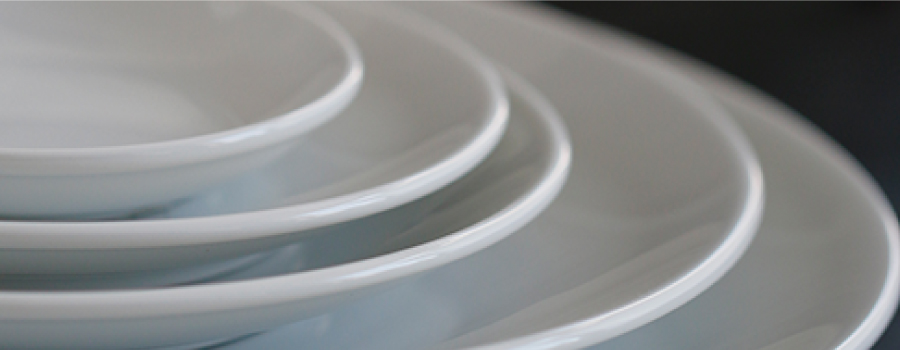
Engineered for high-turnover US hotel dining, steakhouse service, banquet catering, and fine dining establishments.
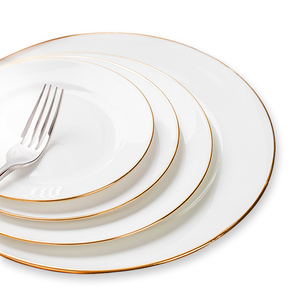 Luxury Hotel
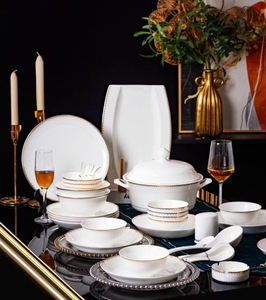 Commercial Grade
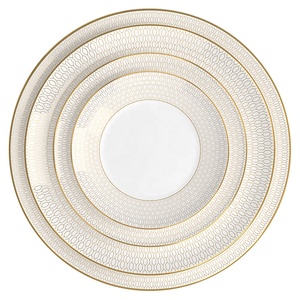 Banquet Preferred
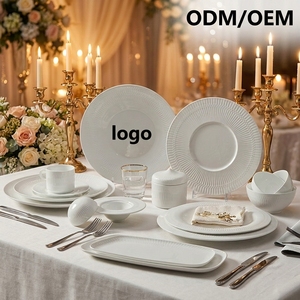 Eco-Friendly OEM
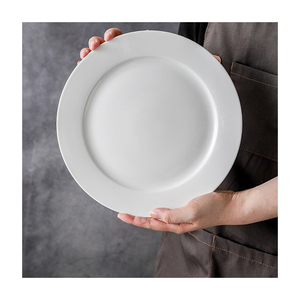 Bespoke Design
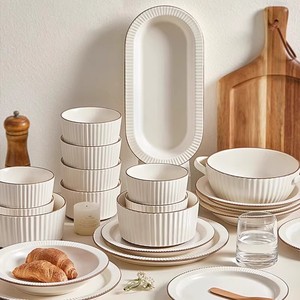 European Ergonomics
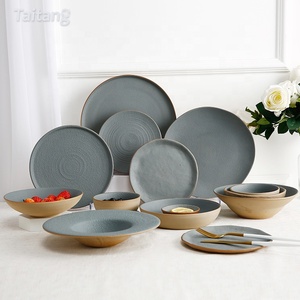 One-Stop Solution
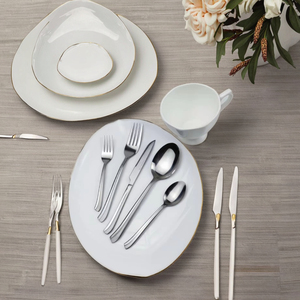 Cutlery Pairing
The North American commercial tableware and hospitality supply market represents one of the most rigorous regulatory and operational environments for ceramic serveware worldwide. Among tabletop holloware, the sauce boat (or gravy boat) requires precise metallurgical, thermal, and geometric engineering. From Thanksgiving turkey gravies and prime rib au jus to modern culinary reduction sauces, these vessels undergo repetitive thermal cycling, high-temperature commercial dishwashing, aggressive chemical sanitization, and heavy physical handling.
For US-based buyers—including food service equipment distributors, hotel chain purchasing procurement directors, restaurant supply houses, and private-label ceramic brands—sourcing sauce boats directly from premier Chinese manufacturing hubs provides a strategic blend of structural durability, custom aesthetic capability, and economic scalability. However, navigating the US import landscape requires strict compliance with US FDA Compliance Policy Guides (CPG 7117.06/07), California Proposition 65 lead and cadmium leaching tolerances, and ASTM C1609 mechanical shock resistance metrics.
Leading Chinese ceramic manufacturers utilize high-alumina vitrified bodies (Al₂O₃ content > 18%) and micro-engineered non-drip spouts that prevent glaze micro-fissuring and oil absorption under heavy commercial microwave and salamander heat lamp use—a primary failure point in budget stoneware imports.
When specifying sauce boats for US distribution, selecting the appropriate body material determines both lifetime replacement rates and table-side presentation quality. Chinese export factories specialize in two dominant body formulations engineered specifically for high-frequency commercial service:
Formulated from a triaxial blend of high-grade kaolin clay, quartz, and feldspar enriched with aluminum oxide, vitrified porcelain is fired in continuous tunnel kilns at temperatures ranging between 1300°C and 1350°C (2372°F to 2462°F). This process eliminates internal porosity (< 0.1% water absorption), fusing the body and glaze into a mono-structural unit. Vitrified porcelain sauce boats excel in high-turnover casual dining, banquet halls, and institutional catering due to their superior chip resistance and high thermal retention.
Incorporate premium synthesized or natural tricalcium phosphate (bone ash) exceeding 45% of the total ceramic slurry formula. Bone china sauce boats are bisque fired, decorated, and glost fired to achieve an ultra-bright whiteness index, high mechanical elasticity, and delicate translucency. While lighter in weight, fine bone china demonstrates exceptional flexural strength, making it the preferred choice for 5-star hotel groups, luxury steak houses, and formal country club dining rooms across the United States.
| Performance Characteristic | High-Alumina Vitrified Porcelain | Fine Bone China (>45% Bone Ash) | Commercial Stoneware (Low-Tier) |
|---|---|---|---|
| Firing Temperature | 1320°C – 1350°C | 1250°C – 1280°C | 1050°C – 1150°C |
| Water Absorption Rate | < 0.05% (Fully Vitrified) | < 0.02% (Zero Porosity) | 1.0% – 3.0% (Porous) |
| Thermal Shock Tolerance (ΔT) | Up to 220°C (428°F) | Up to 180°C (356°F) | Seldom exceeds 120°C |
| Edge Chip Resistance (J/m) | Very High (Rolled Edge Option) | High (Flexural Elasticity) | Poor (Prone to Flaking) |
| Glaze Abrasion Resistance | Mohs Hardness 7+ | Mohs Hardness 6.5+ | Mohs Hardness < 5 |
| US Regulatory Compliance | FDA CPG / Prop 65 Passed | FDA CPG / Prop 65 Passed | Requires Frequent Batch Testing |
To successfully capture market share in North America, sauce boat designs must align with localized dining habits, kitchen workflows, and regional menu offerings across the United States:
Requires large-capacity (12 oz to 16 oz) sauce boats with wide spouts capable of handling thick peppercorn sauces, béarnaise, and chunky au jus without clogging. Thermal retention is vital to ensure sauces remain above 140°F during long table-side service.
Emphasizes stackable, double-handled gravy boats (8 oz to 12 oz) paired with matching underplates (liners). These minimize back-of-house spill risks when banquet servers carry multi-plate trays through crowded ballrooms during Thanksgiving and Christmas galas.
Demands modern European-style mini sauce pitchers (2 oz to 4 oz) featuring narrow, precision-drip spouts for table-side dressing of haute cuisine. Fine bone china with delicate 24K gold or platinum rim decorations elevates the luxury perception.
Utilizes heavy-duty porcelain syrup and gravy dispensers equipped with microwave-safe glazes. Vessels must withstand repeated heating cycles from ambient room temperature to boiling syrup conditions without cracking.
A primary complaint among US restaurant managers regarding inferior gravy boats is the issue of "spout drip"—where residual sauce trickles down the outer wall, staining tablecloths or customer attire. Elite Chinese export factories deploy advanced CAD fluid-dynamic modeling during mold design to overcome this friction point:
Navigating US Customs and Border Protection (CBP) as well as the Food and Drug Administration (FDA) requires importing from factories with rigorous quality management systems. Importers must verify the following export certifications before issuing purchase orders:
FDA CPG 7117.06 (Lead) & 7117.07 (Cadmium): Sauce boats used for hot acidic liquids must pass 24-hour acetic acid leachability testing. Premier factories issue batch-specific Leach Test Certificates from accredited laboratories (SGS, Intertek, or TÜV Rheinland).
California Proposition 65: Requires lead limits below 0.226 ppm and cadmium below 1.85 ppm for lip-and-rim or total food contact areas. Leading Chinese manufacturers utilize lead-free in-glaze stains and electronic firing kilns to guarantee 0.00 ppm lead leaching.
ISO 9001 & BSCI Audit Compliance: Ensures stable production capacity, raw material traceability, and ethical labor practices required by major US retail chains (e.g., Target, Bed Bath & Beyond, Williams-Sonoma).
Established Chinese tableware exporters offer robust Original Equipment Manufacturer (OEM) and Original Design Manufacturer (ODM) workflows for US brands seeking unique product lines: