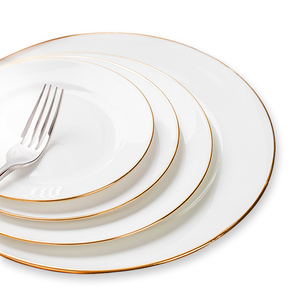

Engineered for extreme durability, non-toxic lead/cadmium compliance, and 5,000+ cycle commercial dishwashing resistance in high-turnover Luxembourg establishments.
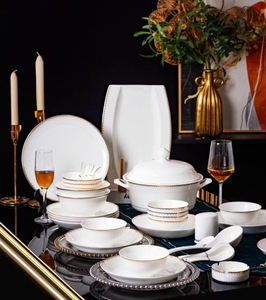
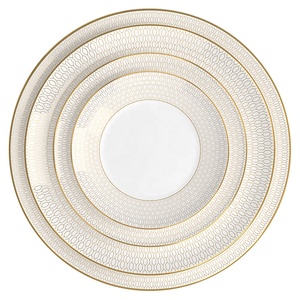
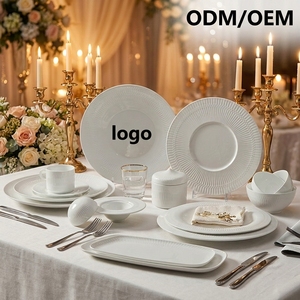
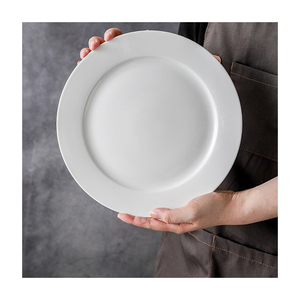
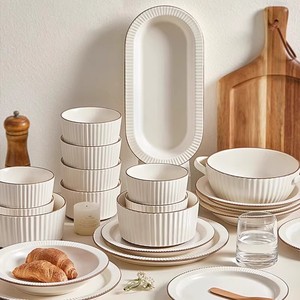
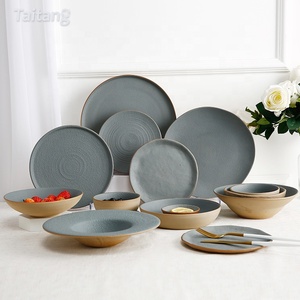
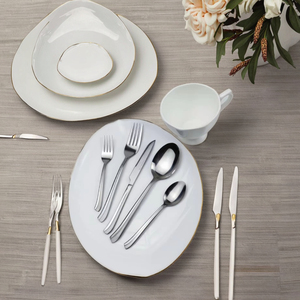
The Grand Duchy of Luxembourg represents one of Europe's most sophisticated and highly regulated HoReCa (Hotel, Restaurant, and Catering) markets. With a flourishing financial district in Kirchberg, a high concentration of Michelin-starred fine dining establishments across Ville Haute and Grund, and major European Union institutional governance dining centers, hospitality operators demand tableware that seamlessly fuses unrivaled aesthetic refinement with rigorous technical endurance.
For B2B procurement managers, hotel project contractors, and luxury tableware distributors importing into Luxembourg, ensuring full compliance with European Union standards—specifically CE certification and EU Regulation (EC) No 1935/2004 on materials intended to come into contact with food—is mandatory. This technical document examines the metallurgical and chemical parameters of high-temperature fired decal porcelain, contrasting on-glaze, in-glaze, and under-glaze transfer technologies, and provides operational benchmarks for enterprise buyers evaluating global porcelain manufacturing partners.
Strict adherence to EU Directive 84/500/EEC and 2005/31/EC. Lead and Cadmium migration limits are tested below 0.1 mg/L, guaranteeing non-toxic security under acidic food contact conditions.
Decal artwork is fused into the liquid glaze layer at 1,250°C–1,300°C. The decoration becomes structurally impervious to industrial alkaline detergent washing and cutlery scratching.
Engineered with reinforced rolled edges and high-density alumina body formulations, yielding impact resistance up to 3.5 J, minimizing operational breakage replacement costs.
Understanding the microstructural differences between dense vitrified porcelain and bone china is vital when specifying dinnerware for high-intensity commercial applications in Luxembourg. PATRA Porcelain’s vertically integrated plant operates dedicated body preparation lines for both media, adhering to ISO 6486 international testing procedures.
| Technical Property | PATRA In-Glaze Decal Porcelain | PATRA Fine Bone China | Standard Commercial Ceramic |
|---|---|---|---|
| Firing Temperature | 1,300°C (Bisque & Glaze) | 1,250°C (Bisque) / 1,150°C (Glaze) | 1,050°C – 1,180°C |
| Body Formulation | Kaolin, Quartz, Feldspar + Alumina | 36%+ Bone Ash, Kaolin, Feldspar | Earthenware / Low-grade Clay |
| Water Absorption (ISO 725) | < 0.05% (Impermeable) | < 0.1% (Fully Vitrified) | 1.0% – 3.0% (Porous) |
| Thermal Shock Resistance | ΔT = 180°C to 200°C | ΔT = 150°C to 170°C | ΔT < 120°C |
| Decal Technology | High-Temp In-Glaze / Under-Glaze | Precious Metal On-Glaze / In-Glaze | Low-Temp On-Glaze Film |
| Dishwasher Life (DIN 50275) | 5,000+ Industrial Cycles | 2,000+ Cycles (Gold/Platinum) | < 500 Cycles (Fading) |
| EU CE / 1935/2004 Lead Migration | ND (Not Detectable < 0.01 mg/L) | ND (Not Detectable < 0.01 mg/L) | Often Exceeds 0.8 mg/L |
From financial executive boardrooms in Kirchberg to heritage châteaux along the Moselle Valley, customized decal porcelain elevates operational identity while standing up to rigorous usage.
Private corporate dining suites and international banking headquarters require understated elegance. Custom gold rim and corporate insignia decals on ultra-white porcelain signal prestige during executive lunches and high-profile negotiations.
Gastronomic culinary venues in Luxembourg’s historic quarter demand complex coupe shapes, wide-rim presentation platters, and bespoke tactile decal textures that enhance culinary art without overshadowing the chef’s visual composition.
Luxury wine estates and boutique resorts along the Moselle require thermal-shock resistant tableware for outdoor garden terraces, wine tasting dinners, and vineyard banquets—demanding zero glaze crazing under shifting temperatures.
Luxembourg’s commitment to European Green Deal initiatives has made product durability a primary ESG metric in procurement. Rather than purchasing cheaper, disposable-grade ceramic options that chip within six months, purchasing directors are adopting total-cost-of-ownership (TCO) models. PATRA Porcelain’s high-alumina vitrified bodies reduce replacement velocity by up to 60% per annum.
While traditional gold-leaf banding required gentle hand-washing, modern commercial fast-service environments in Luxembourg require precious-metal aesthetic looks that are 100% microwavable and commercial dishwasher safe. Utilizing synthetic precious metal oxides fused within the glaze layer, our factory produces metallic luster finishes capable of enduring harsh cleaning agents without tarnishing or corroding.
Luxembourg’s private clubs and historical hotel properties increasingly request heritage pattern revivals and custom monogrammed heraldry. Our Thailand-based in-house design studio produces ultra-high-definition screen-printed transfers with registration accuracy up to 0.05 mm, ensuring crisp execution of intricate crests and geometric borders.
Founded in 1982, PATRA has evolved into one of Southeast Asia's premier tableware manufacturers, serving over 40 export markets across Europe, the Middle East, and the Americas. Operating fully vertically integrated production facilities in Thailand, we control every stage of manufacturing—from raw mineral refinement to artwork decal printing and dual-firing kilns.
Unlike factories that outsource printing, PATRA formulates, screen-prints, and tests all decals in-house. This ensures absolute color fidelity, precise batch-to-batch matching, and immediate prototyping turnaround.
Every lot undergoes 100% visual inspection, thermal shock testing from 200°C to 20°C ice water, edge-impact testing, and chemical leaching verification prior to container loading for European ports.
We archive master molds and color decal profiles for minimum 10-year horizons. Luxembourg hospitality clients can reorder exact matching pieces years after original project installation without color variation.
Clear, authoritative answers regarding CE certification, custom decal sampling, shipping logistics to Luxembourg, and commercial durability compliance.
All PATRA porcelain bodies, glazes, and decal pigments undergo third-party laboratory testing (SGS/TÜV) in accordance with EU Directive 84/500/EEC and 2005/31/EC. We issue official Certificates of Conformity (Declaration of Compliance) confirming Lead and Cadmium release levels are well below permissible European thresholds, ensuring seamless customs clearance at ports such as Antwerp or Rotterdam before transit to Luxembourg.
On-glaze decals are applied over the fired glaze and cooked at lower temperatures (780°C–820°C), making them suitable for delicate precious metals but more vulnerable to strong commercial dishwashing detergent over time. In-glaze decals are fired at 1,250°C–1,300°C; the decal sinks beneath the softened glaze surface, providing absolute protection against abrasion, chemical erosion, and cutlery scratching.
Yes. Our in-house ceramic R&D studio specializes in OEM/ODM custom decal development. Buyers provide vector artwork or Pantone color references. We prepare ceramic decal film proofs and pre-production physical samples for client approval prior to full mass manufacturing.
Sampling and decal proofing typically require 10 to 14 working days. Upon sample approval, full production runs take approximately 30 to 45 days depending on order volume. Sea freight shipping from Bangkok to major Western European ports (Antwerp/Rotterdam) plus inland trucking to Luxembourg takes approximately 28 to 35 days.
PATRA offers both traditional real gold (24k metallic) decoration—which requires specialized gentle dishwashing cycles and is non-microwavable—and modern microwave-safe gold decal formulations engineered from non-metallic inorganic oxides that simulate gold brilliance while remaining 100% microwave and commercial dishwasher safe.
For standard white-ware catalog items, MOQ starts at 500 pieces per item. For custom in-glaze decal projects featuring bespoke logos or patterns, our standard MOQ is typically 1,000 to 2,000 pieces depending on plate diameter and decal complexity, enabling cost-effective screen-printing setup.
Our commercial tableware features optimized rim profiles (rolled edge engineering) and high-density alumina-enriched kaolin bodies fired at 1,300°C. This vitrification process creates an integrated crystalline lattice that absorbs mechanical impact far more effectively than standard domestic ceramic bodies.
Partner directly with a certified high-capacity porcelain manufacturer. Request technical datasheets, order sample collections, or consult with our export engineers for your next hospitality project.
Send an Inquiry