
Precision-manufactured ceramic dinnerware, lidded holloware, and signature buffet accessories tailored for high-turnover hotel banquets and luxury F&B venues.
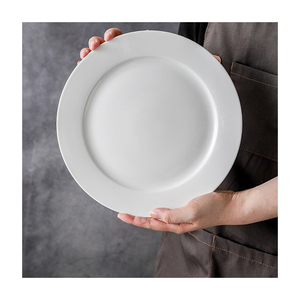
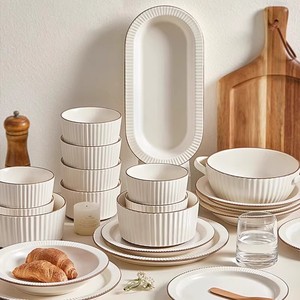
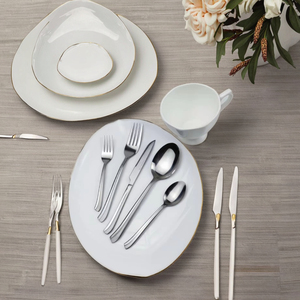
Understanding the material physics, vitrification science, and structural optimization required for professional hospitality operating environments.
Formulated with refined kaolin, feldspar, and alpha-alumina reinforcement, our ceramic body is fired at 1,320°C. This eliminates internal porosity, creating a monolithic crystal matrix (mullite) that resists mechanical impact during heavy banquet service.
Our lead-free, non-porous zircopague glazes undergo double-glazing processes. Achieving Mohs Hardness Grade 7+, the surface withstands aggressive metal cutlery abrasion and acidic commercial wash chemistry without clouding or surface scratching.
Engineered with a low coefficient of thermal expansion (<4.5×10⁻⁶/K). Plates can endure instantaneous temperature deltas of ΔT 180°C, allowing seamless transition from holding cabinets and Salamander grills directly to cold buffet stations.
Selecting the correct ceramic substrate is vital for balancing initial capital expenditure (CapEx) against long-term replacement cycles (OpEx). The matrix below details the mechanical metrics of our commercial buffetware lines.
| Ceramic Category | Alumina Vitrified Porcelain | Fine Bone China (>45% Bone Ash) | Stoneware / Earthenware | Standard Hotel Ware |
|---|---|---|---|---|
| Firing Temperature | 1,320°C – 1,350°C | 1,250°C (Bisque) / 1,150°C (Glaze) | 1,100°C – 1,200°C | 1,220°C – 1,260°C |
| Porosity / Water Absorption | < 0.05% (Impermeable) | < 0.08% (Impermeable) | 1.5% – 3.0% (Absorbent) | 0.2% – 0.5% |
| Modulus of Rupture (Bending Strength) | 180 – 210 MPa | 140 – 160 MPa | 60 – 80 MPa | 110 – 130 MPa |
| Translucency & Whiteness | 82% Whiteness Index | High Translucency / 90% White | Opaque / Matte | 75% – 80% Whiteness |
| Edge-Chipping Resistance | Superior (Rolled Rim Profile) | High (Flexural Toughness) | Low (Prone to Chipping) | Moderate |
| Ideal Operational Use | All-day Dining, Buffet Display, Banquets | VIP Suites, Fine Dining, Fine Banquets | Rustic Bistro, Casual Dining | Standard Catering Services |
Key operational shifts transforming how international hotel chains, casino resorts, and airline caterers specify commercial tableware.
Historical commercial porcelain relied on excessive wall thickness to achieve impact resistance, increasing tray weight for banqueting staff and elevating shipping logistics costs. Modern manufacturing leverages high-purity alumina clays combined with computer-simulated weight distribution. The resulting buffet ware achieves a 15% to 22% weight reduction while reinforcing critical stress zones via engineered rolled rims, dramatically decreasing staff physical strain and reducing annualized transit breakage rates.
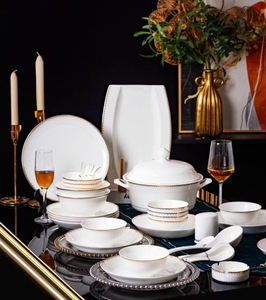
Contemporary buffet presentations have shifted away from monolithic chafing dish setups toward dynamic, multi-tier architectural landscapes. Leading global procurement standards now demand ceramic platters, lidded stew pots, and deep risers that conform to standardized GN (Gastro-Norm) dimensions. Furthermore, ceramic vessels are increasingly engineered with flattened heat-induction bases to interface seamlessly with under-counter induction warming technology, maintaining optimal food safety temperatures without scorching glaze surfaces.
ESG compliance is moving from corporate reporting to mandatory procurement scorecards. Global hospitality groups (such as Marriott, Hilton, and Accor) prioritize suppliers utilizing closed-loop water filtration, heat recovery kilns, and 100% lead and cadmium-free raw materials. Next-generation production facilities utilize natural gas firing with oxygen enrichment, cutting CO₂ emissions per unit produced by up to 30% while guaranteeing compliance with strict California Proposition 65 and EU Regulation No. 1935/2004.
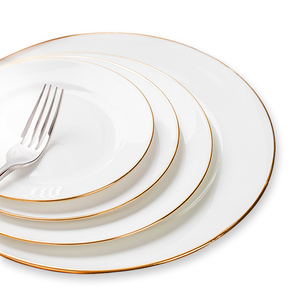
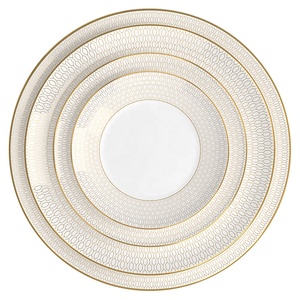
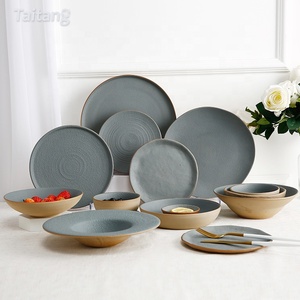
While classic bright white hotelware remains a staple for large-scale operations, specialty F&B concepts increasingly adopt tactile, matte, and semi-matte reactive glazes. Advanced in-glaze technology allows intricate brand logos, gold/platinum rim banding, and organic stone-like textures to be fused *underneath* or *within* the protective glaze layer at temperatures exceeding 1,200°C. This ensures that branded tableware maintains pristine aesthetic fidelity despite daily exposure to harsh commercial dishmachines and chlorine-based sanitizers.
Authoritative technical answers to common questions raised by procurement directors, hotel project managers, and executive chefs.
Alumina porcelain contains added aluminum oxide (Al₂O₃), creating exceptional mechanical bending strength and chip resistance. It is engineered specifically for heavy-duty, high-turnover service like all-day dining and banquets. Bone china incorporates over 45% tricalcium phosphate (derived from bone ash), creating unmatched translucency, lightweight elegance, and superior thermal retention. Bone china is primarily specified for fine dining, executive lounges, and luxury wedding banquets where aesthetic prestige is paramount.
In high-volume commercial venues, standard ceramic failure rates typically range between 20% and 35% annually due to edge chipping, glaze cracking, and mechanical breakage. High-alumina vitrified porcelain reduces annual replenishment rates to under 5% to 8% through high flexural strength (>190 MPa) and impact-resistant rolled edge profiles. Although initial acquisition cost is slightly higher than retail ceramic, the extended operational lifespan significantly lowers CapEx over a 3- to 5-year operating window.
Standard on-glaze metallic bands degrade rapidly under high-temperature commercial dishmachines and alkaline detergents. However, our specialized factory applies advanced in-glaze micro-fusion and protective overglaze capping fired at high temperatures. While white-ware is 100% dishwasher safe without restrictions, gold-rimmed pieces engineered with our commercial glaze formula withstand 1,000+ commercial wash cycles under recommended non-abrasive, neutral-pH liquid detergent protocols.
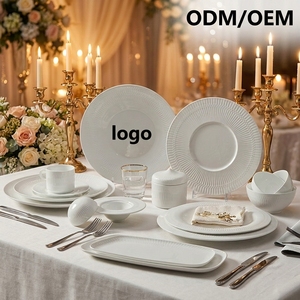
Our technical engineering department provides comprehensive custom development support: 1) 3D digital rendering and SLA rapid prototyping within 5 business days; 2) Physical sample mold production and ceramic firing within 15 days; 3) In-house decal artwork proofing for corporate logos, pantone color matching, and relief embossing; 4) Rigorous lab testing for stacking stability and thermal compliance prior to full mass production.
Our buffet holloware and oven-to-table casserole dishes are formulated with low-expansion synthetic cordierite and high-purity kaolin. They safely absorb thermal shocks of up to ΔT 180°C. This means hot dishes (e.g., 140°C) removed directly from convection holding cabinets can be placed on ice-cooled or ambient buffet display platforms without risk of catastrophic thermal fracture.
Export packaging adheres to ISTA-3A international drop-test standards. Items are individual-wrapped in high-density EPE foam, packed into heavy-duty 5-ply corrugated inner boxes, and outer-crated in moisture-resistant 7-ply master cartons. Palletized shipments are plastic-strapped, corner-boarded, and vacuum-shrink wrapped on heavy-duty fumigated wooden or plastic pallets, resulting in a global shipping transit damage rate of under 0.02%.
For standard white ware items stocked in our central warehouse, the minimum order quantity is 500 pieces per SKU. For custom OEM shape development or bespoke decal applications, the typical MOQ is 2,000 to 3,000 pieces depending on item size. Standard production lead times are 30 to 45 days after artwork and sample approval, with expedited 20-day production runs available for hot-opening project emergencies.
Partner directly with China's leading ceramic engineering manufacturer. Request detailed technical catalogs, order factory-direct physical samples, or consult with our project team.