
Engineered specifically for high-frequency commercial catering, hotel banquet halls, fine dining establishments, and global hospitality distributors.
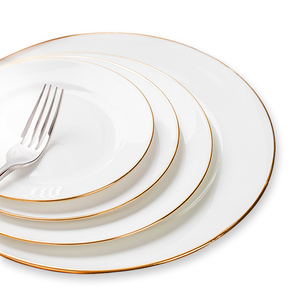
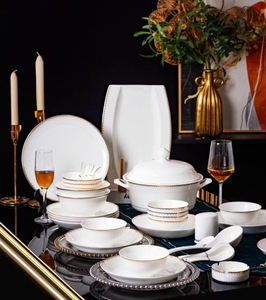
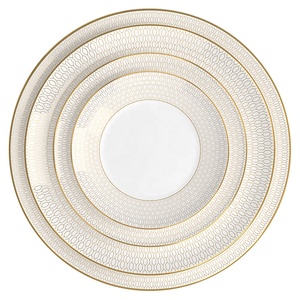
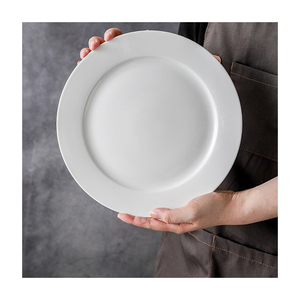
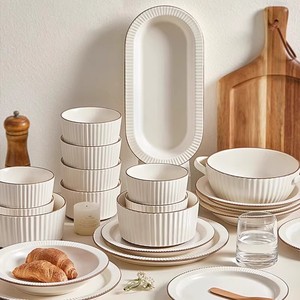
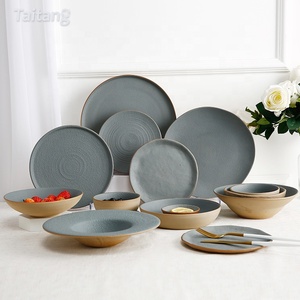
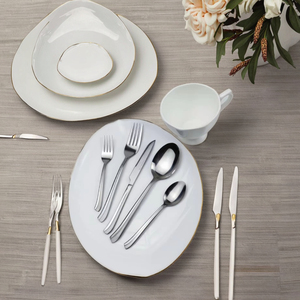
In the commercial hospitality industry (HoReCa), tableware selection directly impacts operational overhead, aesthetic brand positioning, and bottom-line replacement costs. Standard commercial ceramics frequently suffer from premature edge-chipping, glaze crazing, and thermal shock fractures when subjected to high-temperature commercial dishwashing tunnels, intensive banquet stacking, and rapid service turnover.
Reinforced Porcelain (High-Alumina Ceramic) represents the pinnacle of vitrified ceramic engineering. By introducing refined aluminum oxide ($\text{Al}_2\text{O}_3$) content ranging from 15% to over 35% into the kaolin-feldspar-quartz body matrix and firing at temperatures exceeding 1300°C (2372°F), manufacturers produce a dense, non-porous material with superior flexural strength, exceptional impact resistance, and absolute zero water absorption (< 0.1%).
An authoritative evaluation of global manufacturing leaders based on production capacity, material composition, technical compliance (ASTM/BS/ISO standards), customization agility, and export supply chain performance.
| Rank & Manufacturer | Primary Hub | Alumina Body Grade | Specialization & Strengths | Key Certifications | Export Reach |
|---|---|---|---|---|---|
| 1. PATRA Porcelain | Thailand | High-Alumina Core | Hotel-grade vitrified white ware, premium bone china, custom gold/platinum decal decoration, rolled-edge anti-chip engineering. | ISO 9001, FDA, EU 2005/31/EC | Global (40+ Countries) |
| 2. Bauscher (BHS Tabletop) | Germany | Hard Porcelain | Functional hospital and hotel tableware, high thermal resistance, institutional dining solutions. | DIN EN ISO 9001, ISO 14001 | Worldwide |
| 3. Churchill China | United Kingdom | Super Vitrified | Rustic glaze applications, body durability, high-turnover casual dining plates and coupe bowls. | BS 4034, ISO 14001 | Europe, North America |
| 4. RAK Porcelain | UAE | High-Alumina | Mass production, expansive collection shapes, hotel project contract supply across EMEA. | ISO 9001, HACCP Safe | EMEA, Asia |
| 5. Steelite International | United Kingdom / US | Alumina Reinforced | Lifetime edge chip guarantees on select ranges, heavy-duty commercial restaurant dinnerware. | BS 4034, ASTM C368 | Global |
| 6. Schönwald Ceramic | Germany | Vitrified Hard Body | Architectural shape design, luxury cruise line dinnerware, fine dining hotel collections. | ISO 9001, ISO 50001 | Global |
| 7. Noritake Co., Ltd. | Japan / Sri Lanka | Reinforced Fine Porcelain | Ultra-white aesthetics, precision gilding, airline first-class catering sets, fine luxury dining. | ISO 9001, JIS Standard | Asia-Pacific, USA |
| 8. Pillivuyt | France | Culinary Porcelain | Oven-to-table cookware, exceptional thermal shock endurance, specialized culinary serveware. | French Craft Heritage | Europe, North America |
| 9. Rosenthal Commercial | Germany | Fine Bone & Porcelain | Avant-garde designer tableware, Michelin-star plating solutions, premium luxury hospitality. | ISO 9001, ISO 14001 | Worldwide |
| 10. Guangdong Ceramic Alliance | China (Chaozhou/Jingdezhen) | Standard & Reinforced | High-volume wholesale OEM/ODM manufacturing, broad price-tier offerings, custom mold tooling. | ISO 9001, GB Standards | Global Wholesale |
Understanding the microstructural mechanics of reinforced porcelain is essential for procurement directors seeking to balance initial unit purchasing costs with Total Cost of Ownership (TCO).
Standard hard porcelain typically consists of 50% Kaolin (china clay), 25% Quartz (silica), and 25% Feldspar. During high-temperature firing, quartz acts as a structural filler, while feldspar melts to form a glassy liquid phase that fills interstitial voids.
In contrast, Reinforced Porcelain incorporates calcined alumina ($\text{Al}_2\text{O}_3$) partially or fully replacing free quartz grains. Alumina features a significantly higher Modulus of Elasticity ($E \approx 300-400 \text{ GPa}$) and superior mechanical hardness compared to quartz. During vitrification at 1300°C–1380°C, the alumina particles form an interconnected crystalline network (mullite crystals) embedded within the silicate glass matrix. This microstructural reinforcement acts as a crack-arresting mechanism: when impact stress strikes the plate edge, micro-cracks are deflected and halted by the dense alumina phase, preventing catastrophic shattering or edge chipping.
Commercial tableware performance is validated through strict laboratory testing standards:
The durability of reinforced tableware relies equally on the glaze chemistry. High-firing lead-free glazes are formulation-matched to the thermal expansion coefficient of the underlying high-alumina body. This precise coefficient matching eliminates internal glaze tension, rendering the surface immune to surface cutlery scratching (metal marking caused by stainless steel cutlery transfer) and industrial chemical degradation from aggressive automated dishwashing chemicals.
As sustainability mandates, labor efficiency demands, and modern gastronomy evolve, procurement strategy must align with next-generation manufacturing technology.
Traditional chip-resistant plates relied on heavy wall thickness. Modern R&D now utilizes nano-dispersed alumina to achieve thinner, lighter profiles without compromising mechanical strength—reducing server fatigue and transport fuel consumption.
Global hotel chains are auditing scope 3 carbon emissions. Leading manufacturers are transitioning to hydrogen-blend roller hearth kilns, heat-recovery systems, and zero-solid-waste ceramic reclamation loops.
Post-pandemic hygiene standards require advanced protection. Silver-ion ($\text{Ag}^+$) embedded glazes provide permanent 24/7 antibacterial action directly on the ceramic surface, remaining intact throughout thousands of commercial wash cycles.
Off-the-shelf white plates are giving way to bespoke tactile textures, satin-matte reactive glazes, and precision laser-engraved or in-glaze logo applications that reinforce boutique hotel identity.
Established in 1982 in Thailand, PATRA Porcelain has grown into one of the world's premier vertically integrated porcelain and bone china manufacturers. By controlling every stage of production—from raw kaolin refining and proprietary body formulation to precision high-temperature firing and in-house decal decoration—PATRA delivers unmatched consistency across batch runs.
In-house design studio, mold tooling, glaze laboratory, and automated kilns ensure tight quality control and rapid prototyping turnaround for project clients.
Proficiency in both heavy-duty vitrified High-Alumina Reinforced Porcelain and translucent High-Bone China allows hotels to source all F&B outlets under a single vendor.
Every coupe plate, rim dish, and lid is engineered with engineered foot profiles for ultra-stable back-of-house stacking, saving kitchen space and eliminating transit breakage.
Our signature gold and platinum rim treatments utilize advanced in-glaze or high-fire over-glaze techniques, extending precious metal lifespan under commercial care.
Key technical inquiries answered by senior ceramic engineers and export supply managers.
Standard porcelain is fired from kaolin, quartz, and feldspar; it is suitable for domestic use but vulnerable to heavy commercial impacts. Reinforced porcelain infuses high percentages of aluminum oxide ($\text{Al}_2\text{O}_3$), resulting in extreme impact strength, mechanical durability, and chip resistance ideal for high-volume banquets, buffets, and casual dining. Bone china incorporates bone ash (phosphate), creating an ultra-white, translucent, lightweight aesthetic of high luxury, preferred for fine dining, executive suites, and VIP banquet settings.
Yes. All unadorned white porcelain and bone china bodies are fully vitrified, 100% dishwasher safe, microwave safe, and thermal-shock resistant for warming ovens up to 200°C. For tableware featuring real gold, platinum, or metallic luster decoration, microwave use is not recommended, and commercial dishwashing should follow our mild-alkaline automated cycle guidelines.
Absolutely. PATRA operates an in-house R&D design laboratory equipped with 3D prototyping and custom decal printing facilities. We support full OEM/ODM development—from corporate logo decal application and custom pantone rim banding to entirely custom shape tooling tailored to a hotel's signature interior concept.
While reinforced porcelain may carry a slightly higher initial purchase price than cheap soft ceramics, its annual replacement rate drops from an industry average of 15%–25% down to under 3%–5%. Over a 3-to-5-year hotel operating cycle, reduced edge chipping and zero breakage downtime yield a significantly lower TCO and major cost savings.
Our products strictly comply with FDA standards for food contact safety, European Union Directive 2005/31/EC (leachable lead and cadmium limits), ISO 9001 quality management, and ISO 14001 environmental safety regulations.
Pre-production digital artwork and physical sample proofs are typically completed within 7 to 14 business days. Bulk container manufacturing lead times generally range between 30 to 45 days upon sample approval and deposit confirmation, backed by optimized export sea-freight packaging.
Connect directly with our engineering and procurement team to request physical product samples, complete catalog pricing, or custom OEM project consultations.