
Engineered for high-turnover hospitality environments: zero porosity, reinforced rim durability, thermal shock resistance, and micro-thin glaze perfection.
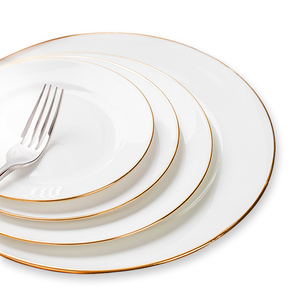
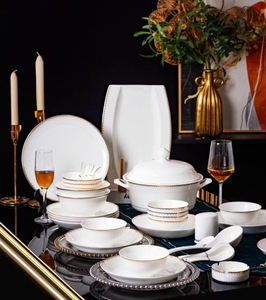
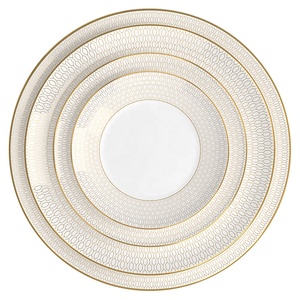
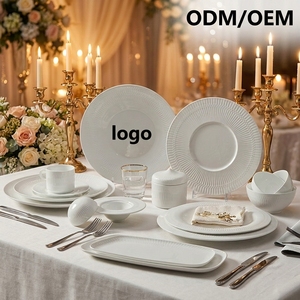
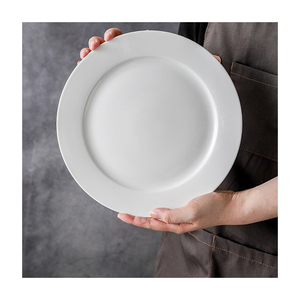
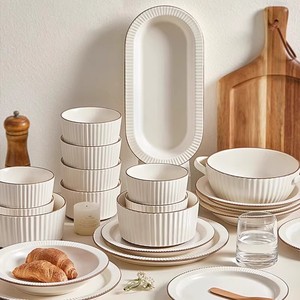
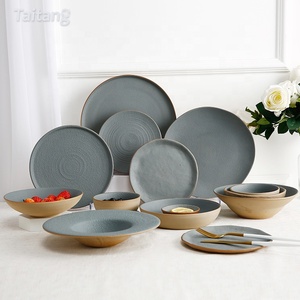
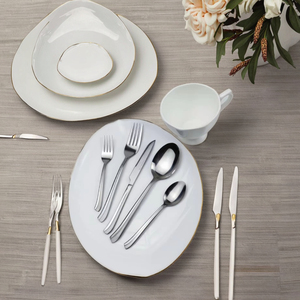
In high-turnover hospitality environments—ranging from luxury star-rated hotels and banquet halls to fast-paced commercial restaurants—tableware selection directly dictates operational overhead. Standard earthenware or low-fired stoneware frequently succumbs to edge chipping, glaze crazing, thermal shock fracture, and sanitary degradation caused by bacterial absorption through porous ceramic bodies. As a premier China wholesale vitrified porcelain supplier and exporter, our manufacturing process solves these micro-structural vulnerabilities through rigorous ceramic chemistry and ultra-high-temperature vitrification.
Vitrified porcelain is achieved through a precise metallurgical mix of refined kaolin clay, feldspar flux, and micro-ground quartz crystals. Fired inside automated computer-controlled tunnel kilns at temperatures ranging from 1,300°C to 1,380°C (2,372°F to 2,516°F), the feldspar melts into a dense liquid glass phase. This molten silica encapsulates the needle-like mullite crystal matrix formed by the kaolin, completely eliminating internal micro-voids upon cooling. The resulting ceramic structure exhibits a water absorption rate of less than 0.1%, drastically surpassing the international commercial requirement of BS EN 1183 and ISO 6486.
Information Gain Insight: The mechanical resilience of commercial crockery does not rely solely on body thickness, but on the density of the inter-crystalline needle-mullite network. Our high-density vitrified porcelain delivers a 35% higher flexural strength (MOR > 120 MPa) compared to standard commercial china, significantly lowering annual replacement ratios for hotel procurement directors.
Water absorption < 0.1% prevents absorption of grease, odors, and bacteria, satisfying strict NSF international health standards.
Withstands sudden temperature variations exceeding 180°C (356°F) without cracking—seamlessly transitioning from freezer to convection oven.
Formulated with micro-crystalline silica glazes rating 7 on the Mohs scale, preventing cutlery marking and dulling under intense commercial washing.
| Performance Metrics | Commercial Vitrified Porcelain | Standard Hotel Bone China | Commercial Stoneware / Earthenware |
|---|---|---|---|
| Firing Temperature | 1,300°C – 1,380°C | 1,220°C – 1,280°C | 1,000°C – 1,150°C |
| Water Absorption | < 0.1% (Fully Vitrified) | < 0.5% (Translucent Body) | 3.0% – 8.0% (Porous Body) |
| Modulus of Rupture (MOR) | 120 - 150 MPa | 90 - 110 MPa | 40 - 65 MPa |
| Edge-Chip Resistance | Exceptional (Reinforced Foot/Rim) | Moderate to High | Low (Frequent Replacements) |
| Commercial Dishwasher Cycle Life | 5,000+ Wash Cycles | 2,000+ Wash Cycles | < 500 Wash Cycles (Glaze Crazes) |
As global hospitality operators restructure their purchasing frameworks to address supply chain agility, environmental sustainability, and culinary presentation, the demand for high-performance vitrified porcelain is evolving rapidly. Key market intelligence highlights four structural shifts driving global wholesale orders:
Global hotel conglomerates are establishing stringent ESG compliance metrics for suppliers. Conventional ceramic kilns relying on high-emission fuels are being phased out in favor of clean energy electric tunnel kilns and hydrogen-blend firing systems. Advanced recycling techniques now allow up to 25% of pre-consumer ceramic scrap (grog) to be re-ground and blended back into the raw kaolin paste, reducing virgin material mining without compromising structural integrity.
Modern culinary gastronomy is shifting away from traditional high-gloss plain white plates toward artisanal organic aesthetics. However, true hand-thrown pottery fails commercial dishwashing tests. The solution lies in industrial reactive glazes—where metallic oxides (iron, copper, cobalt) interact during the 1,350°C vitrification phase to yield unique matte textures and natural color gradations while preserving a non-porous, scratch-resistant surface.
Traditional durable tableware achieved strength through weight, causing physical strain for banquet service staff and inflating international freight costs. Next-generation vitrified bodies incorporate alumina-reinforced minerals, reducing body thickness by 18% while simultaneously increasing mechanical impact resistance by 25%. This weight reduction lowers CO2 emissions during bulk shipping from China export hubs.
Urban restaurant foot-prints and high-density banquet facilities require maximum back-of-house efficiency. Modern shape designs feature engineered foot-to-rim interlocking geometries that prevent horizontal slippage during transit and reduce vertical storage height by up to 30%. Coupe plates with multi-functional rim depths are increasingly replacing traditional multi-piece set configurations.
The manufacturing architecture of China's porcelain export sector has migrated from labor-intensive craftsmanship to high-precision automation and digital quality management. As a leading manufacturer and exporter, our production lines utilize state-of-the-art technologies that guarantee dimensional consistency across high-volume production orders:
Powdered porcelain body is compacted under 250+ bars of uniform hydraulic pressure, ensuring identical density, zero warping, and sub-millimeter dimensional tolerances.
Dual-axis robotic arms apply consistent glaze coatings (0.15mm thickness), eliminating thin edges or heavy drip pooling, guaranteeing smooth cutlery movement.
Precious metal patterns and custom logos are fired at 1,250°C, sinking the decoration directly into the molten glaze layer for absolute dishwasher and chemical protection.
Backed by over four decades of ceramic heritage—rooted in advanced production setups and continuous technical innovation—our enterprise serves as a trusted OEM/ODM manufacturing hub for hospitality brands, international distributors, and project contractors across 40+ countries.
From raw kaolin clay refining and glaze formulation to automated molding, high-temperature firing, and custom decal application, 100% of production takes place within our owned facilities for strict quality control.
Our industrial design team collaborates with global chefs and hotel purchasing consultants, offering 3D CAD modeling, rapid 3D-printed sample molds, and physical ceramic sampling within 7 to 10 days.
We archive master molds and digital glaze color profiles for every custom contract. Hospitality clients can re-order identical replacement pieces 5 to 10 years later with guaranteed color and size matching.
Every production batch undergoes independent lab testing for Heavy Metals (Lead and Cadmium release) in compliance with US FDA, California Proposition 65, EU Directive 84/500/EEC, and LFGB standards.
Key technical and operational answers to support purchasing directors, hospitality supply houses, and wholesale importers during product specification.