
High-performance ceramic baking dishes, fine bone china plates, and commercial hotel dinnerware collections optimized for international export and volume procurement.
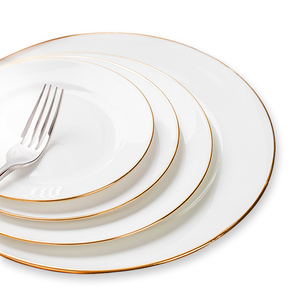
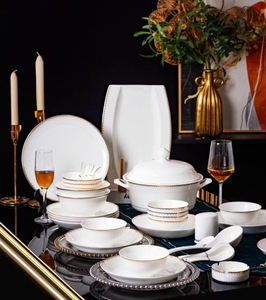
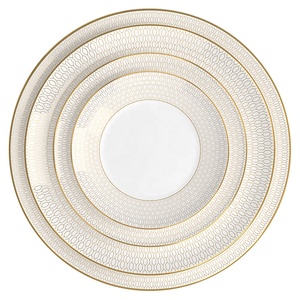
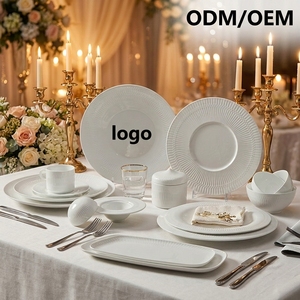
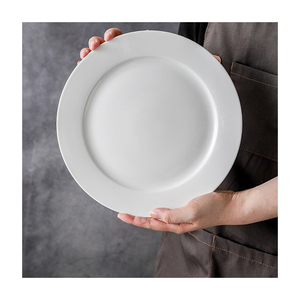
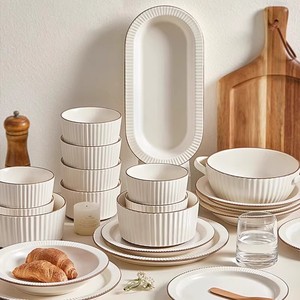
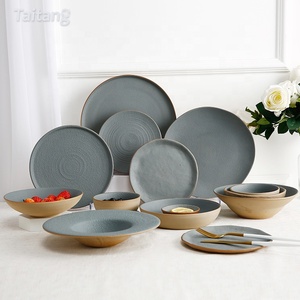
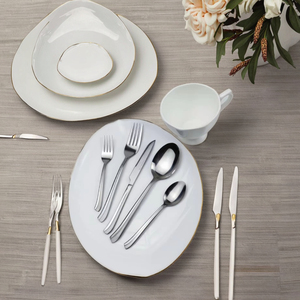
The global commercial kitchen and hospitality industry demands unprecedented rigor in porcelain dinnerware and ovenware manufacturing. As a lead China Wholesale Baking Dishes Exporter, our manufacturing paradigm centers around resolving the dual challenges of commercial food service: extreme mechanical durability and precise thermal shock endurance.
Baking dishes, oven-to-table casseroles, lasagna pans, and commercial porcelain platters must endure violent thermal gradients—transitioning from freezer storage (–20°C) to high-heat convection baking (+250°C) within minutes. Standard domestic ceramics fail under these conditions due to micro-fracturing caused by uneven thermal expansion. Industrial-grade porcelain and specialized stoneware engineered in China utilize high-alumina kaolin clay formulations reinforced with quartz and feldspar fluxes. Fired at temperatures exceeding 1300°C (2372°F), these ceramic bodies achieve complete vitreous transformation, creating an impenetrable crystalline microstructure that guarantees zero porosity and superior mechanical flexural strength.
For international procurement directors, hotel chain buyers, and brand importers, sourcing directly from verified Chinese ceramic manufacturing hubs delivers crucial competitive advantages: optimized economies of scale, extensive OEM mold customization capabilities, rigorous ISO9001/FDA compliance, and cost-effective bulk shipping logistics.
Selecting the optimal ceramic formulation for wholesale procurement requires understanding the technical trade-offs between Vitrified Porcelain, Commercial Stoneware, Fine Bone China, and Borosilicate Bakeware. The table below details critical physical metrics established through standardized laboratory testing (including ISO 6486-1 and EN 1183 thermal shock protocols).
| Material Category | Primary Composition | Max Operating Temp | Thermal Shock Limit (ΔT) | Water Absorption | Dishwasher Endurance | Primary Application Focus |
|---|---|---|---|---|---|---|
| High-Alumina Vitrified Porcelain | Kaolin (50%), Quartz (25%), Feldspar (25%) + Alumina | 300°C / 572°F | ≥ 220°C | < 0.1% (Vitrified) | 5,000+ Commercial Cycles | Oven-to-table bakeware, hotel banqueting, heavy-duty commercial kitchens |
| Reinforced Commercial Stoneware | Ball Clay, Silica, Refractory Chamotte | 260°C / 500°F | 180°C - 200°C | < 0.5% | 3,000+ Cycles | Rustic restaurant cookware, specialized pie dishes, artisan baking bowls |
| Fine Bone China | Tricalcium Phosphate (Bone Ash 42%+), Kaolin, Petuntse | 180°C / 356°F | 140°C | < 0.05% | 2,500+ Cycles (Soft Water) | Fine dining à la carte, luxury hotel suites, executive banquet plating |
| Low-Expansion Borosilicate Glass | Silica Sand, Boric Oxide, Soda Ash | 400°C / 752°F | ≥ 300°C | 0.00% | 4,000+ Cycles | Transparent residential baking pans, industrial kitchen measuring ware |
Rooted in four decades of ceramic craftsmanship and continuous industrial modernizing, our manufacturing infrastructure is built specifically to fulfill high-volume OEM/ODM export orders.
From raw material clay refining, slip casting, and automated high-pressure molding to multi-stage tunnel kiln firing and in-house decal glazing—every step is executed within our controlled facility to guarantee batch-to-batch consistency.
All porcelain baking dishes and dinnerware products undergo strict laboratory testing. Fully compliant with US FDA, EU LFGB, Directive 2005/31/EC, and California Proposition 65 standards for lead-free and cadmium-free safety.
Equipped with 3D CAD modeling studio and precision CNC mold-making capabilities. We convert custom dimensional concepts, relief logos, or specialized rim profiles into physical pre-production samples in under 14 days.
Our high-temperature glaze formulas form a sapphire-hard protective skin that eliminates cutlery marking, glaze pinholes, and edge chipping during severe commercial dishwasher high-temperature rinse cycles.
Engineered drop-test compliant packaging utilizing 5-ply double-wall corrugated cartons, high-density EPE foam cushions, and palletized shrink-wrap wrapping to ensure zero breakage during transoceanic container freight.
Through automated continuous-fire natural gas tunnel kilns, we maintain ultra-efficient fuel consumption and massive daily output, insulating wholesale distributors from price volatility while maintaining strict quality standards.
The commercial ceramic bakeware and tableware export sector is undergoing significant structural shifts driven by evolving culinary practices, operational cost pressures, and environmental regulations. Wholesale buyers and importers must align their procurement strategies with these core macro-trends:
Modern commercial kitchens are phasing out single-use aluminum cookware in favor of aesthetic, highly durable porcelain baking dishes that transfer seamlessly from convection ovens directly to guest dining tables. Sourcing demand is shifting toward modular, nestable rectangular baking dishes and deep casseroles with standardized GN (Gastronorm) dimensions (e.g., GN 1/1, GN 1/2, GN 1/3). This allows seamless compatibility with steam tables, buffet warmers, and commercial refrigeration units while slashing back-of-house washware volume.
While classic bright-white porcelain remains the staple for institutional catering, luxury hotels and boutique dining establishments increasingly demand semi-matte, stone-effect, and reactive glazes. Chinese exporters equipped with advanced glaze R&D labs are applying computer-controlled glaze spraying techniques that mimic hand-thrown artisan pottery while delivering the 100% non-porous, dishwasher-safe performance required for commercial operations.
Global brand owners and European importers are enforcing strict ESG (Environmental, Social, and Governance) supplier audits. Leading export factories in China are adopting closed-loop water recycling systems, heat-recovery units from kilns to dry clay bodies, and incorporating recycled post-industrial ceramic scrap (grog) into body bodies. Sourcing from eco-verified exporters mitigates carbon tariff exposure under upcoming cross-border environmental regulations.
Heavy dishware increases worker fatigue and inflates global freight shipping costs. Technological advances in ultra-pure kaolin clays and high-pressure ceramic pressing now enable manufacturers to reduce dish wall thickness by up to 20% while increasing overall flexural strength. The resulting lightweight porcelain bakeware lowers container shipping weight, minimizes carbon footprints, and facilitates easier handling for service staff.
To maintain a competitive edge in global export markets, leading Chinese manufacturers are pioneering breakthrough material technologies. These innovations address long-standing physical limitations of traditional ceramics under extreme operational conditions:
Incorporating nano-zirconia and titanium oxides into the glaze matrix dramatically increases surface hardness (reaching 7.5+ on the Mohs scale). This prevents grey metal marks caused by stainless steel cutlery scraping across baking dishes during heavy service.
In response to heightened hygiene protocols in healthcare facilities, cruise ships, and institutional catering, in-glaze silver-ion technology actively destroys 99.9% of surface bacteria (such as E. coli and Staphylococcus) throughout the lifetime of the dish.
Computer-aided thermal modeling (FEA) has revolutionized dish base geometry. Reinforced bottom ribs distribute thermal expansion stresses evenly across the ceramic body, increasing thermal shock tolerance ($\Delta T$) up to $250^\circ\text{C}$ without crack propagation.
Critical technical, operational, and commercial insights for international buyers sourcing baking dishes and tableware from China.
For commercial hospitality environments, high-alumina porcelain baking dishes must withstand a temperature differential ($\Delta T$) of at least $200^\circ\text{C}$ to $220^\circ\text{C}$ without crazing or thermal shock cracking. Under standard testing (EN 1183), the dish is heated to $220^\circ\text{C}$ in an oven and immediately submerged into $20^\circ\text{C}$ cold water. Our reinforced vitrified porcelain passes this rigorous test cleanly, making it fully safe for freezer-to-oven and oven-to-table workflows.
The difference lies in raw clay composition, firing temperature, and body density. Porcelain is fired at higher temperatures ($1300^\circ\text{C}+$) using pure white kaolin clay, resulting in a completely vitrified body with less than 0.1% water absorption. It is harder, thinner, lighter, and more durable against chipping. Stoneware is fired at lower temperatures ($1180^\circ\text{C} - 1240^\circ\text{C}$) and retains a water absorption rate up to 0.5%. Stoneware offers a thicker, rustic aesthetic but has slightly lower mechanical impact resistance than porcelain.
Compliance is verified through third-party laboratory testing (such as SGS, TÜV, or Intertek) using Atomic Absorption Spectroscopy (AAS) or Inductively Coupled Plasma (ICP) analysis. Testing follows US FDA CPG 7117.06/07 and EU Directive 2005/31/EC standards. Our export production lines utilize strictly lead-free and cadmium-free glazes and in-glaze colors, ensuring 100% compliance with California Proposition 65 and international food-contact laws.
We offer three primary customization methods: 1) In-Glaze Decals: Fired at $1200^\circ\text{C}+$, fusing the logo beneath the protective glaze for permanent, dishwasher-proof durability; 2) On-Glaze Decals: Fired at $800^\circ\text{C}$, ideal for metallic gold/platinum luxury accents; 3) Embossed/Debossed Molds: Custom physical tooling that presses 3D brand logos or texture patterns directly into the wet clay body prior to firing.
For standard white vitrified porcelain baking dishes in stock shapes, our MOQ starts at 1,000 pieces per item. For fully custom OEM shapes requiring new aluminum mold production, the MOQ is typically 3,000 to 5,000 pieces. Lead times are 10–14 days for sample prototyping, and 30–45 days for full container-load (FCL) production following sample approval.
Edge chipping is minimized by engineering thickened, rounded edge radiuses (rolled rims) rather than sharp $90^\circ$ angles. Additionally, high-alumina clay formulations increase internal mechanical bonding strength, while automated edge-polishing steps remove stress concentrations prior to glaze application.
Standard porcelain and stoneware baking dishes are designed specifically for convection ovens, deck ovens, microwaves, and salamanders—not direct open flame or induction stoves due to localized thermal hot-spots. However, we manufacture specialized flame-proof cordierite-ceramic casseroles capable of handling direct gas flame contact upon request.
We implement ISTA 1A drop-test certified export packaging. Each baking dish is separated by corrugated dividers or bubble sleeves within inner 5-ply cartons, which are then packed onto heavy-duty fumigated wooden pallets, corner-boarded, and shrink-wrapped. Our historical transit breakage rate is consistently under 0.3%. Should transit damage occur due to freight mishandling, damaged items are immediately replaced under our export quality guarantee.
Yes. We encourage full sample evaluation. We supply physical pre-production samples, exact Pantone/RAL color glaze match dips, and decal proof plates for client inspection. Production only commences once formal sign-off and approval of physical reference samples are received.
Partnering directly with a premier China exporter eliminates middleman markup margins (saving 30%–50% on unit costs), provides direct engineering support for custom shape developments, guarantees priority access to kiln capacity, and ensures consistent long-term supply reorders without fear of product line discontinuation.
Whether you require high-turnover hotel baking dishes, luxury bone china dinnerware collections, or custom OEM mold engineering—our technical sales engineers are standing by to provide instant price quotes, product catalogs, and factory audit credentials.