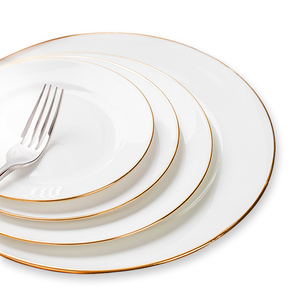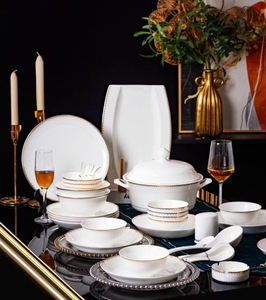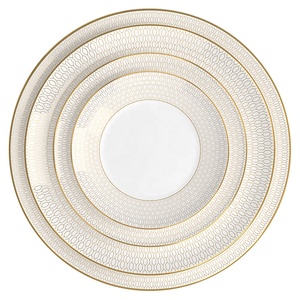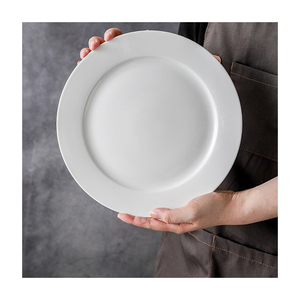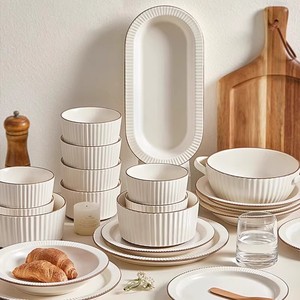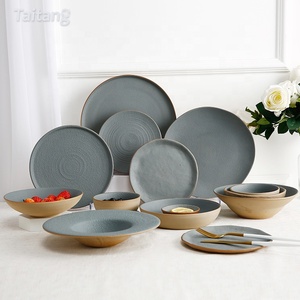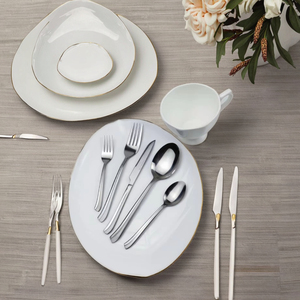
Precision-molded, chip-resistant ceramic ware designed for high-turnover hotels, restaurants, banquets, and airline catering.
In the global hospitality supply chain, procuring beverage service equipment—specifically espresso, cappuccino, tea, and multi-purpose saucer sets—requires a rigorous understanding of ceramic material science, mechanical durability, and regulatory compliance. As a premier manufacturer established in Thailand since 1982 (operating under the global PATRA manufacturing framework), our production lines synthesize raw material purity with precision firing technologies to fulfill the stringent requirements of five-star hotel chains, international restaurant franchises, and airline catering fleets.
CE certification for ceramic tableware served across the European Union and global markets signifies strict compliance with food contact materials safety, specifically evaluating leachable lead (Pb) and cadmium (Cd) levels pursuant to Directive 84/500/EEC and Regulation (EC) No 1935/2004. Beyond chemical safety, commercial-grade saucers must possess structural integrity capable of withstanding the thermal shock of industrial dishwashing cycles exceeding 85°C and the mechanical stresses of rapid back-of-house stacking.
Understanding the structural divergence between high-fired hard porcelain and fine bone china is critical for B2B procurement officers balancing initial unit cost against Total Cost of Ownership (TCO) over a multi-year service lifecycle.
| Performance Metric | Vitrified Commercial Porcelain | High-Bone Ash Fine Bone China | Standard Commercial Stoneware |
|---|---|---|---|
| Firing Temperature | 1,300°C - 1,350°C (Bisque + Glaze) | 1,220°C - 1,280°C (Glaze) | 1,100°C - 1,180°C |
| Body Composition | Kaolin (50%), Feldspar (25%), Quartz (25%) | Tricalcium Phosphate (>45% Bone Ash) | Ball Clay, Fluxing Agents, Silica |
| Water Absorption Rate | < 0.05% (Non-porous, Fully Vitrified) | < 0.10% (Impermeable Body) | > 0.5% to 3.0% (Semi-porous) |
| Mechanical Edge Chip Resistance | Exceptional (High Impact Threshold) | Superior Elastic Tensile Strength | Moderate (Prone to Micro-chipping) |
| Thermal Shock Tolerance (ΔT) | Up to 180°C (BS EN 1183 Certified) | Up to 150°C | Up to 120°C |
| Glaze Hardness (Mohs Scale) | Grade 7.0 (Scratch-Resistant Silica Glaze) | Grade 6.5 (Smooth Mirror Finish) | Grade 5.0 - 6.0 |
A saucer is not merely an aesthetic coaster; it functions as a functional stabilizing platform engineered to prevent beverage spillage during silver-service transportation. Our CAD-engineered saucer profiles incorporate three key mechanical design features:
Direct-from-factory manufacturing integrated with end-to-end quality assurance control.
Fully compliant with EU Regulation (EC) 1935/2004, US FDA CPG 7117.06/07, and ISO 6486-1 standards for heavy metal extraction, ensuring absolute food contact safety.
In-house R&D studio equipped for custom ceramic shape modeling, high-temperature inglaze decal application, and precious metal (gold/platinum) edge gilding.
From raw kaolin refining to high-efficiency tunnel kiln firing, controlling 100% of production in Thailand guarantees color-matching consistency for future reorders.
The global hospitality procurement landscape is undergoing a structural transition driven by environmental mandates, labor cost shifts back-of-house, and evolving dining aesthetics. Sourcing officers must navigate four dominant technological trends shaping ceramic saucer production and export requirements over the coming decade:
Urban hospitality concepts and boutique hotel spaces are restricting back-of-house storage capacity. Modern saucer design is leaning towards "universal foot-wells"—saucers engineered to accommodate espresso, cappuccino, and tea cups within a single profile. This inventory consolidation reduces SKU management overhead for hotel procurement by up to 35%.
European and North American hospitality groups are enforcing strict ESG (Environmental, Social, and Governance) supplier codes of conduct. Forward-thinking ceramic manufacturers are transitioning to heat-recovery kiln system loops and eco-refined clays that lower CO2 emissions per unit by 28%. Choosing CE-certified suppliers utilizing energy-efficient tunnel kilns safeguards hotel brands against future Scope 3 carbon tax penalties.
Post-pandemic hygiene standards demand high-performance surfaces. Next-generation glazes incorporate silver-ion additives and ultra-smooth silica vitrification. These hydrophobic glazes prevent mineral scale build-up from commercial dishwashers, reduce detergent wash temperature requirements, and inhibit bacterial adhesion by 99.9% over extended operational lifespans.
High-volume banquet facilities, cruise ships, and casino resorts are experimenting with passive RFID tags embedded into the base foot of ceramic tableware during the bisque firing stage. This technological innovation enables automated inventory counting during laundering, reducing stock loss and theft while optimizing dishwashing workflow analytics.
Technical clarity for international hospitality buyers, importers, and project managers.
Our saucer sets undergo rigorous laboratory testing in compliance with European standard EN 1388-1 and EN 1388-2 for lead and cadmium release. Furthermore, physical endurance is tested against BS EN 1183 for thermal shock resistance and BS 4034 for water absorption, confirming total vitrification (<0.05% moisture intake).
Yes. While standard on-glaze metallic gilding deteriorates under high-alkaline commercial detergents, our specialized in-glaze and protected overglaze gilding technologies bind precious metals into the ceramic silica structure. When adhering to recommended dishwashing chemical pH levels (pH 7-9), our metallic gold rims withstand hundreds of commercial cycles.
Because we operate a vertically integrated manufacturing facility in Thailand, we control our raw material formulation—mixing precise ratios of high-purity kaolin, quartz, and feldspar in-house. Spectrophotometric color testing is performed on every fired batch to maintain strict whiteness and hue consistency for seamless multi-year inventory replenishment.
Standard white-ware saucer orders typically carry an MOQ of 1,000 units per shape, while custom logo decals or custom-molded shapes range from 3,000 to 5,000 units depending on complexity. Production lead times average 30–45 days post sample approval, supported by ocean freight dispatch from major Thai ports.
Partner with an established manufacturer trusted by international luxury hotel chains, banquet operators, and wholesale distributors worldwide. Download our comprehensive commercial catalog today.
Get Catalog