
Explore our premium hospitality-grade ceramic tableware collections. Formulated for heavy commercial turnover, exceptional rim durability, and full European regulatory compliance.
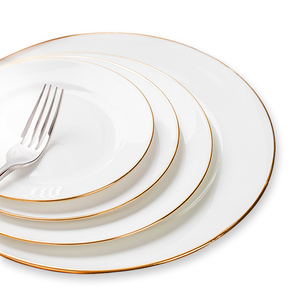
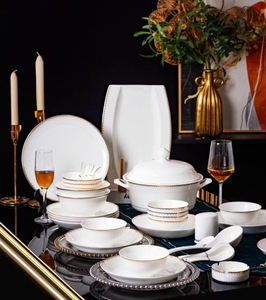
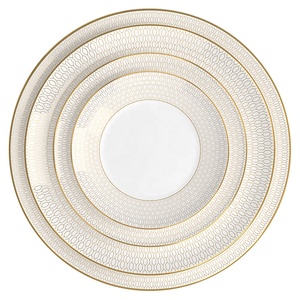
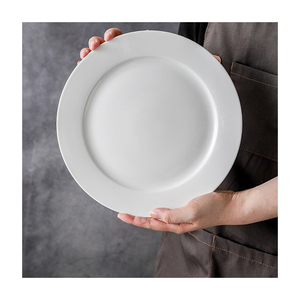
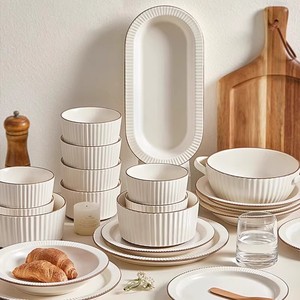
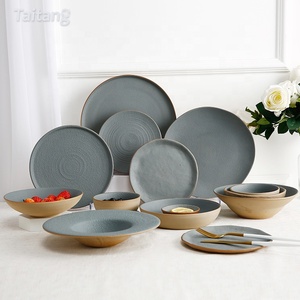
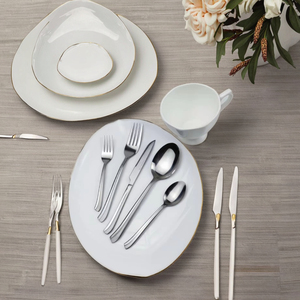
In the global hospitality supply chain, procuring ceramic dinnerware extends far beyond visual aesthetics. Professional food service operators, purchasing executives, and hotel procurement managers require strict compliance with international food contact regulations. A reputable CE Certified Rim Plates Supplier must ensure that every porcelain piece engineered for commercial dining meets demanding chemical, mechanical, and thermal safety thresholds.
CE compliance for ceramic food contact materials within the European Union and associated international jurisdictions focuses heavily on preventing the migration of toxic heavy metals into foodstuff, while validating body stability under extreme operational stress. The standard is anchored in EU Directive 84/500/EEC (amended by Directive 2005/31/EC) and Regulation (EC) No 1935/2004.
Under CE testing criteria (EN 1388-1 and EN 1388-2), flatware and rim plates are submerged in 4% acetic acid for 24 hours at 22°C. To achieve certification, lead (Pb) extraction must not exceed 0.8 mg/dm² and cadmium (Cd) must remain below 0.07 mg/dm² for category 2 surface articles. Advanced vitrification techniques lock metal ions permanently within the silicate glaze matrix.
Rim plates are particularly vulnerable to mechanical impacts along their raised perimeter during high-turnover service and commercial stewarding. CE-compliant manufacturing incorporates high-alumina clay formulations and precision-engineered rolled rims, increasing impact resistance threshold to over 0.15 Joules (tested per ASTM C368 standard protocols).
Commercial kitchens subject plates to rapid temperature fluctuations—from room-temperature plating to 85°C pass holding lights or commercial high-heat sanitizing dishwashers. CE certified rim plates undergo thermal shock testing involving sudden differential shifts (ΔT ≥ 180°C to 200°C) without micro-crazing, cracking, or structural failure.
Understanding the material science behind ceramic bodies enables hospitality teams to select the exact body composition required for specific dining concepts.
| Performance Metric | High-Vitrified Porcelain Rim Plates | Fine Bone China Rim Plates | Standard Commercial Earthenware |
|---|---|---|---|
| Firing Temperature | 1280°C – 1320°C | 1200°C – 1250°C (Glost Firing) | 1000°C – 1150°C |
| Body Formula | Kaolin, Feldspar, Quartz, Alumina | 50% Bone Ash, Kaolin, Cornish Stone | Ball Clay, Silica, Low-Grade Flux |
| Water Absorption Rate | < 0.1% (Non-Porous) | < 0.05% (Impermeable) | 3.0% – 7.0% (Porous) |
| CE Migration Compliance | Zero Leachability Glaze Pass | Zero Leachability Glaze Pass | Vulnerable to Acid Erosion |
| Bending Strength (MOR) | > 140 MPa | > 170 MPa | < 50 MPa |
| Recommended Use | All-Day Dining, Buffets, Banquets | Fine Dining, Executive Suites, Weddings | Casual Domestic Use Only |
As global hospitality operators optimize back-of-house efficiencies and align with strict ESG (Environmental, Social, and Governance) targets, tableware procurement is undergoing structural changes. Strategic sourcing managers are shifting from purely initial-cost evaluation to Total Cost of Ownership (TCO) models.
Leading manufacturers are re-engineering kiln technologies to utilize natural gas-hydrogen blends and waste-heat capture systems. Recycled ceramic grog (reclaimed unfired body material) is increasingly integrated into raw clay slurries, reducing landfill impact while preserving mechanical body strength required for CE certification.
Modern service staff ergonomics and high-density banqueting mandate lighter yet stronger plates. By boosting calcined alumina content in the ceramic matrix, suppliers can create thinner rim profiles with superior structural rigidity—reducing plate weight by 12% to 15% without compromising chip resistance.
High-brightness lighting in luxury hotel dining rooms has driven demand for anti-glare, micro-textured satin glazes. Furthermore, decorated rim plates are moving away from traditional on-glaze gold foils toward high-temperature in-glaze metallic applications that resist harsh sodium hydroxide detergents during commercial dishwashing cycles.
With automated dishwashing, conveyor systems, and robotic sorting entering hotel stewards' rooms, rim plate dimensions are becoming standardized. Uniform rim radii and optimized stackability angles prevent mechanical jams in commercial washing pegs, maximizing drying efficiency and minimizing contact breakage.
As a global pioneer in professional porcelain and bone china tableware manufacturing since 1982, our enterprise (PATRA Porcelain) operates state-of-the-art facilities engineered around quality control, repeatability, and compliance rigor. Headquartered in Thailand, our manufacturing ecosystem controls every phase of production—from raw mineral purification to technical decoration.
We process our own clay recipes in-house using premium kaolin, quartz, and high-grade bone ash. By controlling grain-size distribution and slurry viscosity, we achieve unmatched body density and consistent whiteness, batch after batch.
Our plant operates specialized lines for both high-vitrified porcelain white ware and translucent fine bone china. This flexibility allows global hotel groups to source complete dining solutions—from high-durability buffet platters to delicate fine-dining rim plates—from a single reliable supplier.
Our dedicated design studio develops custom rim geometries, brand logos, and exclusive decorative decal treatments. We provide full digital artwork proofing, pantone-matched ceramic pigments, and pre-production sampling for hotel projects globally.
Exporting to over 40 countries, we maintain strict export packaging standards—utilizing drop-tested double-wall corrugated cartons and customized inner partitions to guarantee safe delivery across ocean freight routes.
Every shipment of CE-marked rim plates can be supplied with a formal Declaration of Compliance (DoC) alongside independent laboratory test reports (SGS, TUV, or Intertek). These document full compliance with EU Regulation (EC) No 1935/2004 and Directive 84/500/EEC for heavy metal migration limits (Lead and Cadmium).
PATRA vitrified porcelain is fired at ultra-high temperatures (up to 1300°C), resulting in a dense body with mechanical strength ideal for high-turnover all-day dining, buffets, and large-scale banqueting. Bone china incorporates bone ash into the body, producing a lighter, highly translucent, ultra-white aesthetic suited for executive fine dining, luxury suites, and high-end à la carte service.
Standard on-glaze gold banding requires careful wash cycles. However, our technical R&D team utilizes advanced in-glaze gold technology and protective flux layers that allow metallic designs to endure hundreds of commercial dishwashing cycles using standard industrial detergents when following our Use & Care guidelines.
For standard white vitrified ware, baseline MOQs start at low threshold volumes per shape. For custom branded logo application or bespoke decorative decal rim designs, MOQs typically start at 500 to 1,000 pieces per item size, depending on ceramic complexity.
A rolled rim features an engineered curvature along the outer edge of the plate, distributing impact kinetic energy across a larger cross-sectional area. This geometry dramatically reduces structural micro-fracturing when plates contact stainless steel prep tables, washing pegs, or adjacent tableware.
Standard white ware items in active production typically ship within 30 to 45 days. Custom shape developments, bespoke color-matched glazes, or intricate decal decoration projects generally require 60 to 75 days, including sample approval phases.
Elevate your hospitality operation with engineered ceramic durability, regulatory compliance, and exquisite design. Contact our global B2B export team today for technical catalogs, product samples, and direct factory pricing.
Contact Us