
Fully vitrified, chip-resistant ceramic and bone china dinner plates rigorously batch-tested under EU Directive 84/500/EEC and Regulation (EC) No 1935/2004.
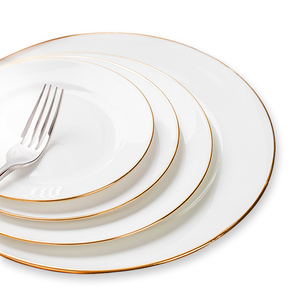
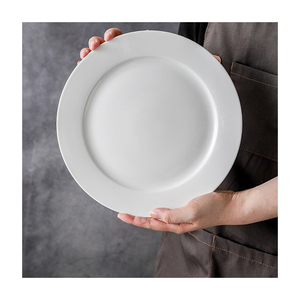
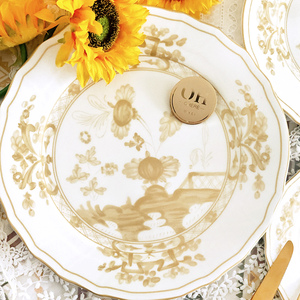
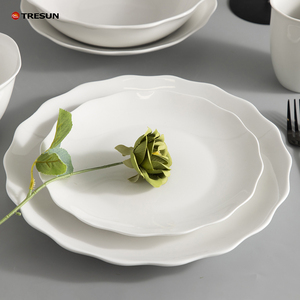
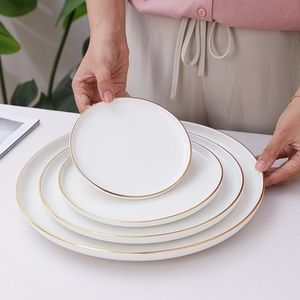
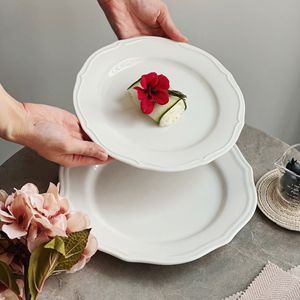
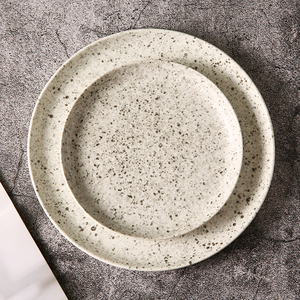
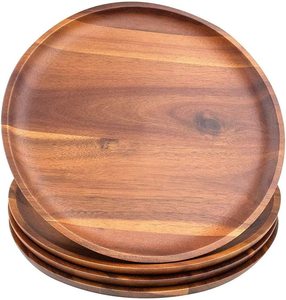
Engineered to surpass standard hotelware requirements through advanced kaolin-feldspar vitrification and strict quality assurance control.
A technical guide for B2B procurement managers, hotel supply chain directors, and global tabletop importers.
While the "CE" mark traditionally applies to industrial machinery and electronics within the European Economic Area (EEA), ceramic dinnerware destined for commercial catering must strictly comply with the underlying EU Food Contact Materials Framework. The term "CE Certified Dinner Plates" in global trade denotes compliance with mandatory European safety standards governing chemical migration and physical integrity.
Key directives regulating global ceramic dinnerware suppliers include:
The primary health hazard associated with low-grade decorated ceramics is the release of toxic heavy metals—specifically Lead ($Pb$) and Cadmium ($Cd$)—derived from unstable glaze pigments or low-temperature decorative decals. Under European Directive 2005/31/EC, analytical testing via Inductively Coupled Plasma Mass Spectrometry (ICP-MS) or Atomic Absorption Spectrometry (AAS) enforces the following limits:
PATRA Porcelain's manufacturing process achieves non-detectable leaching profiles by employing high-temperature in-glaze decoration techniques at 1,250°C to 1,320°C. This physically locks pigments beneath a crystalline glass layer, neutralizing migration risks entirely.
Selecting the optimal body composition based on operational environment, turnover velocity, and thermal strain.
| Technical Parameter | High-Alumina Vitrified Porcelain | Fine Bone China (45% Ash) | Underglazed Stoneware | Acacia Hardwood Ware |
|---|---|---|---|---|
| Firing Temperature | 1,320°C (High-Temperature Sintering) | 1,250°C Bisque / 1,150°C Glost | 1,180°C - 1,220°C | N/A (Kiln Dried Hardwood) |
| Water Absorption (ISO 10545-3) | < 0.05% (Impermeable) | < 0.08% (Highly Vitrified) | 0.5% - 1.5% (Slightly Porous) | N/A (Sealed Surface Coating) |
| Modulus of Rupture (MOR) | > 210 N/mm² (Superior Impact Strength) | > 170 N/mm² (Flexible/Resilient) | 120 - 140 N/mm² | High Tensile (Shatterproof) |
| Edge Chipping Resistance | Exceptional (Rolled Rim Geometry) | High (Ductile Microstructure) | Moderate (Susceptible to Flaking) | Zero Chipping Risk |
| Thermal Shock Tolerance | Delta 200°C (Freezer-to-Oven Safe) | Delta 150°C (Standard Kitchen Handling) | Delta 130°C | Not Microwave/Oven Safe |
| EU CE & Food Contact Status | Fully Compliant (EC 1935/2004) | Fully Compliant (EC 1935/2004) | Varies by Glaze Origin | Resin Compliant (AP 2004/1) |
How technical innovations, circular economy standards, and shifting visual aesthetics are shaping global hotel tableware purchasing.
Global hotel chains (e.g., Marriott, Hilton, Accor) are increasingly evaluating vendors based on Scope 1 and Scope 2 carbon emissions. Progressive manufacturers are transitioning to hydrogen-blend natural gas kilns and recirculating 98% of unfired clay scraps (reclaimed slurry) back into the body mixture, reducing raw material footprint without sacrificing mechanical strength.
Banquet service staff ergonomics and air transport logistics drive the demand for reduced plate weight. By optimizing kaolin-to-quartz ratios and introducing micro-spherical alumina particles, new-generation dinnerware achieves 15-20% weight reduction while exceeding standard edge-chipping thresholds.
Post-pandemic sanitation regulations have spurred the development of silver-ion integrated glazes. Fired directly into the glass matrix at 1,300°C, these nano-coatings continuously inhibit bacterial growth (E. coli, Staphylococcus) by 99.9% while preventing stubborn oil adhesion during automated dishing cycles.
While matte dinnerware remains visually trending in Scandinavian and Asian fusion dining, traditional matte glazes suffered from grey cutlery metal marking. Modern CE-certified manufacturers utilize hard micro-textured glazes engineered with a Mohs hardness of 7+, completely eliminating utensil residue transfer.
Integrating heritage Thai craftsmanship with modern automated tunnel kilns and vertically integrated quality management systems since 1982.
From refined clay preparation and high-pressure iso-casting to in-house glaze preparation, multi-stage firing, and custom decal application, PATRA maintains 100% operational control over the manufacturing sequence. This ensures batch-to-batch color stability, consistent mass, and strict dimensional tolerances for high-density stacking.
Our dedicated design studio works directly with hospitality procurement teams, culinary directors, and global tabletop distributors to execute custom shape developments, bespoke rim profiles, backstamp branding, and precious metal banding (Gold & Platinum) backed by certified food safety test reports.
Essential guidance for commercial tableware buyers, importers, and hospitality procurement teams.
CE compliance for tableware requires a formal Declaration of Compliance (DoC) stating adherence to Regulation (EC) No 1935/2004 and Directive 84/500/EEC. This must be supported by third-party laboratory test reports (from accredited bodies such as SGS, TÜV, or Intertek) demonstrating heavy metal release (Lead and Cadmium) below EU regulatory thresholds using standard acid-etching extraction procedures.
Commercial Hard Porcelain is produced from kaolin, quartz, and feldspar fired at temperatures up to 1,320°C, forming a dense, high-durability structure ideal for high-turnover buffets and banquets. Fine Bone China incorporates 40%–45% tricalcium phosphate (bone ash), yielding superior whiteness, high translucency, lighter weight, and high impact resilience, preferred for fine dining and executive suites.
Edge chipping resistance is engineered through two main methods: (1) Structural Geometry: Incorporating reinforced rolled rims that absorb mechanical impacts during sorting and dishwashing; (2) Material Vitrification: Firing bodies to zero porosity (<0.05% water absorption), ensuring the ceramic matrix lacks internal void spaces where structural micro-cracks originate.
Standard metallic decorations applied on top of the glaze (on-glaze) contain pure metals that reflect microwave radiation and degrade under aggressive commercial dishwashing detergents. However, PATRA offers advanced In-Glaze Metallic Treatments fired at high temperatures, allowing selected decorated lines to withstand commercial dishwashing cycles while retaining brilliance.
Standard white-ware production runs carry an MOQ of 500 to 1,000 units per shape, with lead times ranging from 30 to 45 days ex-factory. Custom shape development requires 15 to 20 days for 3D modeling and physical sampling, followed by 45 to 60 days for mass production after sample approval.
Tableware in commercial kitchens undergoes extreme temperature shifts (e.g., passing from a hot salamander grill directly to a cold washing queue). Plates with low thermal shock resistance suffer internal stress cracking. High-alumina bodies withstand temperature variations ($\Delta T$) of up to 180°C–200°C without cracking, reducing annual breakages and replacement expenditure by up to 35%.
Request technical datasheets, full EU compliance documentation, sample kits, or volume pricing for your upcoming hotel project or distribution network.