
Engineered for high-volume banquets, takeaway logistics, airline catering, and luxury hospitality settings. All products maintain full regulatory compliance for European and global distribution.
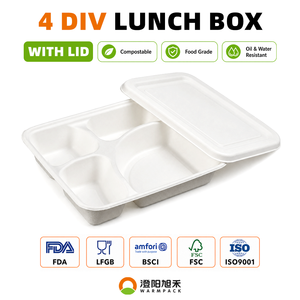
Eco-friendly compostable portioning tray molded from dense sugarcane fiber. Microwave and freezer safe with high oil and water resistance.
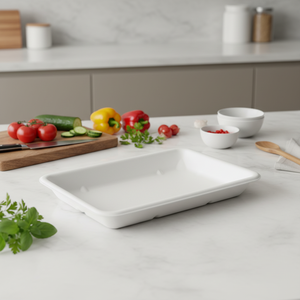
Rigid food-grade catering platter designed for heavy meal distribution, cold cuts, and buffet displays. Chip-resistant and reusable.
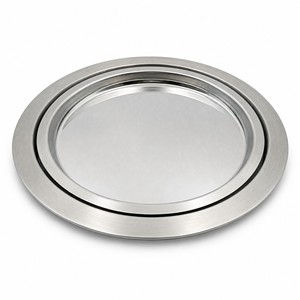
Mirror-polished stainless steel platter for luxury hotels, banquets, and VIP service. Corrosion resistant with reinforced outer rims.
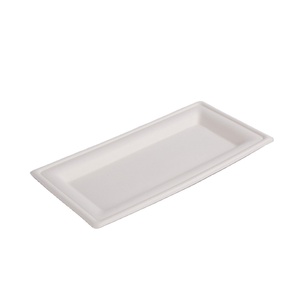
Aqueous-coated disposable paper containers providing superior structural stability under thermal loads. Ideal for quick service and events.
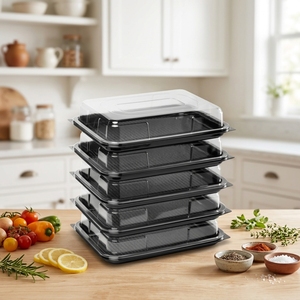
Crystal-clear anti-fog lid fitted over a textured black base tray. Designed for cold presentation platters, gourmet sandwiches, and delis.
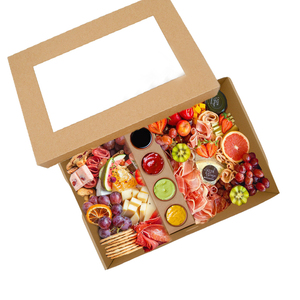
Grease-proof reinforced cardboard catering box for direct-to-venue delivery. Features high stacking strength and viewing window.
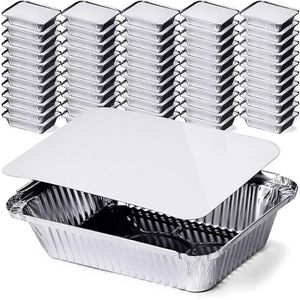
Full and half-size steam table foil pans. Ultra-high temperature tolerance for direct baking, reheating, and thermal insulation.
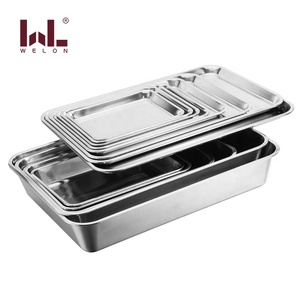
Precision-engineered stainless steel bakery tray with smooth rolled edges for ergonomic handling in high-turnover kitchen lines.
In modern high-volume commercial catering, food service packaging is far more than a simple container. It acts as an essential component of food safety, thermal preservation, operational efficiency, and environmental compliance. Global buyers—including purchasing directors from hotel chains, airline catering services, institutional dining providers, and major B2B distributors—must carefully navigate complex international safety standards when sourcing commercial catering trays.
The **CE certification mark**, while historically associated with machinery and electronic goods, serves within European commercial networks as a symbol of rigorous manufacturer compliance with mandatory European Union directives. In food contact materials (FCM), CE compliance requires strict conformity to **Regulation (EC) No 1935/2004** on materials intended to come into contact with food, alongside **Regulation (EU) No 10/2011** for plastic materials and **Directive 94/62/EC** regarding packaging waste and heavy metal limits. Sourcing from certified manufacturers guarantees that products are free from toxic chemical migration (such as lead, cadmium, phthalates, and per- and polyfluoroalkyl substances/PFAS), providing operational safety for commercial operators.
Every commercial catering tray supplied to EU and North American markets must undergo standardized overall migration limits (OML) and specific migration limits (SML) testing. Food-grade substrates certified under CE standards ensure chemical migration levels remain safely below the mandatory limit of 10 mg/dm² of food contact surface area, regardless of fat, acidity, or temperature conditions.
Selecting the optimal catering tray material requires matching substrate thermodynamics, mechanical strength, and disposal pathways with specific operational environments. Below is an engineering overview of the primary substrates used in contemporary catering tray manufacturing:
Extracted from the fibrous residue of crushed sugarcane stalks, bagasse is compressed under high pressure and temperature (up to 200°C). It yields a high-density molded fiber structure capable of holding liquids up to 100°C without structural softening. Bagasse trays are 100% biodegradable and compliant with **EN 13432** industrial composting standards.
Engineered for endless reuse in banquets, buffets, and hospital food service lines. Utilizing AISI 304 (18/8) or AISI 201 stainless steel alloys, these trays offer exceptional resistance to acidic foods, corrosion, and high thermal stress. Precision-rolled edges prevent bending under heavy loads and facilitate safe handling.
Polypropylene trays provide excellent structural integrity and heat resistance (up to 120°C), making them ideal for microwaveable meal delivery. Clear rPET (recycled Polyethylene Terephthalate) lids feature anti-fog additives to preserve clear visual presentation during cold storage transport.
| Material Substrate | Thermal Resistance Range | Primary B2B Application | CE / EU Food Compliance Status | End-of-Life / Sustainability |
|---|---|---|---|---|
| Sugarcane Bagasse | -20°C to +120°C | Airline, Takeaway, Eco-Events | EN 13432 / Regulation (EC) 1935/2004 | 100% Industrial Composting |
| Stainless Steel (304/201) | -40°C to +300°C | Banquet Buffets, Fine Dining, Hotels | Direct Metal FCM / Directive 2002/72/EC | 100% Infinite Recycling Loop |
| Heavy-Duty Polypropylene | -10°C to +120°C | Hospitality Takeout, Institutional Meals | Regulation (EU) No 10/2011 (Plastic FCM) | Recyclable (SPI Code 5) |
| Heavy-Gauge Aluminium Foil | -40°C to +350°C | Baking, Steam Tables, In-Flight Hot Meals | Council of Europe Resolution CM/Res(2013)9 | 100% Recyclable metal |
| Corrugated Kraft Cardboard | -10°C to +80°C | Catering-to-Go, Pastry & Sandwich Boxes | FEFCO / Directive 94/62/EC Packaging | Biodegradable & Paper Recyclable |
The global commercial catering market is undergoing a major structural transformation driven by stricter environmental legislation, carbon accounting mandates, and shifts in consumer expectations. B2B procurement managers must align their purchasing strategies with several critical industry trends:
Following the European Union’s Single-Use Plastics Directive (SUPD), national authorities across North America and Asia are implementing strict bans on expanded polystyrene (EPS) and single-use non-recyclable plastics. Furthermore, upcoming regulatory frameworks target PFAS ("forever chemicals") historically used for oil and water repellent coatings in molded fiber. Forward-looking factories are deploying next-generation fluorochemical-free aqueous coatings derived from bio-based polymers to ensure complete regulatory compliance without compromising oil proofing.
Hospitality groups and corporate catering operators are increasingly adopting closed-loop circular procurement models. This shift demands catering trays designed either for high-cycle washing durability (such as stainless steel and heavy-duty PP platters) or fully certified organic recovery paths (such as unbleached bagasse and virgin kraft board). Suppliers capable of providing verified **Life Cycle Assessment (LCA)** data and carbon footprint metrics gain a distinct competitive advantage in international tenders.
Raw material costs and international freight fees continue to fluctuate. In response, manufacturing R&D is focusing on structural ribbing and geometric design optimizations. By incorporating micro-embossed perimeter rims, perimeter fluting, and multi-faceted stackable profiles, factories can reduce material mass by up to 18% while maintaining or improving crush resistance during multi-tiered stacked transport.
For food contact materials, official proof of compliance is provided via a legal **Declaration of Compliance (DoC)** issued in accordance with Regulation (EC) No 1935/2004 and Regulation (EU) No 10/2011 (for plastics). This document confirms that the products have undergone overall and specific migration testing at accredited third-party laboratories (such as SGS, TÜV, or Intertek) and meet all safety parameters established by European health authorities.
High-grade sugarcane bagasse catering trays are manufactured using dense interlocking plant fibers treated with food-grade aqueous sizing agents. They effectively hold hot water (up to 100°C) and food oils (up to 120°C) for extended service windows without structural softening or leakage. For multi-day chilled storage or high-acid sauces, lamination with bio-based PLA film provides an additional barrier equivalent to standard plastic trays.
Grade 304 stainless steel contains 18% chromium and 8% nickel, providing superior resistance to oxidation and corrosion from acidic foods (such as tomato sauces, citrus, and dressings). It is recommended for long-term commercial kitchen use and high-frequency dishwasher sanitization. Grade 201 replaces part of the nickel content with manganese, offering a cost-effective, high-strength option suitable for general banquet serving and dry pastry presentation.
Standard PET (Polyethylene Terephthalate) has a heat deflection temperature limit of roughly 60°C to 70°C, making it ideal for cold platters, deli selections, and room-temperature sandwich boxes. For hot food applications requiring clear lids, purchasing managers should specify **CPET (Crystallized PET)** or **High-Heat Polypropylene (PP)** lids, which maintain clarity and shape at temperatures up to 120°C.
Precision-engineered catering trays feature tapered side walls with anti-jamming stacking lugs. This design allows ultra-dense nesting inside shipping cartons, maximizing container payload volume and reducing freight costs per unit by up to 22%. Furthermore, anti-jam features enable rapid separation on automated food packaging lines, directly reducing labor costs.
When selecting a manufacturing partner for commercial catering trays, enterprise buyers should look beyond initial per-unit pricing. Long-term profitability and brand security depend on consistent material quality, strict food safety certification, and dependable supply chain execution. Establishing direct factory partnerships with vertically integrated manufacturers ensures seamless custom production, steady inventory access, and full regulatory transparency across all operating markets.
Connect directly with our engineering and international export team to request physical product samples, custom mold quotes, or complete CE/EU compliance documentation.