
PATRA  |  Porcelain & Bone China Tableware Manufacturer since 1982 — Bangkok, Thailand
0%

Choosing Restaurant white ware porcelain for wholesale is more than selecting bright plates from a supplier catalogue. The ware must survive busy service, repeated washing, hurried stacking, and occasional drops. It should also support the restaurant’s visual identity. American culinary authority James Beard said, “Food is our common ground, a universal experience.” The right porcelain quietly strengthens that experience, from a crisp breakfast plate to a deep bowl holding a steaming curry.

A careful wholesale evaluation begins with the body. Fully vitrified porcelain usually offers low water absorption, strong durability, and a cleaner surface. Check the rim thickness, foot-ring stability, glaze consistency, and resistance to cutlery marks. Hold each sample under clear light. Uneven whiteness can become obvious across a large dining room. Test several pieces in commercial dishwashers, not only in a showroom sink. Small differences matter.

Capacity and dimensions deserve equal attention. A 10-inch dinner plate may look elegant, yet fail when portions grow during peak service. Measure stack height before ordering hundreds of pieces. Confirm replacement availability, carton protection, minimum order quantities, lead times, and documented food-contact compliance. Ask whether the supplier can reproduce the same shape and glaze next year. No checklist is perfect. A sample can pass inspection and still feel awkward in a server’s hand. That practical detail is easy to miss. The strongest purchasing decision balances durability, handling comfort, presentation, and total cost. This guide explains how to compare those factors with clearer questions and fewer expensive assumptions.
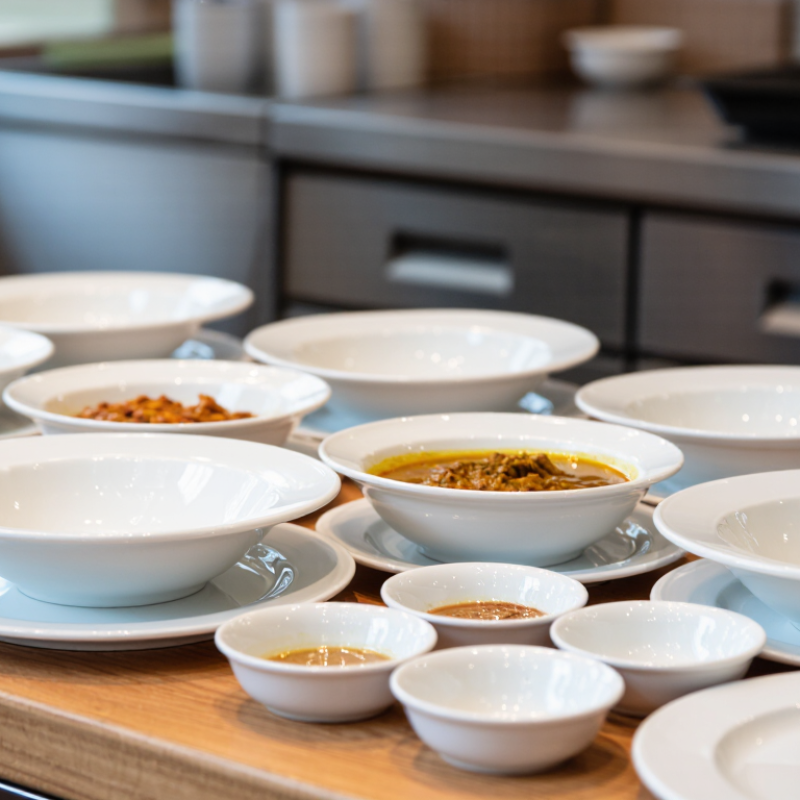
How to Choose Restaurant White Ware Porcelain for Wholesale

Understanding Restaurant White Ware Porcelain Requirements

Choosing restaurant white ware porcelain for wholesale starts with operational demands, not appearance alone. A busy dining room needs plates that stack neatly, survive repeated dishwasher cycles, and remain presentable after months of service. Check rim strength, glaze consistency, thermal shock resistance, and overall weight. A plate that feels elegant may become tiring during fast table clearing.

I have learned to inspect more than a product photograph. Ask for samples and test them in a working kitchen. Stack them beside existing dinnerware. Run several dishwasher cycles, then examine the rims under strong light. Look for fine cracks, uneven glaze, staining, and unstable stacking. Small defects become expensive when multiplied across hundreds of pieces.

Food-contact documentation should match the destination market and intended use. Request clear specifications for porcelain composition, firing temperature, dimensions, tolerance, and available replacement pieces. Confirm carton protection and delivery lead times before placing a wholesale order. A low unit price can lose value when breakage rates rise or matching items disappear.

Appearance matters. Yet durability usually protects the budget better. I once focused too heavily on a bright white finish and underestimated plate weight. The dining team disliked carrying the heavier pieces, even though guests liked their appearance. That lesson stayed. Restaurant white ware should support service speed, staff comfort, menu presentation, and long-term replenishment. Sample testing is not perfect, but it reveals problems that polished catalogs often hide.

Evaluating Porcelain Quality, Durability, and Safety

Choosing restaurant white ware porcelain for wholesale requires more than a bright, flawless glaze. A glossy plate can still hide weak edges or high water absorption. The U.S. FDA Food Code 2022, Section 4-101.11, requires food-contact surfaces to be smooth, durable, nonabsorbent, and easily cleanable. Ask suppliers for batch-specific test reports, not only product photographs. ISO 6486-1:2018 evaluates lead and cadmium release using 4% acetic acid over 24 hours. This test helps verify glaze safety for repeated food contact. Check the laboratory name, testing date, sample code, and measured results.

Durability deserves physical inspection. Stack ten plates, tap each rim gently, and examine chips under bright light. Rub the glaze with a metal utensil, then inspect for gray marks or scratches. A stable foot ring improves stacking and reduces table wobble. Thermal shock testing also matters when plates move from a hot kitchen to a cooler service area. ASTM C373 provides a recognized method for measuring water absorption, although tableware buyers should confirm the suitable specification with an independent laboratory. One weakness remains: a report may represent another production batch. That detail is easy to miss.

Tips: Request three samples from separate batches. Measure weight and dimensions. Inspect the underside for rough spots. Confirm dishwasher and microwave performance through written testing. Keep rejected samples for comparison. No test replaces handling samples.

Comparing Shapes, Sizes, Styles, and Functional Designs

When buying restaurant white ware porcelain wholesale, compare the complete table setting, not one attractive plate. A round coupe plate gives modern meals open space, while a rimmed plate protects sauces during busy service. Square shapes look distinctive, but they can waste shelf space and feel awkward on narrow tables. Oval platters suit shared dishes and roasted foods, yet their storage footprint is easy to underestimate. A useful test is stacking samples beside your existing pans, shelves, and service trays. This exposes problems before a large order arrives.

Size should follow portions, table dimensions, and washing capacity. A 10-inch dinner plate may support generous servings, while a smaller plate can control costs and reduce food waste. Bowl depth matters too. Shallow bowls suit pasta and salads; deeper bowls hold broth with less spilling. Choose styles that match your dining concept, from plain hotelware to lightly textured surfaces. Texture adds character, but heavy relief can trap food and slow cleaning. I have seen attractive designs become unpopular when servers struggle to carry them safely. That detail is easy to miss.

Tips: Request physical samples and run a week-long service trial. Check stack height, rim strength, microwave and dishwasher suitability, glaze consistency, and replacement availability. Ask for exact dimensions, usable capacity, and packed-carton details. Keep a few spare pieces in the opening order; breakage happens, even with careful teams. I would also review the choice after the first month, because real service reveals flaws that showroom lighting hides.

How to Choose Restaurant White Ware Porcelain for Wholesale - Comparing Shapes, Sizes, Styles, and Functional Designs

White Ware Type Shape and Typical Dimensions Approximate Capacity Style and Visual Effect Functional Design Features Recommended Restaurant Use Stacking and Storage Considerations Wholesale Selection Notes
Round Coupe Dinner Plate Round, rimless profile
Common diameter: 10–11 in / 25–28 cm
Height: approximately 1 in / 2.5 cm
Not applicable; flat service piece Contemporary and minimalist; the wide open surface makes food presentation prominent. Rimless design offers a large plating area and reduces sauce accumulation around the edge. Smooth surfaces are easy to wipe clean. Main courses, grilled dishes, pasta, rice dishes, and modern plated menus. Usually stacks efficiently, but the broad face requires more shelf width than smaller plates. Useful as a core plate for modern casual dining. Verify flatness, edge consistency, and resistance to thermal shock.
Round Plate with Rolled Rim Round with raised rolled edge
Common diameter: 9–10.5 in / 23–27 cm
Height: approximately 1–1.5 in / 2.5–3.8 cm
Not applicable; flat service piece Classic and versatile; suitable for traditional, family-style, and institutional settings. Raised rim helps contain sauces and food. The reinforced edge provides better resistance against chipping than a sharp, unprotected edge. Everyday entrées, breakfast plates, buffets, banquets, and high-volume table service. Generally stable when stacked. Confirm that the foot ring and rim are aligned to prevent wobbling. A practical wholesale choice when durability and broad menu compatibility are priorities.
Round Side Plate Round, flat or slightly rimmed
Common diameter: 6–7.5 in / 15–19 cm
Height: approximately 0.75–1 in / 1.9–2.5 cm
Not applicable; small service piece Simple and unobtrusive; matches most white porcelain dinnerware collections. Compact size supports portion control and side-item service. A shallow rim can help contain crumbs, butter, or small garnishes. Bread, pastries, desserts, appetizers, condiments, and small side dishes. Very efficient for stacking and storage. Smaller pieces can be stored in divided racks to reduce handling damage. Purchase quantities should reflect frequent use and replacement needs because side plates circulate quickly in busy operations.
Pasta or Coupe Bowl Wide shallow bowl with sloped sides
Diameter: 9–10 in / 23–25 cm
Depth: approximately 1.75–2.5 in / 4.5–6.5 cm
Approximately 16–24 fl oz / 475–710 ml Contemporary presentation with a broad center and gentle rim; creates a clean frame around the food. Combines plate-like presentation with bowl-like containment. Sloped sides support pasta, grains, salads, and sauced dishes. Pasta, risotto, ramen variations, grain bowls, salads, and entrée portions with sauce. Usually nests well, but the wide diameter requires careful shelf planning and compatible dish racks. Choose a consistent interior depth to maintain portion presentation across different menu items.
Rimmed Soup Bowl Round bowl with defined rim
Diameter: 8–9 in / 20–23 cm
Depth: approximately 1.75–2.5 in / 4.5–6.5 cm
Approximately 12–16 fl oz / 355–475 ml Traditional and highly recognizable; the rim provides a formal table setting appearance. Deep well contains broth and liquid foods, while the rim provides a stable handling area and space for garnishing. Soups, stews, chowders, curries, and liquid-based appetizers. Stacking height can be greater than that of coupe bowls. Confirm nesting clearance before ordering large quantities. Review the usable fill line, as overfilling can increase spill risk during carrying and service.
Stackable Cereal or Dessert Bowl Round bowl with moderate depth
Diameter: 6–7 in / 15–18 cm
Depth: approximately 1.75–2.25 in / 4.5–5.7 cm
Approximately 10–16 fl oz / 295–475 ml Casual and adaptable; works well with breakfast, café, and dessert presentations. Moderate depth supports cereals, fruit, yogurt, desserts, and small sides. A stable foot ring improves handling. Breakfast service, desserts, ice cream, fruit, sauces, and side portions. Designed for nesting; check the stack height per piece to calculate cabinet and dish-pit capacity. Prioritize a durable foot ring and smooth interior finish for frequent commercial washing.
Oval Serving Platter Oval with slightly raised edge
Common sizes: 12–16 in / 30–41 cm long
Width: approximately 8–11 in / 20–28 cm
Not applicable; serving piece Traditional yet flexible; creates an elegant focal point for shared dishes and banquet service. Elongated shape accommodates whole fish, roasted meats, vegetables, and multiple portions. Raised edge helps control juices. Family-style service, buffets, banquets, catering, and shared entrées. Requires wider storage space and careful rack compatibility. Large platters should be stored vertically where possible. Order several sizes to support different portion volumes while maintaining a coordinated table presentation.
Rectangular Presentation Plate Rectangular with straight or gently softened corners
Common sizes: 10–14 in / 25–36 cm long
Width: approximately 5–8 in / 13–20 cm
Not applicable; presentation piece Modern and architectural; emphasizes linear plating and contemporary menu design. Long surface supports tasting portions and multiple components. Slightly rounded corners are easier to clean and less vulnerable than sharp corners. Small plates, sushi-style service, appetizers, desserts, tasting menus, and food photography. May stack less efficiently than round ware. Confirm rack dimensions and shelf depth before purchasing. Best used as a complementary style rather than the only plate format in a high-volume collection.
Ramekin or Sauce Dish Small round bowl, often straight-sided
Diameter: 2.5–4 in / 6–10 cm
Height: approximately 1–2 in / 2.5–5 cm
Approximately 2–6 fl oz / 60–180 ml Functional and understated; supports neat condiment presentation. Compact cavity contains sauces, dips, dressings, butter, toppings, and measured ingredients. Straight sides simplify portion control. Condiments, dipping sauces, mise en place, tasting portions, and dessert accompaniments. Typically nests well, but very small items are easy to misplace. Use storage trays or compartment racks. Standardize capacities around the menu’s portion sizes to reduce sauce waste and improve service consistency.
Handled Mug Cylindrical or gently tapered body with attached handle
Common capacity: 8–12 fl oz / 240–355 ml
Height: approximately 3.25–4.5 in / 8–11.5 cm
Approximately 8–12 fl oz / 240–355 ml Classic café and casual dining appearance; a white surface provides strong contrast for coffee and tea. Handle improves grip and reduces direct contact with hot contents. Thick walls help retain heat but may increase weight. Coffee, tea, hot chocolate, breakfast service, and casual beverage programs. Handles can limit nesting and are common impact points. Select racks that protect handles during transport and washing. Check handle attachment, rim smoothness, microwave suitability, and compatibility with commercial dishwashers.
Porcelain Espresso Cup and Saucer Small cup with matching saucer
Cup capacity: 2–3 fl oz / 60–90 ml
Saucer diameter: approximately 4.5–5.5 in / 11–14 cm
Approximately 2–3 fl oz / 60–90 ml Formal and refined; supports a coordinated coffee-service presentation. Thick porcelain walls help retain heat. The saucer provides space for the cup, spoon, sugar, or a small biscuit. Espresso, concentrated coffee service, after-dinner beverages, and tasting portions. Cups may nest, but saucers require flat, protected storage. Separate cup and saucer handling reduces breakage risk. Confirm that cup and saucer dimensions are matched and that the cup sits securely in the saucer recess.
Rectangular or Square Serving Bowl Square or rectangular body with rounded internal corners
Common length: 8–12 in / 20–30 cm
Depth: approximately 2–3 in / 5–7.5 cm
Approximately 24–64 fl oz / 710–1,900 ml Contemporary and space-defining; creates a structured centerpiece for shared food. Broad base improves stability. Rounded internal corners make scooping easier and reduce food residue during cleaning. Shared salads, vegetables, fries, rice, side dishes, and buffet presentation. Corner geometry can reduce nesting efficiency. Measure storage racks and cabinet openings before selecting large formats. Choose reinforced corners and a stable base when the item will be moved frequently during buffet or catering service.

Dimensions and capacities are common commercial ranges and may vary by manufacturer, firing process, wall thickness, and product collection. Before placing a wholesale order, request physical samples and verify dishwasher, microwave, oven, thermal-shock, stacking, and edge-chip performance.

Checking Wholesale Suppliers, Customization, and Certifications

When choosing restaurant white ware porcelain for wholesale, inspect the supplier beyond a polished website. Request factory photos, production details, and recent export references. A dependable supplier should explain clay composition, firing temperature, quality-control stages, and expected breakage rates. Ask for a pre-production sample before discussing large quantities. Check its weight, rim strength, glaze smoothness, and flatness on a restaurant table. Small defects become expensive when thousands of plates arrive.

Customization needs careful coordination. Suppliers may offer logo printing, embossed patterns, special shapes, or adjusted plate sizes. Confirm whether decoration is fired into the glaze or applied afterward. Ask for color samples under restaurant lighting, not only digital images. Clarify mold charges, minimum order quantities, replacement terms, packaging methods, and production lead times. A custom design can look impressive but may slow replenishment. That risk is easy to overlook.

Certifications should match the destination market and intended food contact use. Request current test reports for lead and cadmium migration, along with food-contact safety documentation. Quality-management certification can support factory consistency, but it does not replace product testing. Verify the laboratory, report date, product description, and tested decoration. Documents can be incomplete. Be cautious. Ask whether the report covers the exact porcelain body and glaze you will purchase. A pilot order remains useful, because shipping damage, shade variation, or stacking problems may appear only in real restaurant conditions.

How to Choose Restaurant White Ware Porcelain for Wholesale

A practical procurement scorecard covering supplier verification, customization, certifications, quality control, and logistics. Scores are weighted out of 100 for wholesale evaluation.

Prioritize suppliers that can provide consistent production capacity, documented food-contact compliance, reliable quality inspection, and customization options that support your restaurant’s operating needs.

Calculating Costs, Order Quantities, and Delivery Conditions

How to Choose Restaurant White Ware Porcelain for Wholesale

Calculating Costs, Order Quantities, and Delivery Conditions

Wholesale pricing means more than the unit price printed on a quotation. Calculate the landed cost per piece, including porcelain, packing, inland transport, insurance, duties, and final delivery. A plate priced at $1.20 may reach your warehouse at $1.65. Request a detailed cost sheet before approving production.

Order quantities should match storage space and realistic restaurant demand. Review monthly usage, replacement rates, and seasonal changes. Add a modest breakage allowance, often three to five percent, depending on packaging quality and handling conditions. For example, 2,000 plates may require an order of 2,080 pieces. My estimates are not always perfect. A trial shipment can expose weak cartons, unexpected damage, or slow unloading.

Delivery conditions need precise wording. Confirm the trade term, loading port, production lead time, inspection stage, and documents included. Ask whether delivery dates begin after deposit, artwork approval, or sample confirmation. These details can change the actual schedule by several days. Inspect a random carton before dispatch, then photograph pallet labels and carton counts. A clear replacement policy should cover shortages and transit damage. Keep extra stock for busy weekends. Small errors become expensive when a restaurant operates daily.

FAQS

What should restaurants check before buying white ware porcelain wholesale?

Check rim strength, glaze consistency, thermal shock resistance, weight, and stacking stability. Appearance alone is not enough.

Why should buyers request physical samples?

Samples reveal problems that photographs hide. Test them beside current plates and run several dishwasher cycles.

How can a restaurant test porcelain durability?

Inspect rims under strong light after washing. Look for hairline cracks, stains, uneven glaze, and unstable stacks.

Does plate weight affect restaurant operations?

Yes. Heavy plates can slow table clearing and tire staff. Elegant appearance may not justify daily lifting.

What supplier information should wholesale buyers request?

Request factory details, porcelain composition, firing temperature, quality checks, export experience, and expected breakage rates.

What details matter when requesting customization?

Confirm decoration methods, color samples, mold charges, minimum quantities, replacement terms, and production times. Digital colors can mislead.

Which documents support food-contact porcelain purchases?

Request current food-contact safety documents and migration test reports. Check the laboratory, report date, porcelain body, glaze, and decoration.

How should the total wholesale cost be calculated?

Include unit price, packing, inland transport, insurance, duties, and final delivery. A low quotation may hide expensive logistics.

How many extra pieces should a restaurant order?

Review monthly use, storage space, seasonal demand, and replacement rates. A modest three-to-five percent allowance may help.

What delivery details should be written clearly?

Confirm trade terms, loading port, production lead time, inspection timing, documents, carton counts, and damage replacement rules. Dates can shift.

Conclusion

Choosing Restaurant white ware porcelain for wholesale begins with understanding the operation’s practical needs, including menu types, serving portions, table capacity, storage space, and washing methods. Buyers should assess porcelain for consistent quality, strong chip and crack resistance, heat performance, food-contact safety, and a smooth glaze that can withstand frequent commercial use. The right combination of plates, bowls, cups, and serving pieces should balance classic appearance with functional shapes, suitable sizes, stable stacking, and easy handling.

A reliable wholesale supplier should offer clear product specifications, quality-control information, relevant certifications, customization options, and dependable communication. Before placing an order, compare unit prices, sample costs, tooling or decoration fees, minimum order quantities, packaging standards, payment terms, lead times, and delivery conditions. It is also wise to calculate replacement rates, shipping expenses, import charges where applicable, and the total cost per usable piece rather than focusing only on the initial price. Careful evaluation helps restaurants achieve attractive table settings, dependable performance, and sustainable purchasing value.

Ethan

Ethan

Ethan is a professional marketing specialist dedicated to helping customers better understand the value, quality, and practical applications of our company’s products. With a strong knowledge of product development, market trends, customer needs, and digital communication, he creates clear,......