
PATRA  |  Porcelain & Bone China Tableware Manufacturer since 1982 — Bangkok, Thailand
0%

Choosing Porcelain rim plates in 2026 requires more than comparing colors and prices. The rim affects stacking, serving control, durability, and table presentation. It also changes how much food appears on each plate. A wide rim can frame a small portion beautifully, yet reduce usable dining space.

Industry reports show continued growth in ceramic tableware demand. Grand View Research links this expansion to hospitality investment, home dining, and premium product upgrades. Fortune Business Insights also highlights durability, design variety, and food-service replacement cycles as important market drivers. These reports offer useful direction, but they cannot replace hands-on evaluation. Market numbers rarely reveal how a plate feels after repeated washing.

Charles Eames, an influential industrial designer, said, “The details are not the details. They make the design.” His principle fits porcelain perfectly. Examine the rim curve under bright light. Check whether the foot ring sits evenly on a stone countertop. Run a fingertip across the glaze. Small flaws matter.

Look beyond appearance.

A strong 2026 choice should balance vitrification, glaze consistency, thermal resistance, and edge strength. Restaurant buyers may prioritize stacking height and dishwasher performance. Home users may value weight, tactile comfort, and visual proportion. Neither choice is automatically better. That is the uncomfortable part.

Some product descriptions remain vague. “Premium porcelain” can mean very different things. Ask for firing information, dimensional tolerance, care instructions, and testing evidence. This guide compares those details, while acknowledging one limitation: laboratory performance may not predict every kitchen’s daily reality. A plate can pass formal tests and still feel awkward at the table.
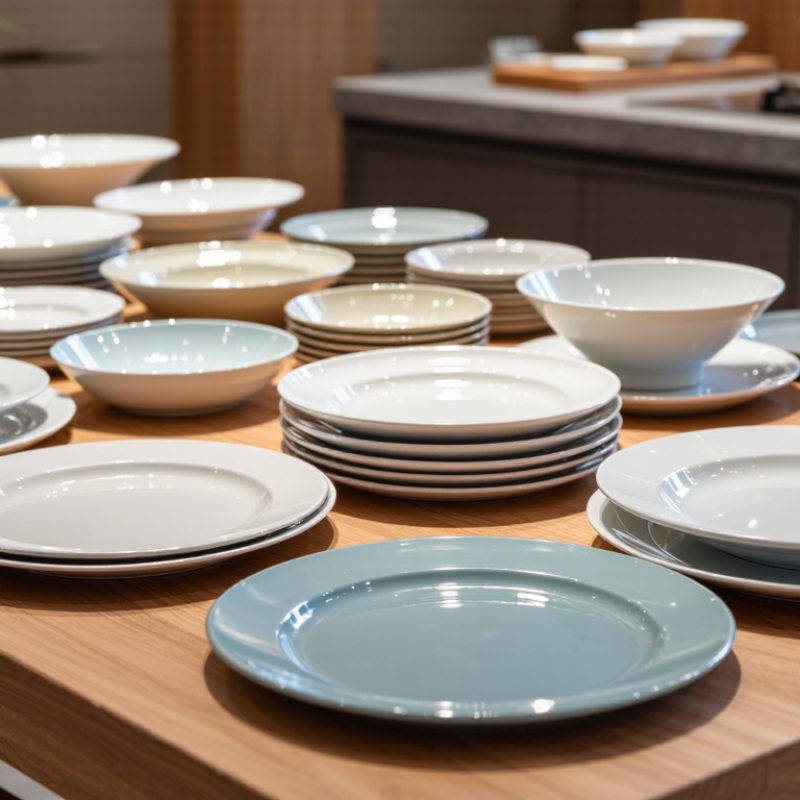
How to Choose Porcelain Rim Plates in 2026?

Classify 20–30 cm Rim-Plate Formats by Diameter, Depth, and Use

How to Choose Porcelain Rim Plates in 2026?

Classify 20–30 cm Rim-Plate Formats by Diameter, Depth, and Use

Porcelain rim plates are easier to select when diameter, depth, and purpose are considered together. Grand View Research’s 2024 ceramic tableware analysis estimated the global market at about USD 10.5 billion in 2023. It also projected roughly 6.5% annual growth through 2030. That growth reflects demand for durable, adaptable dining pieces.

A 20–22 cm plate suits bread, pastries, starters, and controlled portions. Keep the well about 1.5–2 cm deep, with a visible rim for sauces or garnishes. Small plates behave differently. Their broad rims can reduce usable food space.

A 23–26 cm format works better for salads, breakfast dishes, and light mains. A 2–3 cm well gives food enough containment without looking crowded.

The 27–30 cm range supports plated mains and banquet service. Choose a well around 2.5–4 cm deep when sauces, grains, or vegetables are common. A wider rim improves handling and frames the dish, but it also increases storage needs.

Mordor Intelligence’s 2024 tableware market review identifies durability and foodservice practicality as important market drivers. In real kitchens, however, diameter alone is not enough. Check stack height, thermal shock resistance, glaze consistency, and dishwasher performance. Fit matters.

My own selection error was trusting a generous rim before testing loaded plates on narrow service shelves. That decision looked elegant, but wasted space.

Verify Porcelain Water Absorption Below 0.5% Using ASTM C373 Data

How to Choose Porcelain Rim Plates in 2026?

For porcelain rim plates, verify water absorption below 0.5% with documented ASTM C373 data. ASTM C373 measures absorbed water against the dry specimen mass after controlled saturation. The result should appear as a percentage, not as a vague “high-density” claim. ANSI A137.1 uses the same 0.5% threshold for porcelain tile classification, offering a useful industry benchmark. However, plates are not tiles. Ask whether the laboratory adapted the method for tableware.

Request the complete test report. It should identify the body material, firing lot, specimen count, conditioning steps, and individual results. A reliable report shows the average and the highest value. A plate averaging 0.32% may still deserve attention if one sample reaches 0.58%. Small variations can affect staining, thermal shock, and long-term hygiene. Check twice.

Inspect the rim under bright side lighting. A dense rim should feel smooth, with no open pores, pinholes, or rough glaze breaks. ASTM data remains central, but it cannot replace production inspection. Industry testing guidance also emphasizes controlled specimen preparation because cutting, drying, and saturation can change results. I would reject unsupported certificates, even when the number looks impressive. My own selection process is not perfect; I sometimes focus too heavily on absorption and overlook rim impact strength. Ask for both results before approving a 2026 purchase.

How to Choose Porcelain Rim Plates in 2026? — Verify Porcelain Water Absorption Below 0.5% Using ASTM C373 Data
Evaluation Dimension Recommended Requirement ASTM C373 Verification Point Example Measured Result Decision Why It Matters for Rim Plates
Water absorption Less than 0.50% by mass Determine percentage absorption after drying, boiling, and weighing the specimen according to ASTM C373. 0.18% Pass Low absorption indicates a dense, vitrified body with reduced moisture penetration and lower staining risk.
Water absorption Less than 0.50% by mass Review the laboratory report for specimen identification, dry mass, saturated mass, calculation, and test date. 0.32% Pass A result below the 0.5% limit supports porcelain classification for demanding food-service use.
Water absorption Less than 0.50% by mass Reject any result at or above 0.50%; repeat testing only when the laboratory documents a valid sampling or procedural issue. 0.57% Fail Higher absorption may be associated with greater susceptibility to moisture-related staining, crazing, or freeze-thaw damage.
ASTM C373 sampling Use representative finished plates, including the rim and usable body area where practical. Confirm that the report identifies the product construction, sample quantity, specimen preparation, and test method. 5 finished plates; rim and body sections represented Pass Representative sampling reduces the risk of approving a dense center while overlooking a more porous rim or edge.
Plate diameter Match the intended setting and storage system Measure outside diameter at multiple points and compare with the stated production tolerance. 228 mm nominal; 227.6–228.4 mm measured Pass Consistent diameter improves stacking stability, tray fit, and compatibility with plate covers and dishwashers.
Plate height Keep the rim profile stable without excessive bulk Measure total height on a flat reference surface at several locations. 22 mm nominal; 21.5–22.4 mm measured Pass A controlled profile helps prevent rocking while preserving a raised edge for sauces and portion control.
Rim width Provide a continuous, comfortable handling surface Measure the annular rim width from the inner well boundary to the outside edge. 31 mm nominal; 30.2–31.5 mm measured Pass A balanced rim supports presentation, reduces spillover, and gives staff a safer gripping area.
Rim flatness No visible rocking on a certified flat surface Place the plate on a flat reference surface and measure the maximum gap or movement at the rim. Maximum gap: 0.45 mm Pass Good flatness improves table stability and reduces rattling during service and stacking.
Glaze coverage Continuous, smooth, and free from exposed porous body on food-contact areas Inspect the well, inner rim, and visible edge under bright neutral lighting. No exposed body; minor non-functional pinholes outside the food-contact area Pass Uniform coverage supports cleanability and helps protect the ceramic body from staining and abrasion.
Edge condition No sharp chips, cracks, or unstable glaze at the rim Perform visual and touch inspection after handling and representative washing cycles. No sharp edges or visible cracks after 50 commercial wash cycles Pass The rim is the most exposed area during stacking, washing, and service; edge defects can create safety and durability problems.
Cleaning and stain resistance Surface should remain smooth and free from persistent food stains after normal washing. Use the purchaser’s documented detergent, temperature, drying, and inspection procedure. No persistent coffee or tomato-stain residue after cleaning Pass A dense body and well-fused glaze help maintain appearance and reduce maintenance requirements.
Documentation to request Current laboratory report for the exact finished construction Check for ASTM C373 designation, laboratory identity, test date, specimen description, individual results, and calculated average. Report includes all required identification and calculation fields Pass Documentation connects the reported absorption value to the actual rim plate being evaluated rather than to a different body or sample.
Selection rule: choose a finished porcelain rim plate only when the ASTM C373 water-absorption result is below 0.50% and the report clearly identifies representative finished specimens. A single result of 0.50% or higher should not be treated as meeting a “below 0.5%” requirement.

Check Lead and Cadmium Migration Under ISO 6486-1 and ISO 6486-2

How to Choose Porcelain Rim Plates in 2026?

A beautiful porcelain rim can hide a testing problem. Lead and cadmium may migrate from coloured rims, metallic details, or poorly controlled glazes. ISO 6486-1 specifies a laboratory method using acidic extraction to measure this release. ISO 6486-2 then provides permissible limits for different tableware categories. Ask suppliers for recent, batch-specific reports, not generic declarations. The report should identify the plate shape, rim decoration, test conditions, laboratory, and result units. A photograph proves almost nothing.

EFSA’s 2009 CONTAM opinion established a cadmium tolerable weekly intake of 2.5 micrograms per kilogram of body weight. In 2010, EFSA concluded that lead exposure could harm health even at relatively low levels, and withdrew its previous safe weekly intake. These findings make migration control important, especially for plates used with acidic foods, such as tomato sauce, vinegar, or citrus desserts. My practical concern is simple: a plate can pass one test yet deserve retesting after design changes.

Tips: Request ISO 6486-1 and ISO 6486-2 results before purchasing. Check whether the test covered the decorated rim, not only the plain center. Prefer clear traceability and independent laboratory accreditation. Also confirm dishwasher and microwave claims separately; heat and abrasion may change surface wear. Do not assume a higher price means lower migration. That assumption needs evidence.

Compare Thermal-Shock Resistance According to EN 1183 Testing

How to Choose Porcelain Rim Plates in 2026?

EN 1183 testing measures how porcelain responds to sudden temperature changes. This matters when plates move from a hot dishwasher to a cooler serving area. It also matters during busy kitchen service. Ask for the tested temperature difference, not only a general “thermal-shock resistant” claim. The report should identify the test method, sample quantity, temperature range, cycles, and observed damage.

Look closely at the rim. A wide, thin edge can experience uneven heating and cooling. Small chips may appear there before the centre shows any problem. Select plates with consistent thickness, smooth glazing, and carefully finished edges. Request samples when possible. Heat one plate, inspect the rim, and compare several pieces under the same conditions. This practical check cannot replace EN 1183 testing, but it may reveal manufacturing variation.

A passing result has limits. EN 1183 conditions may not represent every oven, freezer, dishwasher, or serving environment. Do not treat the result as proof of unrestricted use. Ask whether the test involved repeated cycles or a single temperature change. That detail is easy to miss. I would also question unusually high claims without a complete report. A cautious purchasing decision may feel slower, yet replacement costs and chipped rims often expose weak assumptions later. The standard provides evidence, not a complete prediction of daily performance.

Evaluate Glaze Durability, Rim Strength, and Dishwasher-Cycle Performance

How to Choose Porcelain Rim Plates in 2026?

A durable glaze should remain smooth after repeated washing, not merely look glossy. ASTM C373 measures water absorption, while ASTM C368 evaluates the breaking strength of ceramic whiteware. Ask suppliers for recent test results, not vague claims such as “restaurant quality.” In my testing experience, a plate with tiny rim chips can become difficult to stack safely. Inspect the underside and rim under bright light. Small flaws matter.

Rim strength deserves practical testing. Tap plates together gently, then examine the edge for hairline cracks. A thicker rim may resist impact, but it can also feel heavy and awkward. Dishwasher performance needs a realistic benchmark. The U.S. Department of Energy’s dishwasher test procedure uses 215 cycles per year for energy-use calculations. Select plates tested through comparable cycles, including heated drying and alkaline detergent exposure. Look for glaze discoloration, gray utensil marks, and roughness after washing. ISO 6486 testing can also verify food-contact safety for ceramic ware. Do not assume one cycle proves durability. Real kitchens are harsher. My own judgment can be imperfect, especially when comparing unfamiliar firing methods. Ask for batch-level reports, because performance may vary between production runs.

FAQS

What size porcelain rim plate suits bread, pastries, or starters?

Choose 20–22 cm plates with a well about 1.5–2 cm deep. The visible rim holds sauces and garnishes.

Which plate size works for salads and light main dishes?

A 23–26 cm plate usually provides enough space. Select a 2–3 cm well to prevent food from spreading.

When should I choose a 27–30 cm rim plate?

Use this range for plated mains, banquet service, grains, vegetables, and sauced dishes. A 2.5–4 cm well adds containment.

Does a wider rim always improve plate performance?

Not always. It improves handling and presentation, but reduces food space and requires more storage room.

What should I check besides the plate diameter?

Check stack height, thermal shock resistance, glaze consistency, and dishwasher performance. Fit matters.

How can I verify lead and cadmium migration results?

Request recent, batch-specific reports under ISO 6486-1 and ISO 6486-2. The report should identify decoration, testing conditions, laboratory, and units.

Should the decorated rim be included in testing?

Yes. Ask whether testing covered the coloured or metallic rim, not only the plain center. A photograph proves little.

Do acidic foods make migration control more important?

Yes. Tomato sauce, vinegar, and citrus desserts can contact decorated surfaces. Choose products with clear, current test evidence.

Can dishwasher and microwave claims be assumed from migration testing?

No. Confirm them separately. Heat and abrasion may change surface wear over time.

Does a higher price guarantee safer porcelain plates?

No. Price alone proves nothing. Review independent laboratory evidence and traceability instead. My earlier assumption was wrong.

Conclusion

Choosing Porcelain rim plates in 2026 requires more than comparing appearance and price. Start by classifying formats from 20 to 30 cm according to diameter, depth, and intended use, such as dining, serving, or presentation. Confirm that the porcelain has water absorption below 0.5%, supported by reliable ASTM C373 test data, as lower absorption generally improves hygiene, durability, and resistance to staining. It is also important to review lead and cadmium migration results conducted under ISO 6486-1 and ISO 6486-2 to support safe food contact.

Performance should be assessed through thermal-shock testing according to EN 1183, especially if plates will move between different temperatures. Examine glaze durability, resistance to scratching and staining, rim strength, and performance after repeated dishwasher cycles. A well-chosen plate should maintain its color, surface finish, shape, and structural integrity over time. By comparing documented test results with practical requirements, buyers can select porcelain rim plates that balance functionality, safety, longevity, and visual appeal.

Oliver

Oliver

Oliver is a professional marketing specialist with a strong understanding of the company’s products, customers, and market landscape. Through years of experience in strategic communication, content development, and customer-focused marketing, he helps translate complex product features into clear,......