Wholesale buyers evaluating Porcelain rectangular platters need more than a polished product photo. They need reliable dimensions, durable glazing, stackability, and consistent supply. A platter that looks elegant but chips easily can disrupt service and increase replacement costs. Small details matter.
The National Restaurant Association’s 2024 State of the Restaurant Industry projected U.S. restaurant sales of $1.1 trillion that year. This figure describes the wider food-service market, not porcelain platter sales. Still, it signals the scale of hospitality purchasing, where presentation and practical performance must work together. The data is directional, not porcelain-specific.
Design authority Charles Eames observed, “The details are not the details. They make the design.” Eames was not a porcelain-market analyst, but his point suits commercial tableware: rim shape, glaze finish, and foot design affect both appearance and handling. No single platter wins every service. That is easy to overlook.
This guide compares seven options for wholesale buyers, focusing on usable formats, visual character, care requirements, and ordering considerations. Look closely at dimensions and stacking claims. Ask suppliers about samples, packing, and replacement availability before committing to volume. Product descriptions can sound reassuring; real-world performance may differ. A careful comparison helps buyers choose platters that suit their menus, storage space, and service pace.
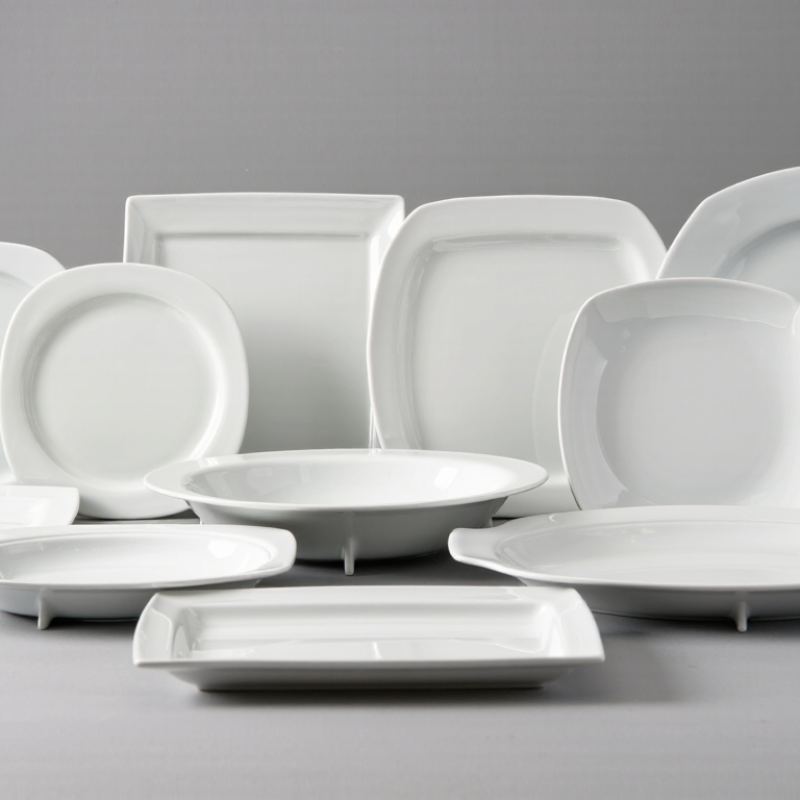
Understanding Porcelain Rectangular Platters and Their Wholesale Uses
Porcelain rectangular platters combine a hard, smooth surface with a shape that uses serving space efficiently. Their elongated profile suits sliced roast, sushi, pastries, or rows of small appetizers. On a buffet, dishes can sit side by side without crowding round plates. The edges also help contain light sauces, though deep rims may make food harder to arrange neatly.
Wholesale buyers often choose these platters for restaurants, hotels, caterers, and retail sets. The right specification depends on daily use: platter length, rim height, weight, glaze finish, and whether pieces can be stacked. Check product samples under actual kitchen lighting. A glossy white glaze can show fingerprints and scratches more clearly than expected. That detail is easy to overlook.
For larger orders, ask suppliers about carton quantities, protective packaging, replacement availability, and consistency between production batches. Request dimensions and weight, not just product photos; a platter that looks generous online may be too large for a standard service tray. Porcelain is generally durable, but no tableware is unbreakable. Test how pieces stack and fit your storage shelves. Even small differences matter. A slightly uneven base can wobble on a busy service counter, so inspect samples before confirming the order.
Common Porcelain Rectangular Platter Sizes for Wholesale Buyers
Illustrative nominal dimensions show how platter length and width scale across a sample wholesale assortment. Actual sizes vary by supplier.
Use these size examples to plan product ranges for different serving needs; confirm exact dimensions and tolerances with the manufacturer before ordering.
Key Materials, Sizes, Shapes, and Finish Options
For wholesale buyers, material consistency matters more than a polished product photo. Ask for the porcelain body’s specifications, firing details, and food-contact documentation. Check samples for pinholes, uneven glaze, and slight warping along the long edges. Small flaws show clearly under bright dining-room lights. They can also affect stacking.
Size should match the menu and the storage rack. Common choices might include platters around 10 by 5 inches, 12 by 6 inches, or 14 by 7 inches; confirm actual measurements with the supplier. A larger platter gives room for shared dishes, but it needs more shelf space and stronger protective packaging. Not every size sells evenly. A trial order can reveal which dimensions suit your customers before you commit to a full case quantity.
Shape and finish change both presentation and handling. Straight corners create a crisp, modern look, while softened corners feel less severe and may be easier to wipe clean. Compare glossy and matte samples in the same lighting; matte glaze can show scuffs differently. Look closely at the rim and underside, too. A stable foot ring and even glaze help the platter sit securely. Still, finish descriptions alone are not enough—inspect physical samples, since color and texture can vary slightly between production runs.
How to Evaluate Platters for Wholesale Purchasing
For wholesale buyers, a rectangular porcelain platter is more than a serving surface. It must arrive intact, stack neatly, and look consistent across a large order. Check the edges. Run a finger along the rim and inspect sample pieces for chips, rough spots, and uneven glaze. Compare several platters side by side; small differences can become obvious on a restaurant table.
Measure usable length and width, not just the widest points. Check the platter’s weight, depth, and stacking stability against how customers will store and serve it. Ask for sample cartons and review the dividers, padding, and carton strength. Packaging may look minor until a shipment arrives with cracked corners.
Ask for evidence. Request written details on production tolerances, order quantities, lead times, and how defects are handled. Verify that any food-contact claims are documented, rather than relying on a sales description.
A polished sample can hide variation in a full production run, so request samples from more than one batch when possible. It takes extra time. Still, checking glaze color, warping, and dimensions early can prevent costly surprises.
One trade-off is easy to miss: heavier platters may feel substantial, yet increase handling and shipping costs. Compare the landed cost per usable piece, including expected breakage, before placing a large order.
Seven Porcelain Rectangular Platters Worth Considering
Seven Porcelain Rectangular Platters Worth Considering
For wholesale buyers, the right platter should suit both the menu and the washing routine. The National Restaurant Association’s 2024 State of the Restaurant Industry projected U.S. restaurant sales at $1.1 trillion, reflecting the scale of a sector where serving ware faces frequent use. Consider seven practical styles: classic white for mixed menus, coupe-edge for a clean presentation, rimmed for sauces, narrow fish platters for long portions, deeper-sided designs for shared dishes, lightly textured surfaces for visual contrast, and stackable shapes that save shelf space. Look closely at the underside, too. A rough foot can scratch shelves, and small differences in dimensions can complicate storage.
Tips: Request samples before placing a bulk order. Test them with your actual racks, dishwasher, and plated portions. Ask suppliers for documented food-contact suitability and care instructions; porcelain performance varies by construction and finish. Check packed-carton weight and replacement availability as well. Small details matter during service. I would not choose texture on appearance alone; residue can collect in deep patterns, and cleaning may take longer than expected. A simpler platter is not always more attractive, but it may be easier to manage.
Comparing Suppliers, Pricing, and Bulk-Order Requirements
For wholesale buyers, a rectangular porcelain platter is a cost-per-use decision, not just a unit-price comparison. The National Restaurant Association’s 2024 State of the Restaurant Industry projected U.S. restaurant sales of $1.1 trillion and employment of 15.7 million people. That scale makes consistent replenishment important. Compare suppliers on the same dimensions, weight, glaze finish, and carton quantity. Ask for a physical sample; a platter that looks slim online may feel heavy in a server’s hand. Small details matter.
Request a written quote showing the minimum order quantity, sample fee, production lead time, packing method, and replacement terms for transit damage. Check whether the quoted price includes export packaging and freight. It often does not. Compare landed cost per usable piece, allowing for a realistic breakage reserve rather than assuming every platter arrives intact. Confirm whether future batches can match the sample’s dimensions and color, and ask how the supplier handles defects. A low quote can still be poor value if cartons are weak or replenishment takes months. I would not treat a single sample as proof of consistent production; that is an easy assumption to make, and a costly one.
Conclusion
Porcelain rectangular platters are versatile serving pieces suited to restaurants, caterers, retailers, and other wholesale buyers. Their clean shape makes it easy to arrange and present a variety of foods, while porcelain offers a balance of durability, practicality, and refined appearance. Buyers can compare materials, dimensions, proportions, and finishes to find options that match their service needs, storage space, and preferred style.
When evaluating platters for bulk purchasing, consider construction quality, ease of handling and cleaning, consistency across pieces, and suitability for frequent use. The article reviews seven types worth considering and outlines how to compare suppliers, pricing, minimum order quantities, packaging, and delivery requirements. Assessing these details together can help wholesale buyers choose platters that meet operational needs and provide dependable value over time.